Boards & Governance
Board Monitor Australia 2026: The advantage of optionality
The pace of change is making it harder for boards to predict future leadership needs. Organizations that build optionality through foresight, renewal, and alignment are better equipped to adapt and succeed.
September 21, 2026
An overwhelming majority of Australian boards recognize that their organizations are entering a period of substantial change. Geopolitical tensions, shifting workforce expectations, economic volatility, and the rapid acceleration of AI adoption are reshaping the operating environment in which companies compete. Yet, many boards haven’t updated their approach to board succession at the same pace. And more than half indicate they are not ready to address the gap between current strengths and the capabilities they will require in the coming years.
Our data suggest organizations that prioritize foresight, renewal, and enterprise-wide alignment create something even more valuable than a stronger board: optionality—the ability to preserve multiple leadership options until strategic needs become clearer.

According to our recent survey of 1,033 CEOs and directors globally, 53 of whom were in Australia, 81% expect their organization’s strategy and operating model to change over the next two to three years. But 53% report a gap between their present board’s strengths and the capabilities their organization will need most for near-term success. In Australia, this capability gap is higher than in the overall Asia Pacific region.
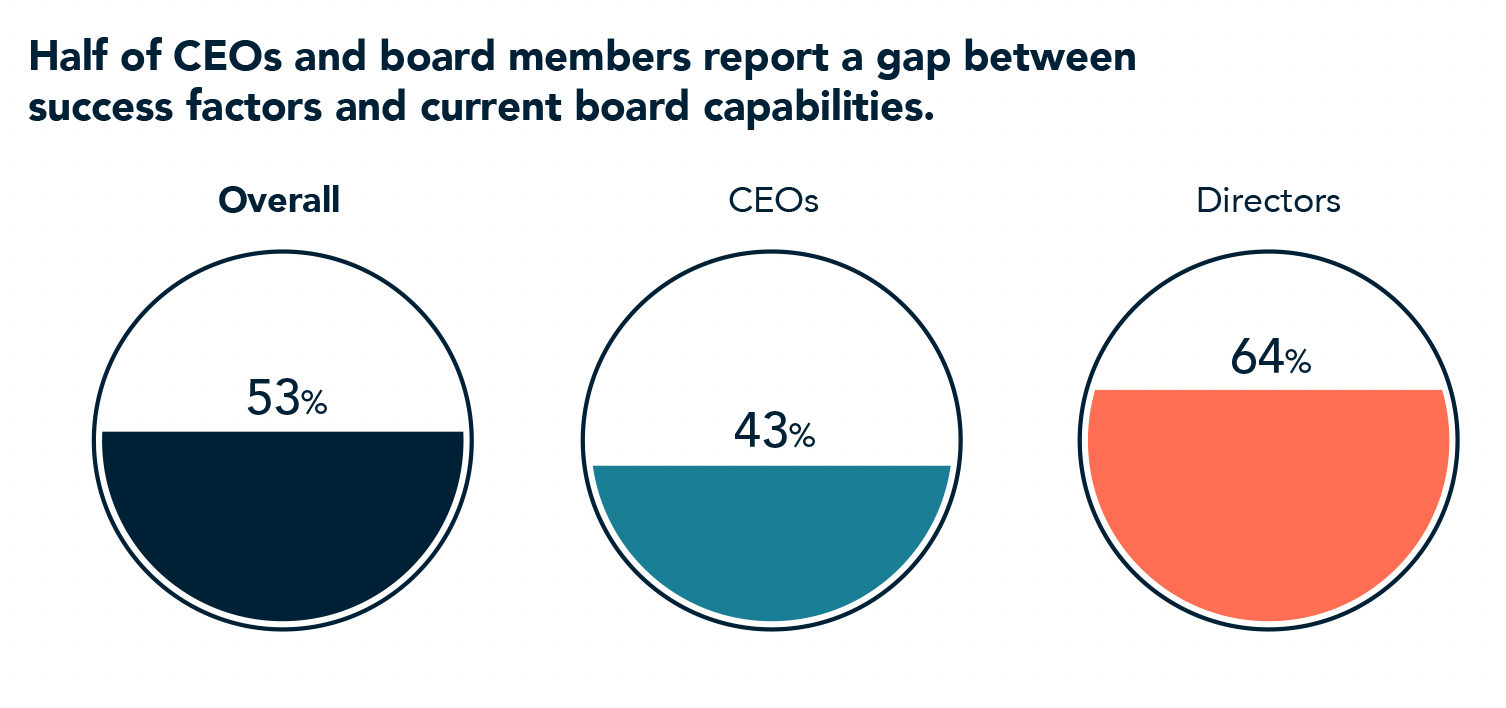
Part of this gap likely stems from geography and Australia’s relatively concentrated director market. Australia’s distance from other major markets leaves it with a comparatively small talent pool, since many prospective directors based in the United Kingdom and United States are reluctant to relocate. This distance also requires Australia to rely on supply chains that have been disrupted by conflict and instability in the Middle East more than some of their peers.
But it would be naïve to assume geography explains the capability gap entirely. In an earlier survey in 2025, 73% of CEOs and directors across Asia Pacific said they don’t regularly replace underperforming or misaligned directors,1 which means that capability gaps are likely to persist over time. The fast-moving market also makes it difficult for many boards to adapt and it’s becoming harder for them to predict exactly which leadership capabilities will be needed years from now. Rather than relying on a single ideal successor, boards should focus on maximizing optionality. By developing multiple potential successors with different strengths, boards have greater strategic choice when the future does not unfold as expected.
Relationships build trust, but optionality requires foresight
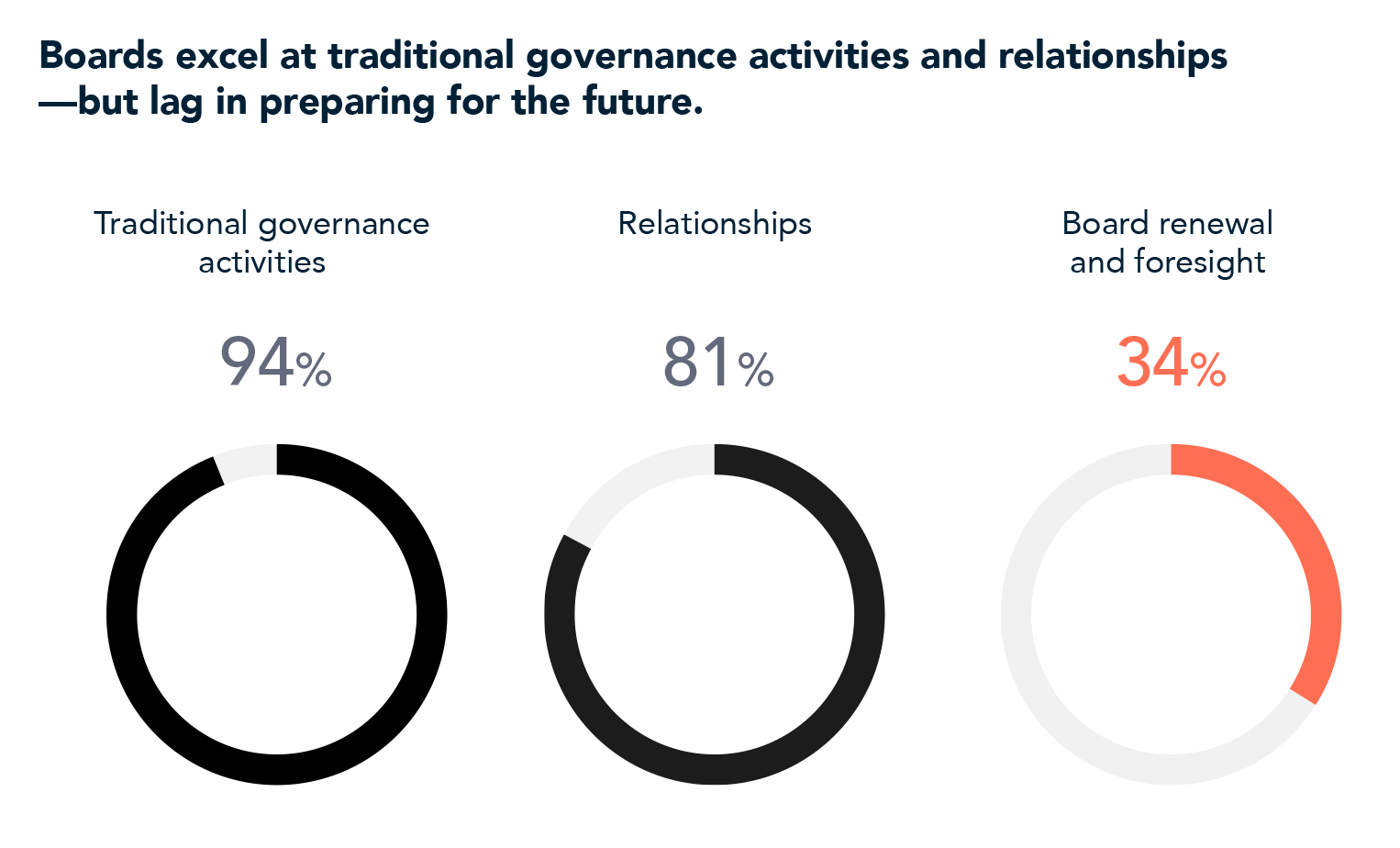
Beyond traditional governance activities, Australian boards excel at relationship building—a strength that helps them provide effective oversight, challenge management constructively, and maintain productive engagement with executives. But far fewer boards demonstrate strength in the foresight and renewal activities needed to be effective as organizations evolve. CEOs and directors are more than twice as likely to report strength in relationships as they are in foresight and renewal.
This pattern carries through to alignment. Based on decades of advising boards and executive teams, combined with our research, we have repeatedly found that succession planning is most effective when treated as a strategic capability rather than a periodic talent exercise. The strongest outcomes emerge when these succession practices are directly informed by business strategy and integrated, creating a consistent approach to identifying, developing, and preparing future leaders across the enterprise.2
To better understand what differentiates organizations that are prepared for strategic change, we examined the role of organizational alignment across three dimensions:
1. Alignment among senior leaders
2. Alignment between business strategy and leadership pipeline management
3. Alignment among executive development and succession planning processes
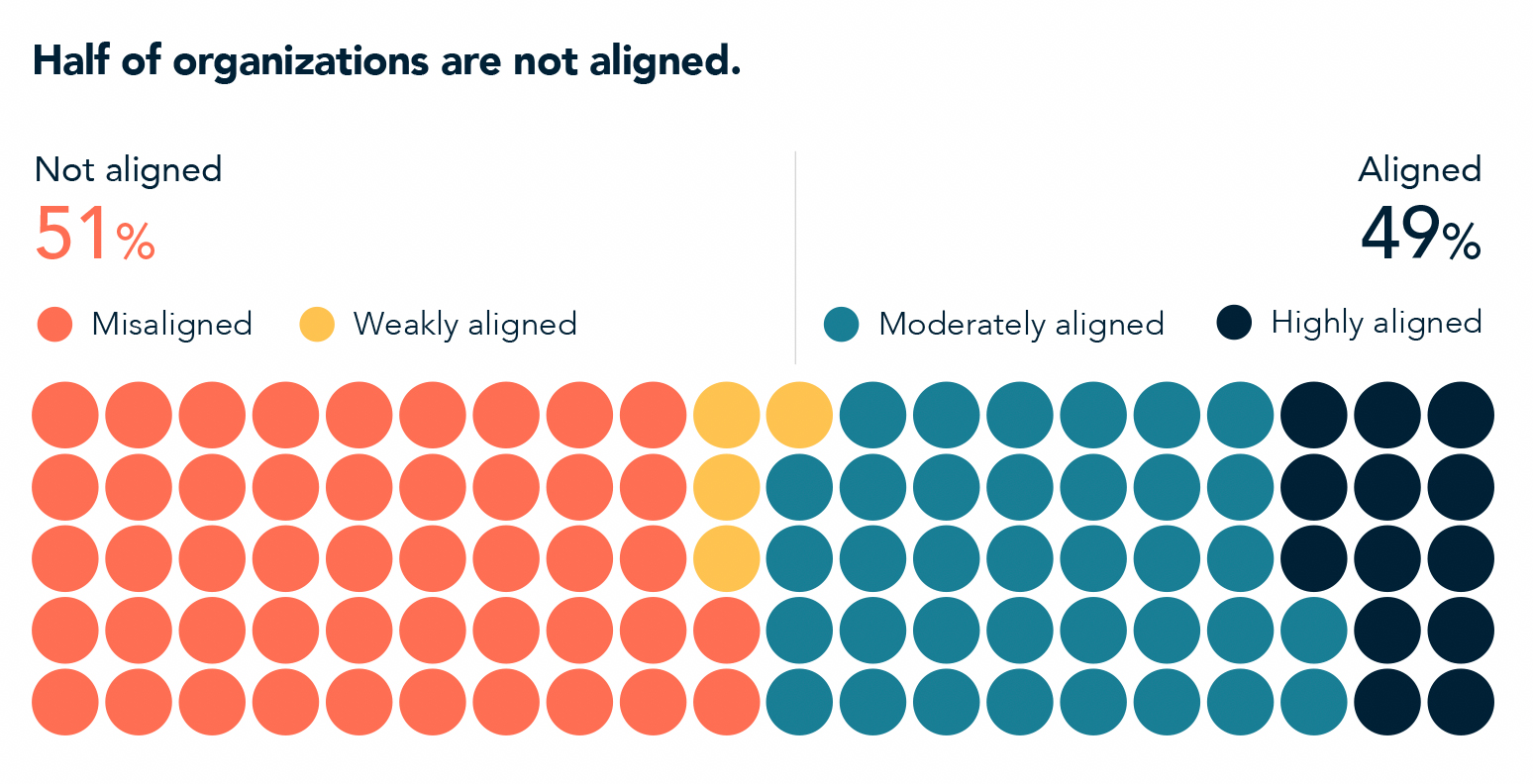
We found Australian companies are almost evenly split: about half are aligned and half aren’t. Alignment was strongest across leadership relationships and systems, but weakest across strategy.
When organizations combine alignment with a board whose strengths lie in foresight and renewal, they are less likely to report a capability gap. While hardly surprising, this raises the question of why more boards don’t prioritize these capabilities. We believe the issue is less a lack of prioritization than the challenge of keeping pace with change and competing demands. For instance, boards today are looking for directors well-versed in AI, but that wasn’t a pressing concern three years ago when many boards last made an appointment. And if the next director scheduled to retire happens to chair the audit and risk committee, boards may have no choice but to replace that seat first, leaving the AI gap unfilled for longer.
This dynamic isn’t just a governance issue. Organizations that combine enterprise-wide alignment with strong foresight and renewal are not only less likely to have a capability gap, but they are substantially more likely to outperform financial expectations. More than 50% of organizations with high alignment and sound foresight and renewal report that their 2025 financial performance exceeded expectations set at the beginning of the year, compared with just 33% of all other organizations. And none of these organizations reported falling short of expectations, versus nearly a quarter of all others.
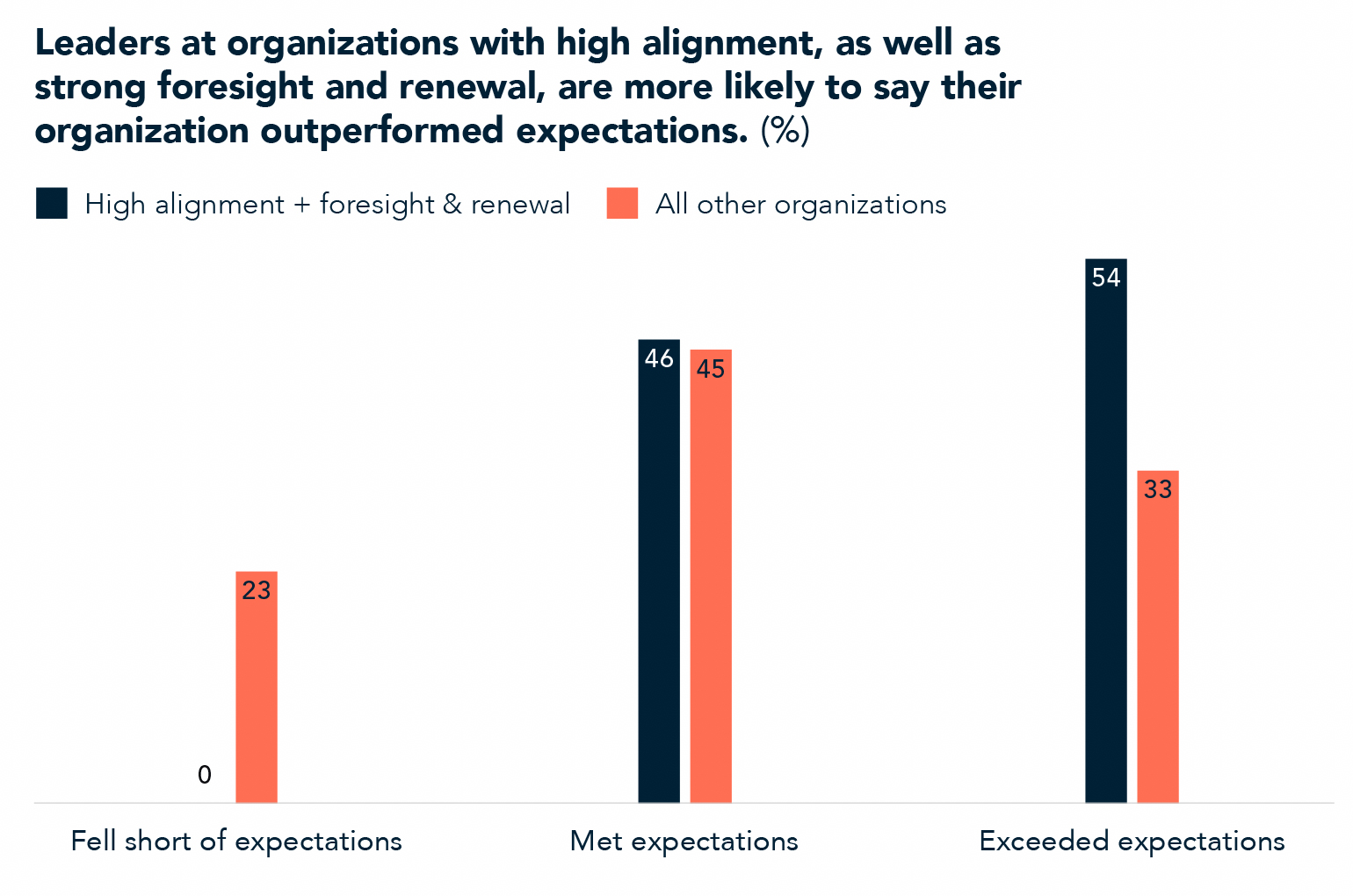
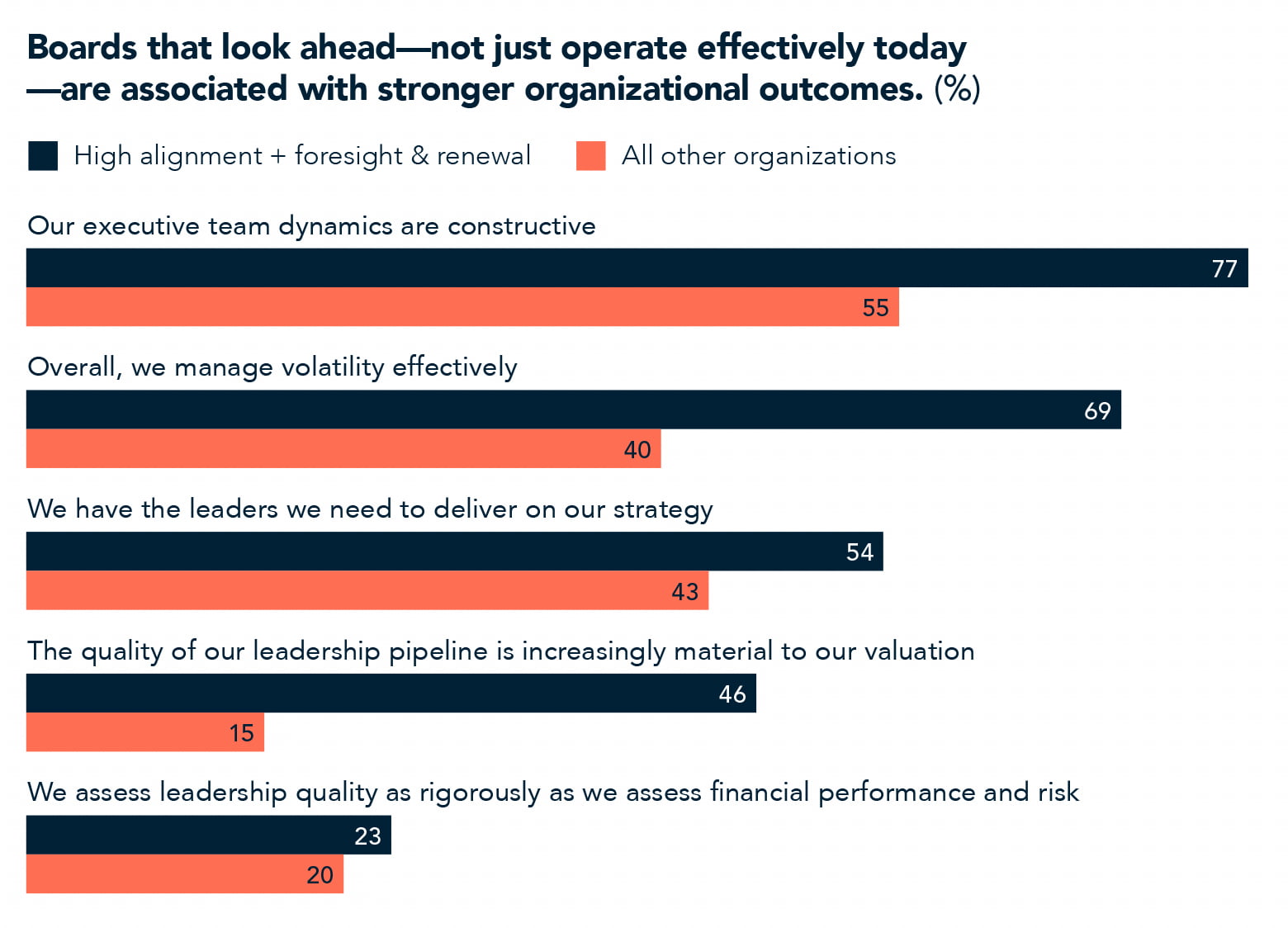
The organizations with high alignment, along with strong foresight and renewal, also have CEOs and directors who show stronger performance across a range of other leadership and governance activities, such as volatility management and leadership readiness. This suggests that boards that actively anticipate and adapt are better positioned to support organizational performance.
Focusing on the future
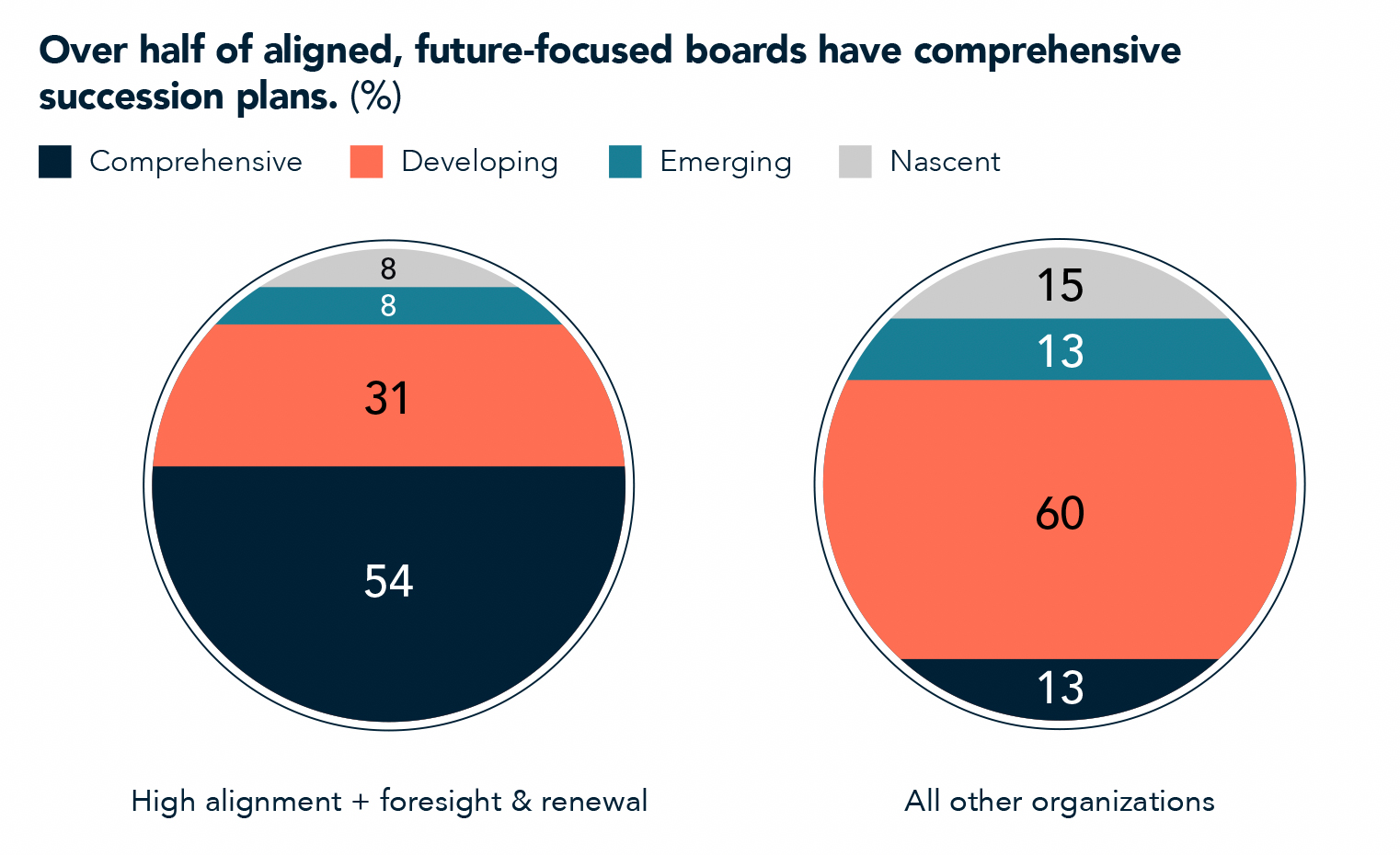
Organizations that are aligned and have boards strong in foresight and renewal are about three times as likely as other organizations to treat board succession as a priority. In contrast, nearly half of all other organizations don’t view board succession as important. The gap also extends to preparedness: 54% of aligned, future-focused boards have comprehensive succession plans, compared with just 13% of all other organizations.
The good news is that, unlike many of the external forces reshaping business today, alignment and board succession are areas boards can directly control. Australian boards can consider three priorities:
• Strengthen foresight and renewal capabilities. The current capability gap is surprisingly large, especially given that it sits squarely within the board’s remit.
• Improve alignment, particularly between strategy and talent. While closing the capability gap is necessary, it’s not sufficient to drive improved performance. Even well-positioned companies have room to strengthen strategy–talent alignment, since qualifying as “aligned” requires proficiency across all three dimensions.
• Treat board refreshment as a strategic, ongoing process. Boards with comprehensive succession plans ensure access to external experts, set clear timelines and decision criteria, align planning with strategy, and update their capability matrices regularly. By doing this, boards can enable their organizations to speed up their renewal and reduce capability gaps.
Some boards may be concerned about integrating new members more frequently. But the data suggest they don’t need to be. Boards at aligned companies tend to have more constructive, purpose-driven dynamics, making them better equipped to integrate new members. A continual cadence of refreshment may also ease some of the stigma attached to as-needed director reviews, as directors are less likely to feel they have been personally targeted when reviews occur on a regular schedule rather than reactively.
Boards alone are responsible for their renewal. This isn’t a call for constant turnover, as continuity still matters, but rather for a more strategic view of an organization’s long-term needs. Optionality is ultimately the board's competitive advantage. No board can predict exactly what capabilities the future will require, but every board can create the flexibility to respond.
References
1 Unpublished data from Heidrick and Struggles’ 2025 Q3 survey on board refreshment.
2 For example, “CEO and board confidence monitor: Beating the succession planning paradox,” Heidrick & Struggles, October 30, 2024, heidrick.com; and “Route to the Top 2025 | The ascent redefined: Charting more effective routes to the summit,” Heidrick & Struggles, June 23, 2025, heidrick.com.
Stay connected
Stay connected to our expert insights, thought leadership, and event information.
Leadership Podcast
Explore the latest episodes of The Heidrick & Struggles Leadership Podcast.