Boards & Governance
Board Monitor Europe 2026: Building a culture ready for renewal
European boards have strong relationships but significant gaps in foresight. Building a culture that uses those relationships to enable alignment and continuous renewal can help close those gaps.
September 30, 2026
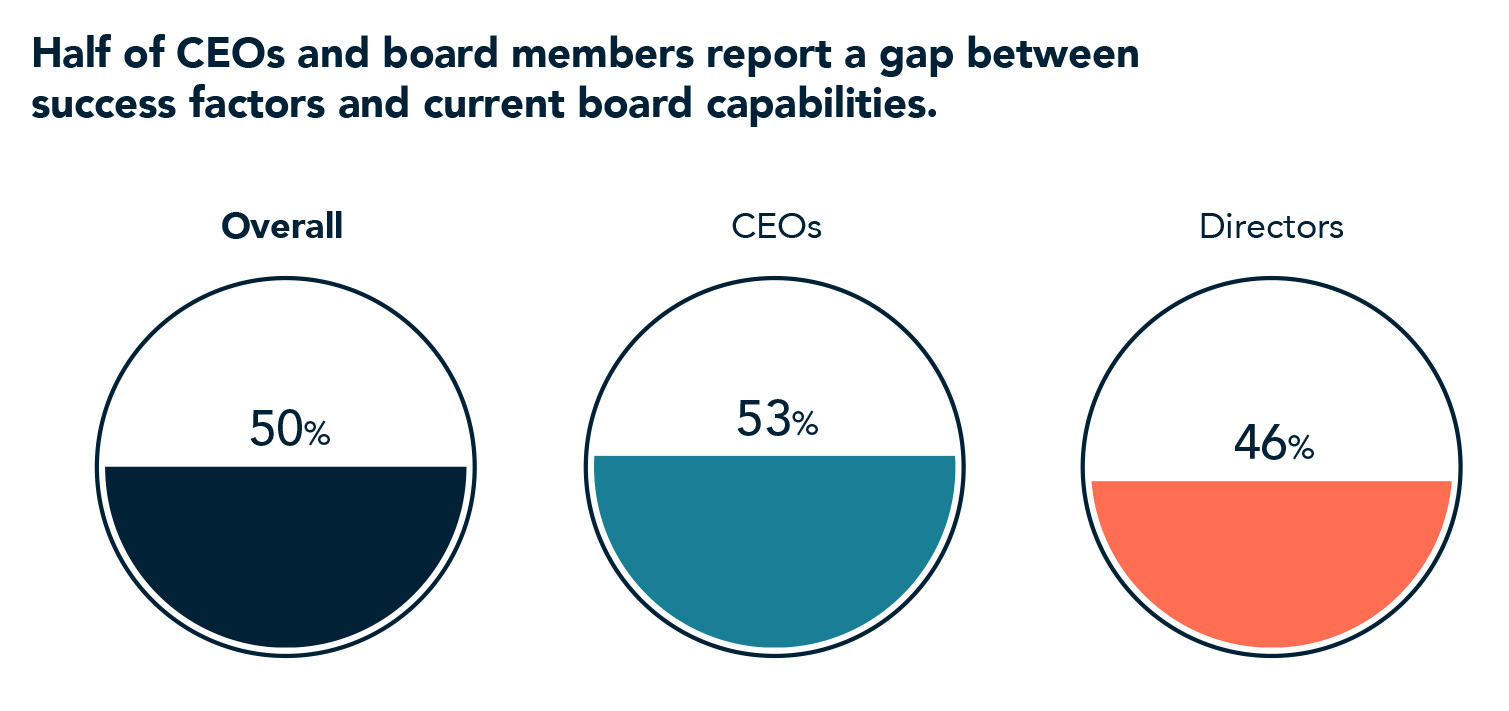
European boards are operating in a business environment that offers little stability. The region’s economies are on track for barely more than 1% growth this year, while geopolitical tensions are putting renewed pressure on energy security and trade relationships that Europe had only recently begun to stabilize. At the same time, the pace and complexity of AI adoption are creating new challenges for boards as organizations rethink how they operate and compete. Yet many boards have not updated their capabilities at the same pace: half report a gap between the capabilities their organizations will need for future success and the strengths their boards have today.
European boards already have an important asset for closing these gaps: strong relationships among directors. The trust and candor those relationships foster can help boards build greater foresight, improve alignment, and make renewal a more continuous part of how boards operate. Our research suggests that boards that combine alignment with foresight and renewal are better positioned to address capability gaps, strengthen succession planning, and achieve materially better organizational performance.

According to our recent survey of 1,033 CEOs and directors globally, including 299 in Europe, most European CEOs and directors expect their organization’s strategies and operating models to change over the next two to three years. But there is a gap between the capabilities organizations will need and those their boards have today. Fifty percent of European CEOs and directors report a mismatch between the factors their organizations need for future success and the strengths of their current boards.
Despite this gap, the criteria boards use to select new directors haven’t changed much. In the United Kingdom, 25% of directors appointed in 2025 were first-time public board members and 35% had prior CEO experience—both within one percentage point of 2024 levels. Similarly, in the rest of Europe,1 38% of directors appointed in 2025 were first-time public board members, compared to 37% in 2024, and 42% had prior CEO experience, versus 39% the year before.
Strong relationships, weaker foresight
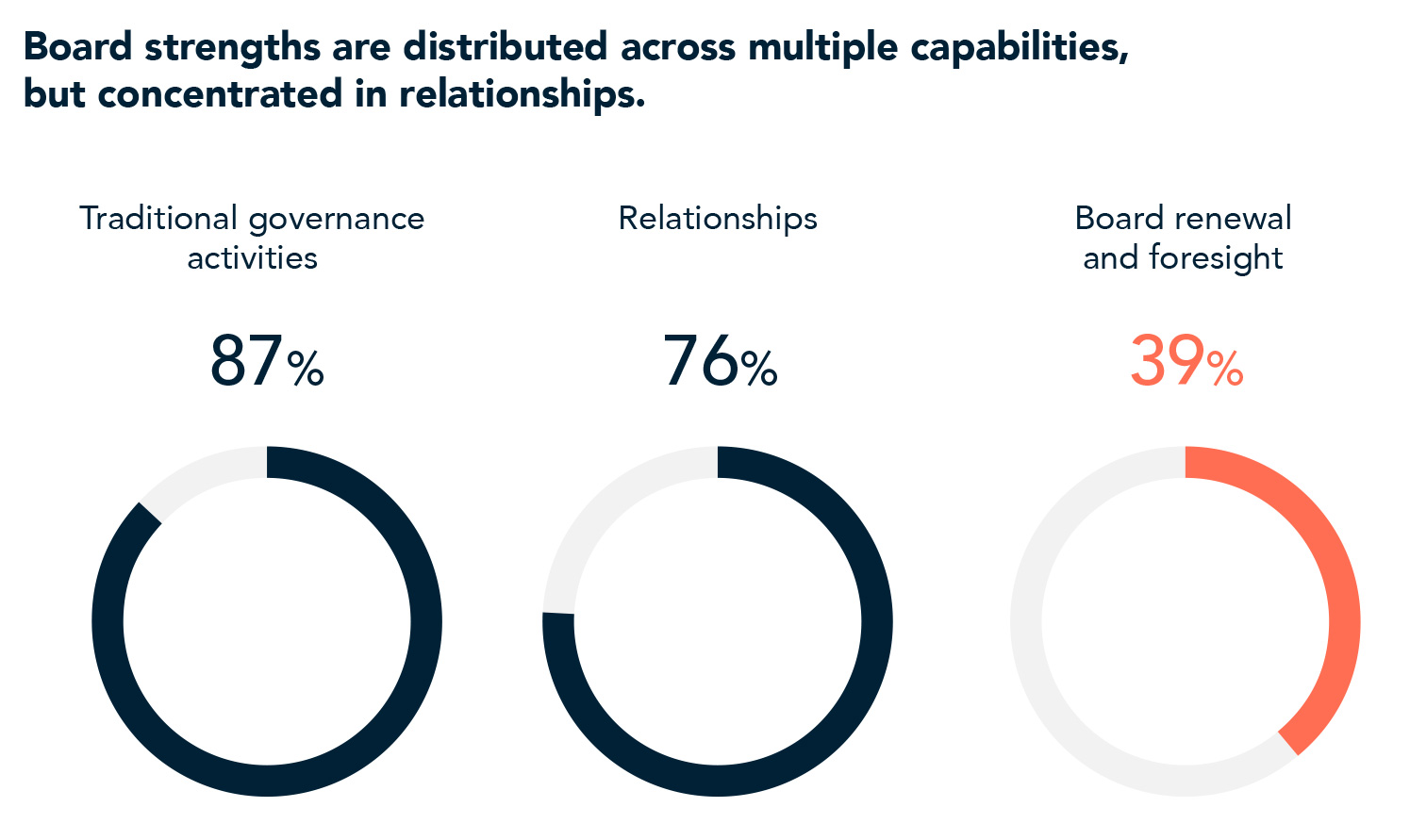
Keeping pace with change is only one aspect of effective board dynamics. Another is how well directors work together. European boards tend to excel at building strong relationships among directors, helping them provide effective oversight and stay productively engaged with the leadership team. The greatest value of strong relationships, however, may be the candor they enable, allowing directors to raise difficult issues rather than limiting discussions to areas of agreement.
That candor can create the foundation for difficult conversations, particularly around succession. Yet relatively few European boards report strengths in the foresight and renewal capabilities needed to stay effective as organizational needs evolve.
A similar pattern has emerged elsewhere. Decades of working with leaders, combined with our research, show that succession planning at every level is most effective when it aligns closely with business strategy. Outcomes improve further when those succession practices are applied consistently and holistically across the organization.2
Prior research has repeatedly identified two conditions that predict stronger succession outcomes: alignment between business strategy and succession planning, and practices woven throughout the enterprise rather than confined to a single function. This year’s survey built on those conditions by examining alignment across three dimensions:
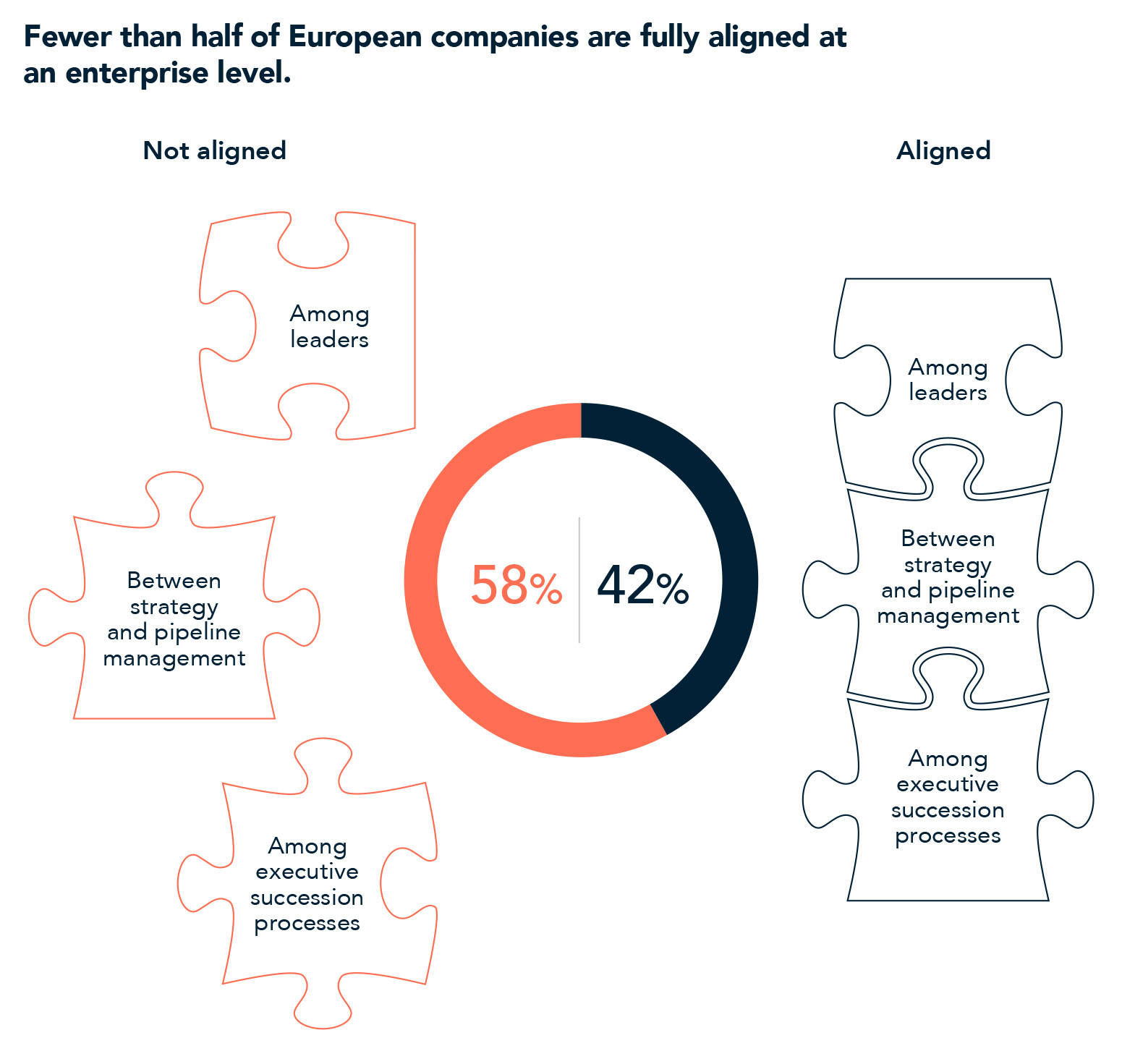
• Alignment between the board and executive team: do the CEO, board, and executive team share a common view of the strategic direction and who will execute it?
• Alignment between strategy and pipeline management: is company talent being developed today with the skills tomorrow’s strategy will require?
• Alignment across leadership development processes: do hiring, leadership development, and succession planning function as a coherent, mutually reinforcing system?
Our survey found that fewer than half (42%) of European companies achieve alignment across all three dimensions—and that most aligned companies are only moderately so, suggesting alignment is fragile.3 Moreover, alignment is strongest across leadership relationships but weaker where systems and strategy connect directly with talent.
Alignment and renewal create a measurable advantage
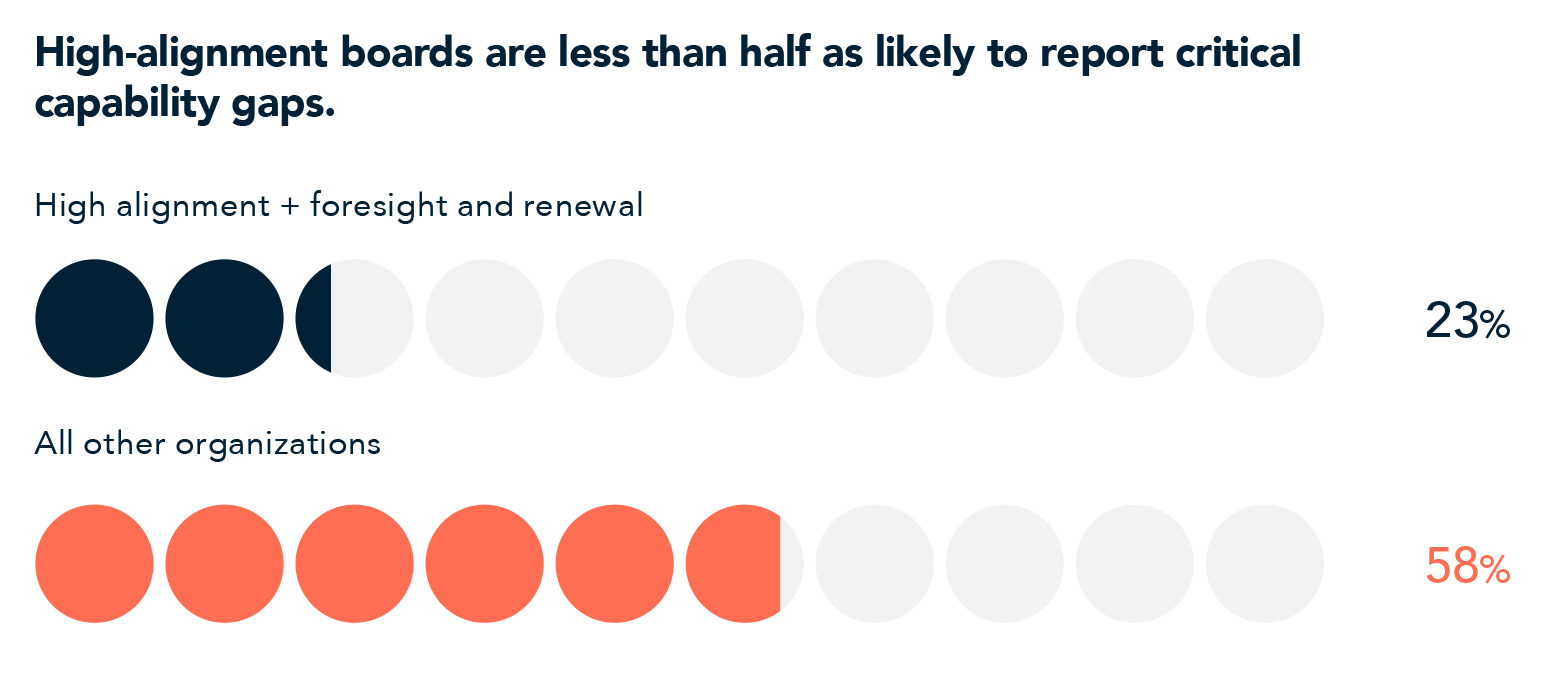
Boards that combine enterprise-wide alignment with strength in foresight and renewal report measurable benefits. Only 23% of companies with this combination report a capability gap, compared to 58% of all other organizations.
This gap is hardly surprising, but it raises an important question: Why do more boards not prioritize these capabilities? The challenge may be less about recognizing the need for renewal than about keeping pace with changing capability requirements. Strategic needs can evolve faster than board appointment cycles. A board may recognize today that it needs an AI-savvy director, but that capability was likely not on its radar three years ago when it last appointed directors.
In addition, directors in some European countries can serve for up to 12 years before losing their formal independence. This means that if, for example, the audit chair is approaching retirement, replacing that critical role may take precedence over adding a director with a newly important capability, such as AI expertise.
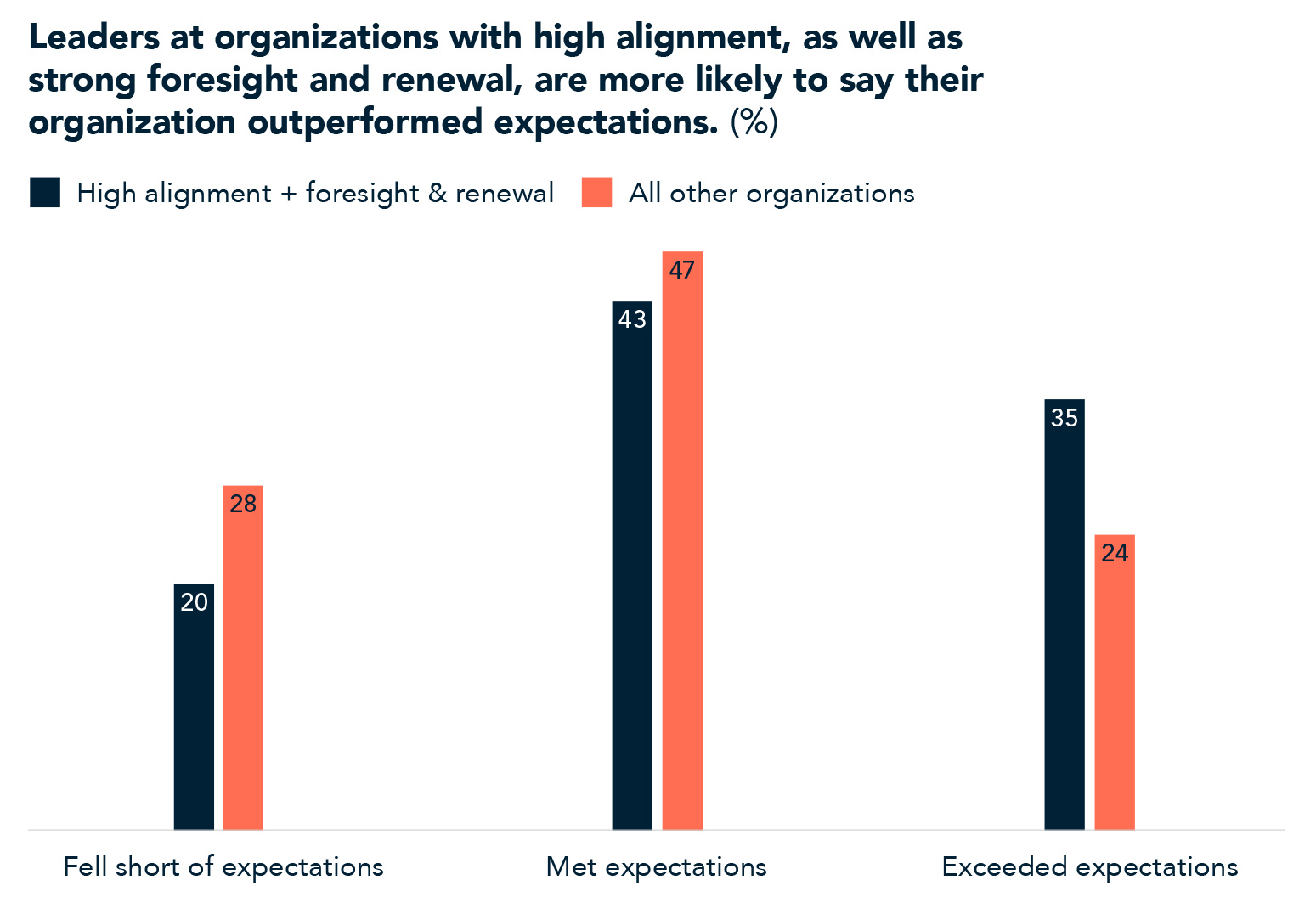
The benefits of overcoming these constraints extend beyond board capabilities. Our research shows that organizations with boards that are both aligned and strong in foresight and renewal also report better financial performance. Thirty-five percent of these organizations say their 2025 financial performance exceeded expectations, compared to just 24% of all other organizations.
Directors at these organizations report greater strength across a range of other governance activities, including adopting AI at an appropriate pace and managing volatility. This suggests that alignment and renewal also help boards respond more effectively as organizational needs change.
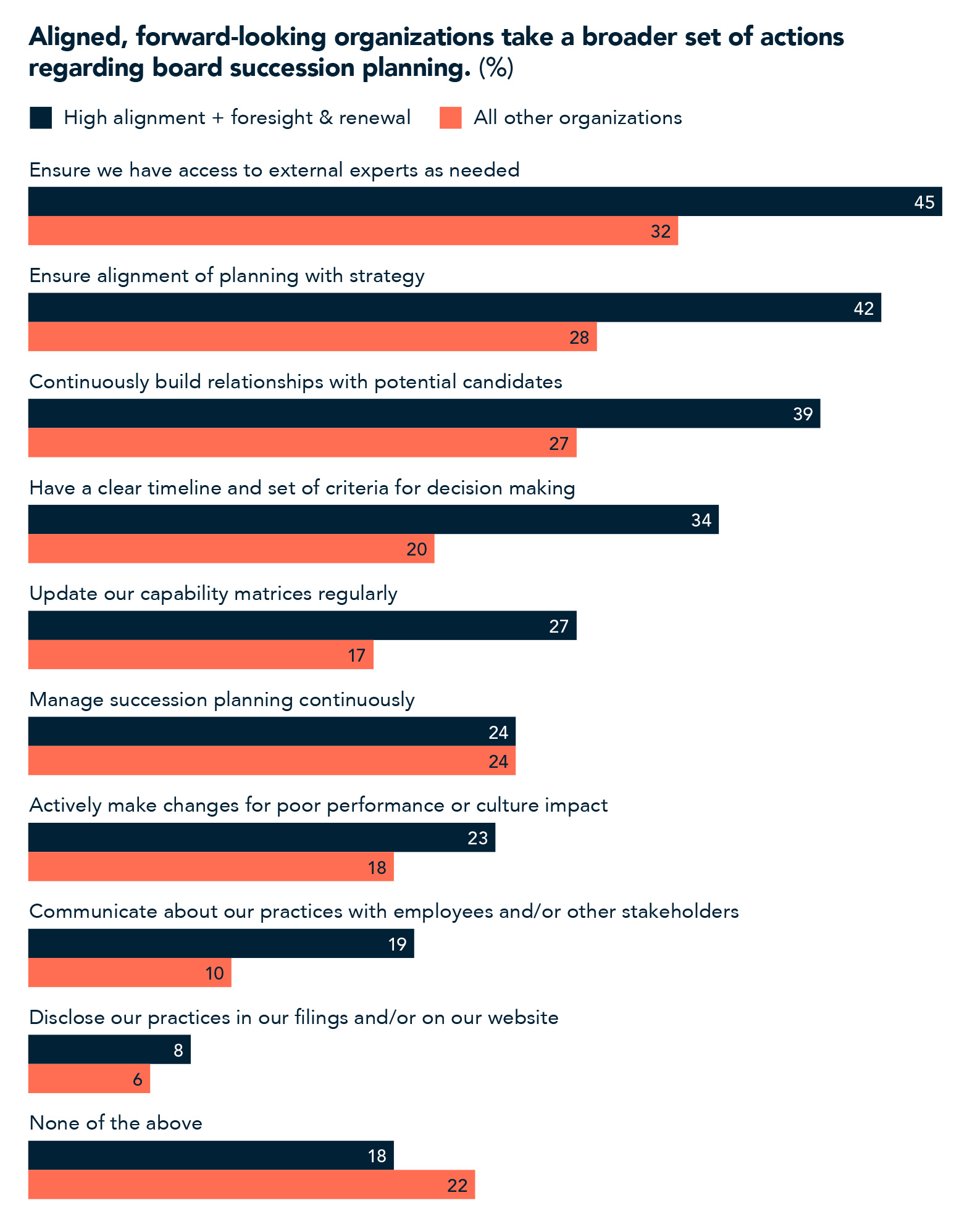
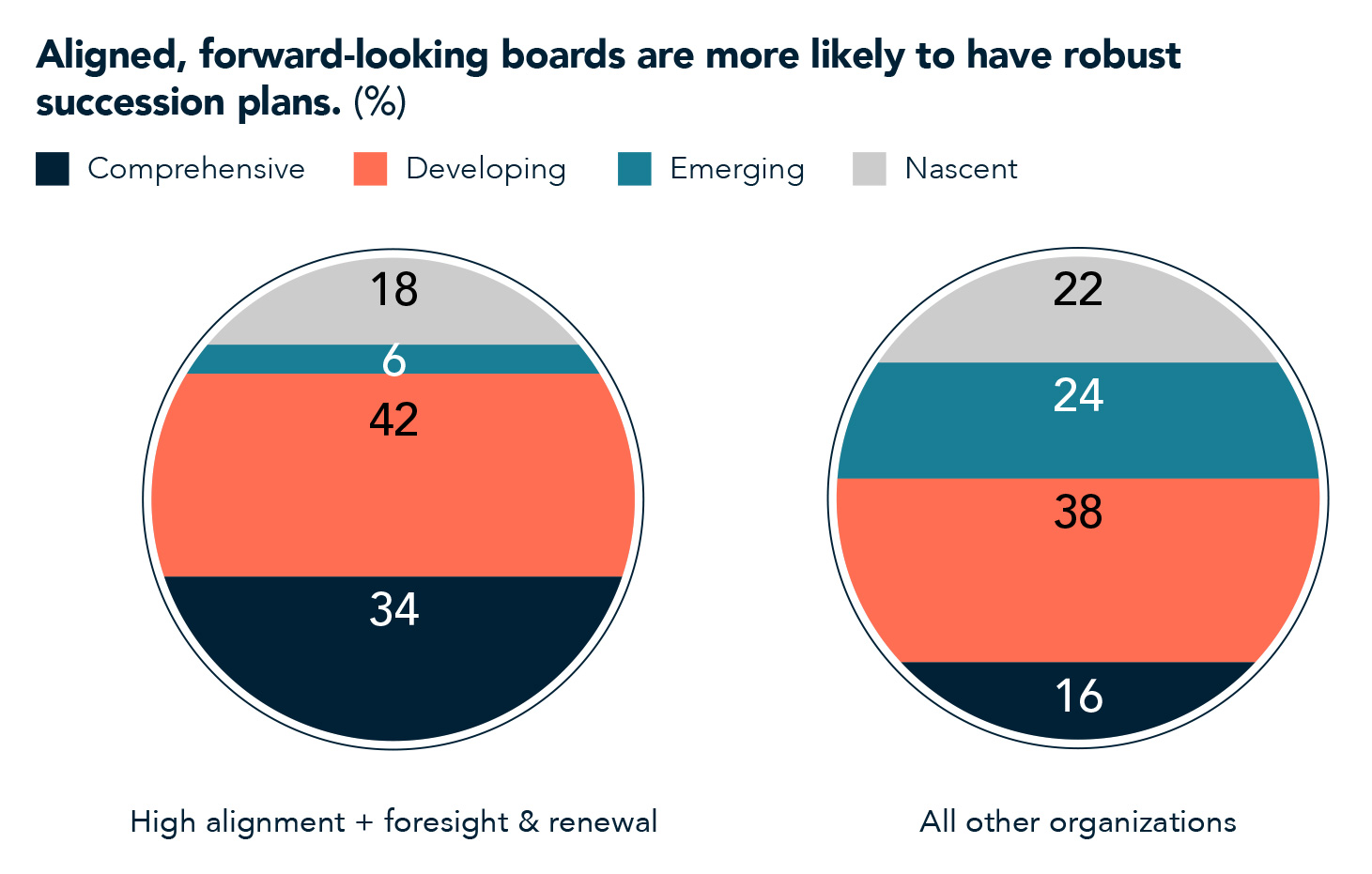
They also approach succession more strategically. Boards with strong foresight and renewal are nearly twice as likely to treat board succession as a strategic priority—31% compared to 17% of all other organizations. By contrast, 42% of all other organizations do not view succession as a high priority. That focus translates into more robust planning: 34% of aligned boards with strong foresight and renewal have comprehensive board succession plans, compared to only 16% of all other organizations.
Building a culture of continuous renewal
Unlike many external forces shaping organizations today, board composition, succession, and renewal are areas boards can directly control. For European boards, the opportunity is to turn an existing strength—strong relationships—into a foundation for continuous renewal.
That can appear counterintuitive. Strong relationships and productive dynamics take time to develop, so boards may hesitate to introduce new members more frequently for fear of disrupting what already works. But effective dynamics and renewal do not have to compete. Our data suggests the opposite: boards at aligned companies tend to have more constructive, purpose-driven dynamics, making them better equipped to integrate new members while preserving the relationships that make the board effective.
This requires a broader view of the board’s responsibility for culture. Its remit extends beyond oversight to create the conditions for high performance. Strong relationships should enable candor rather than inhibit change, allowing directors to challenge whether current capabilities will meet future needs and to introduce new perspectives when they will not. Culture, then, is not simply something to preserve during periods of renewal; building a culture that supports renewal is itself a board responsibility.
Alignment helps turn that culture into action. Before boards can determine which capabilities they will need next, they need a shared view of where the organization is headed. That requires alignment among directors and executives, between strategy and talent decisions, and across succession processes. Without it, even a board of strong individual directors may struggle to agree on future needs—or to renew itself accordingly.
Comprehensive succession planning can make that renewal continuous. A regular refreshment cadence can reduce the stigma associated with as-needed reviews of individual directors. Succession becomes an ordinary part of board governance, rather than a response to a particular director or urgent capability gap.
European boards alone are responsible for refreshing themselves. The most successful build a culture in which renewal is expected, strategic, and continuous—and identify multiple potential successors before the need becomes urgent. Boards that treat renewal as a deliberate practice, rather than something that happens to them, will be better prepared for what’s next.
References
1 This data includes newly appointed directors in Belgium, Denmark, Finland, France, Germany, Ireland, Italy, Netherlands, Norway, Poland, Portugal, Spain, Sweden, and Switzerland.
2 See “Route to the Top 2025 | The ascent redefined: Charting more effective routes to the summit,” Heidrick & Struggles, July 23, 2025; “CEO and board confidence monitor: Beating the succession planning paradox,” Heidrick & Struggles, October 30, 2024. Additional research forthcoming.
3 See the online methodology for details on how the alignment score was calculated.
Stay connected
Stay connected to our expert insights, thought leadership, and event information.
Leadership Podcast
Explore the latest episodes of The Heidrick & Struggles Leadership Podcast.