Boards & Governance
Board Monitor India 2026: The balance between continuity and growth
As Indian organizations navigate accelerating strategic change, boards must find a balance between maintaining the continuity that has made them successful thus far.
November 09, 2026
Most companies listed on the National Stock Exchange of India are controlled by founding families who often have dual roles, simultaneously managing operations and sitting on the board. This structure is built for continuity, which means that relationships run deep and governance is steady.
But that stability is now being tested as the majority of CEOs and directors expect their organization’s strategy and operating model to shift over the next few years. Indian boards are responding to this shift more aggressively in comparison with some of their regional peers. However, the question now is whether that initiative will translate into the readiness and agility needed for sustaining long-term success.

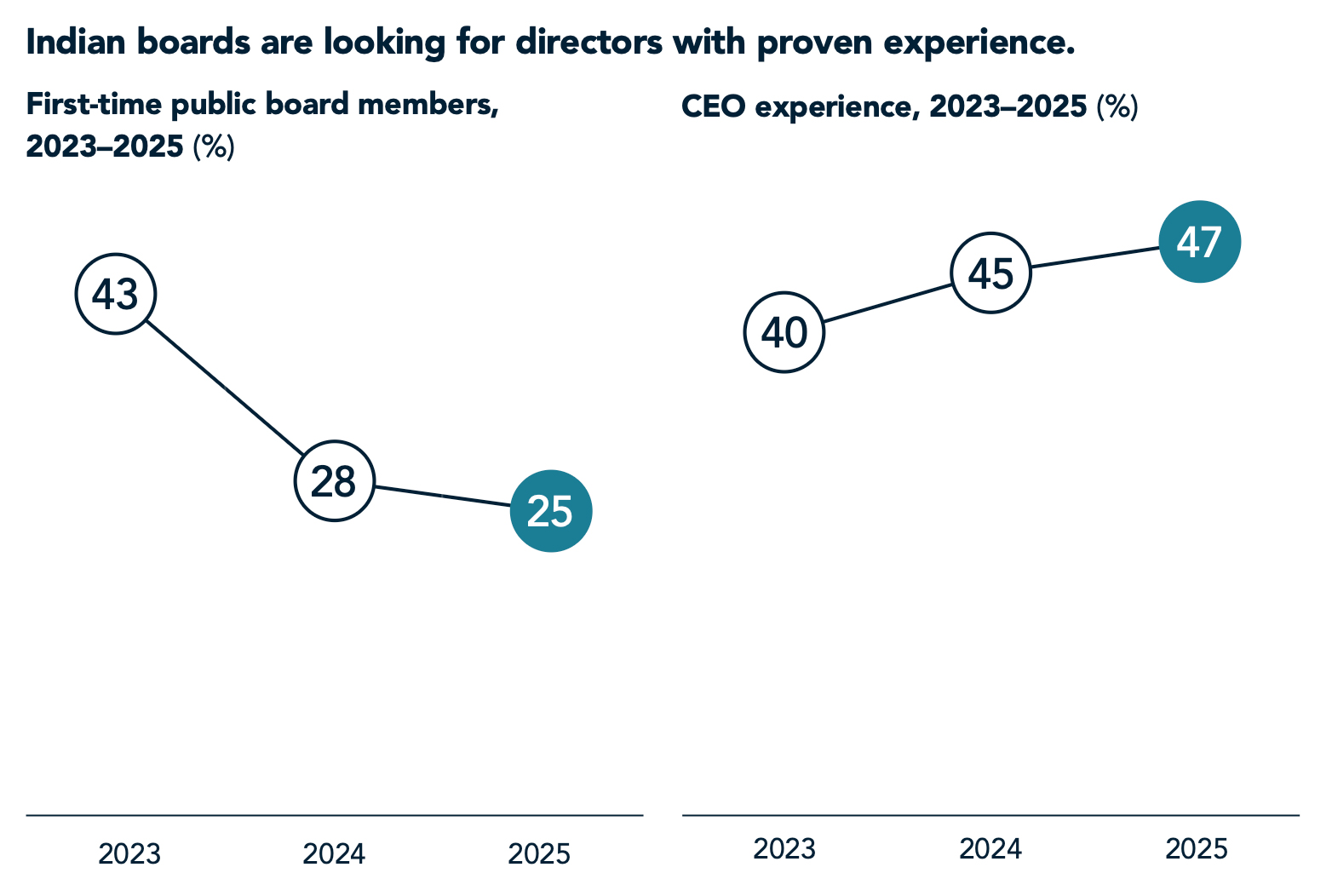
According to our recent survey of 1,033 CEOs and directors, including 58 in India, nearly 9 out of 10 leaders in India expect their strategy and operating model to change over the next two to three years, including one-third who expect significant change. It’s not surprising, then, that boards are looking for directors with proven experience. Only 25% of newly appointed directors are first-time public board members, down from 43% two years ago. Meanwhile, 47% of newly appointed directors bring previous CEO experience, continuing an upward trend established over the last few years.
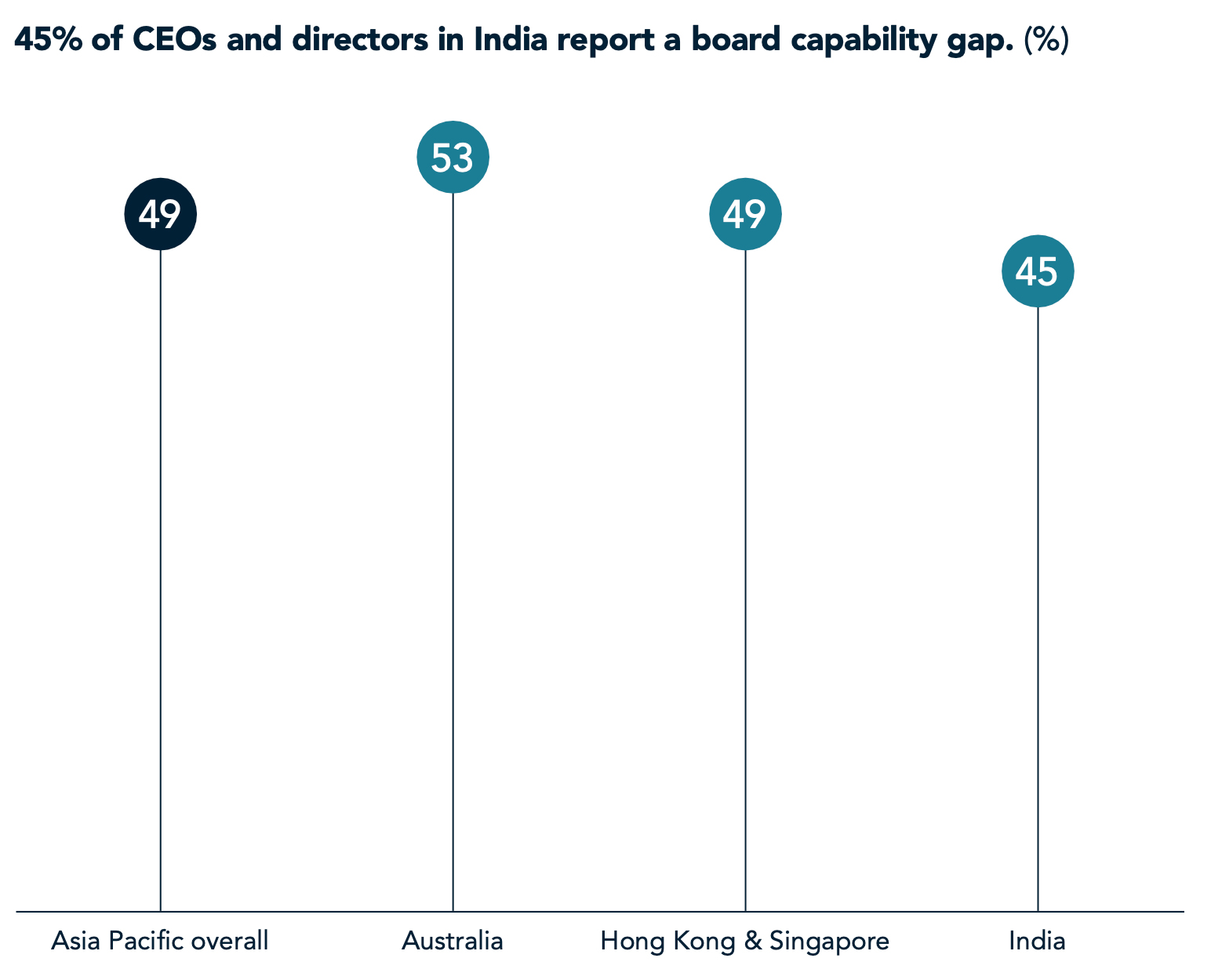
Despite a clear move toward more experienced directors, these efforts don’t seem to be filling capability gaps. Forty-five percent of CEOs and directors report a gap between the most important factors for near-term organizational success and the current strengths of their board. While this is lower than the 61% who reported a capability gap in the United States and is the lowest share among the Asia Pacific markets we surveyed, leaders at Indian organizations would likely say this number is still too high.
One likely contributor to these capability gaps is the fact that 73% of CEOs and directors across the Asia Pacific region say they don’t regularly replace underperforming or misaligned directors. It’s clear that experience helps, but it’s not a substitute for actively renewing the board when a director no longer fits the organization’s needs.1
Leveraging strong relationships
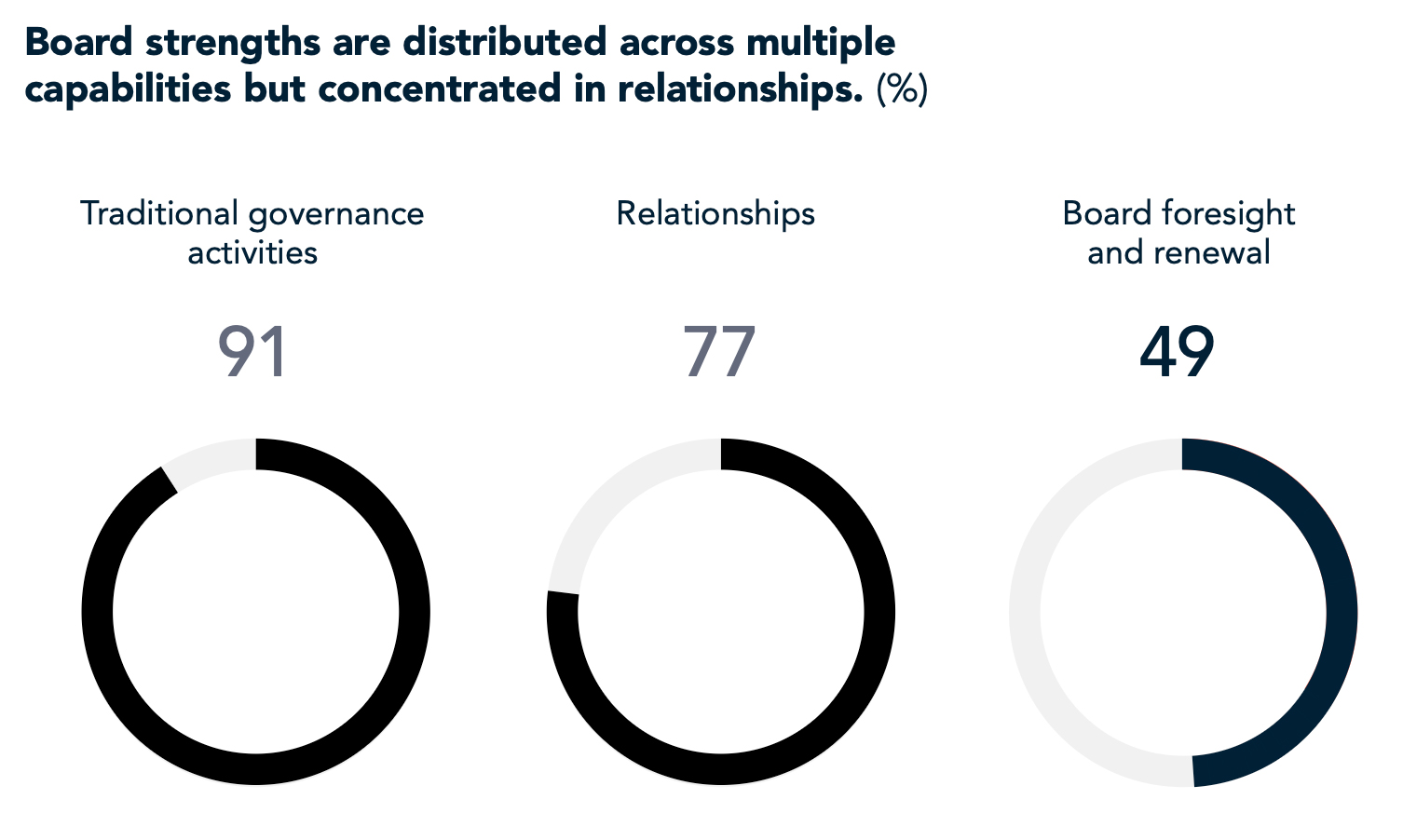
One area where Indian boards excel is traditional governance and relationship building. CEOs and directors are substantially more likely to report that their boards have strengths in relationships (77%) than in foresight and renewal (49%). These robust relationships help boards provide effective oversight, challenge management constructively, and stay engaged with executives.
Interestingly, those same strengths may be part of why renewal lags. In a setting where controlling families manage operations and perpetually sit on the board, relationships carry outsized importance. Strategic foresight and renewal don’t garner the same attention.
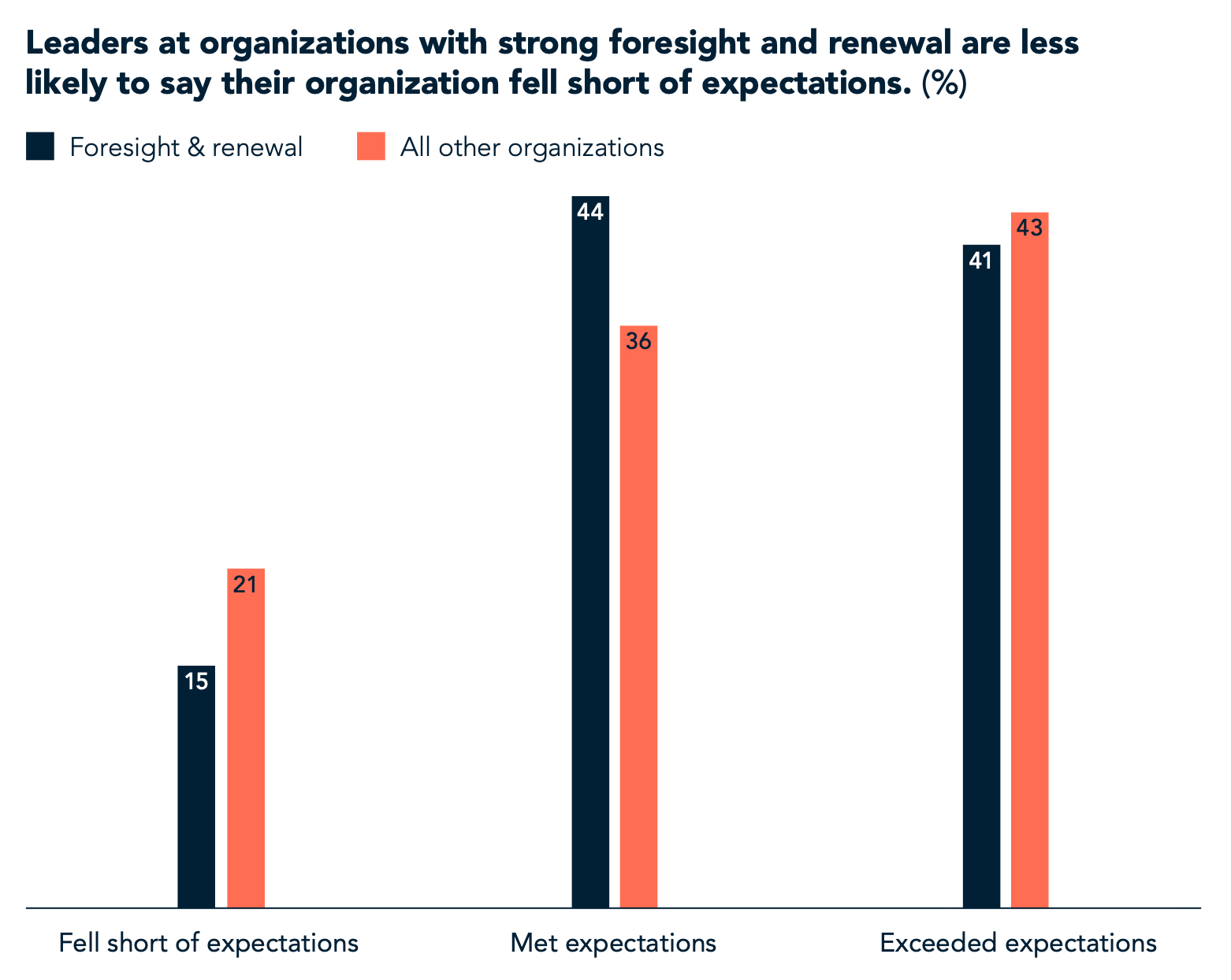
However, we found that respondents who include foresight and renewal among their board’s strengths also report measurable benefits for their organization. Only 36% of companies with strong foresight and renewal report a capability gap, compared with 52% of all other companies. Correspondingly, there’s also a performance disparity: just 15% of organizations with strong foresight and renewal said their 2025 financial performance fell short of expectations, compared to 21% of all other organizations.
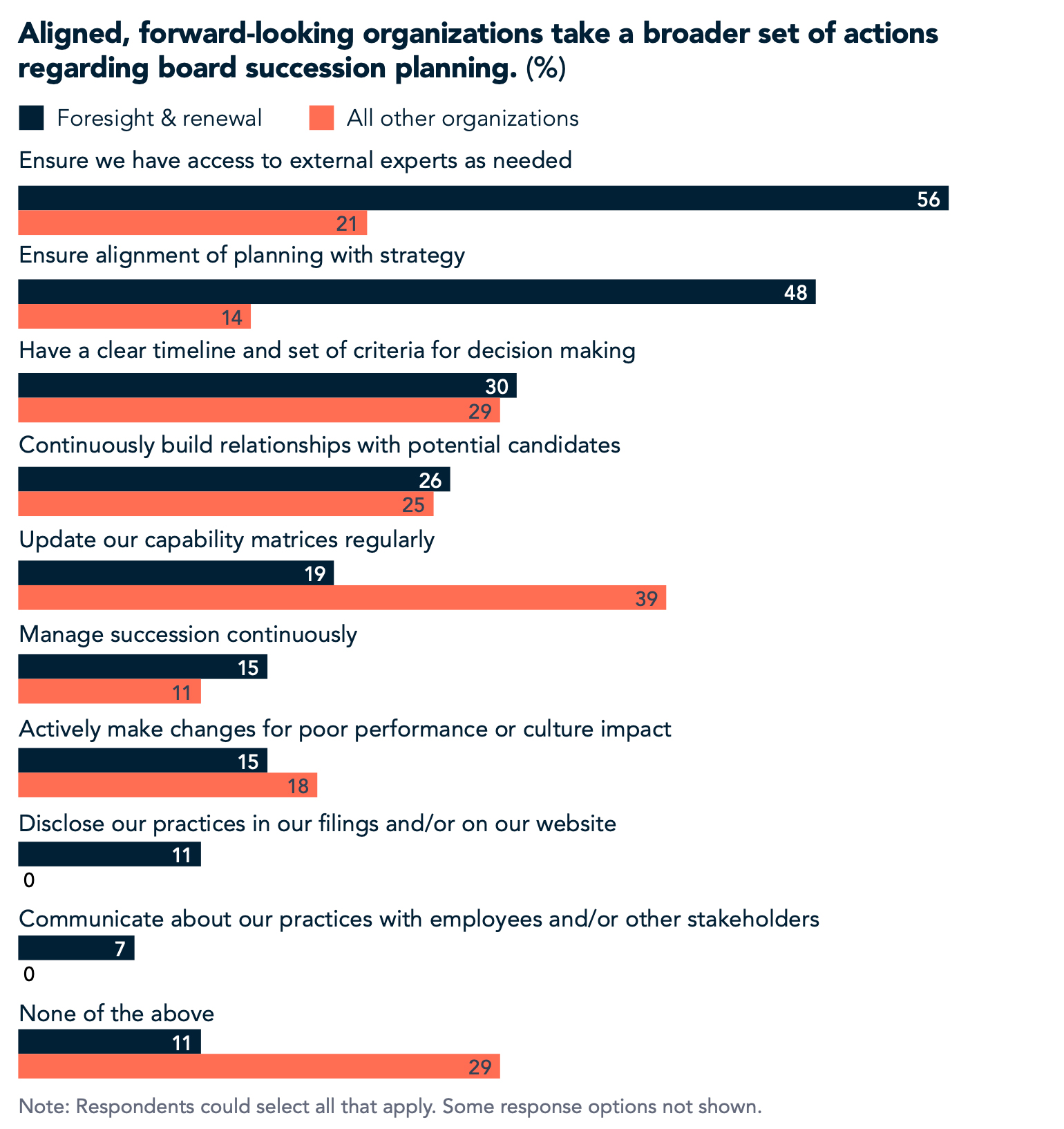
Directors at more nimble organizations also report strengths across a range of other governance activities, such as the abilities to rigorously assess leadership quality and adopt artificial intelligence at the right pace. This pattern suggests that boards built to anticipate change are better positioned to support performance broadly, not just in areas directly tied to renewal.
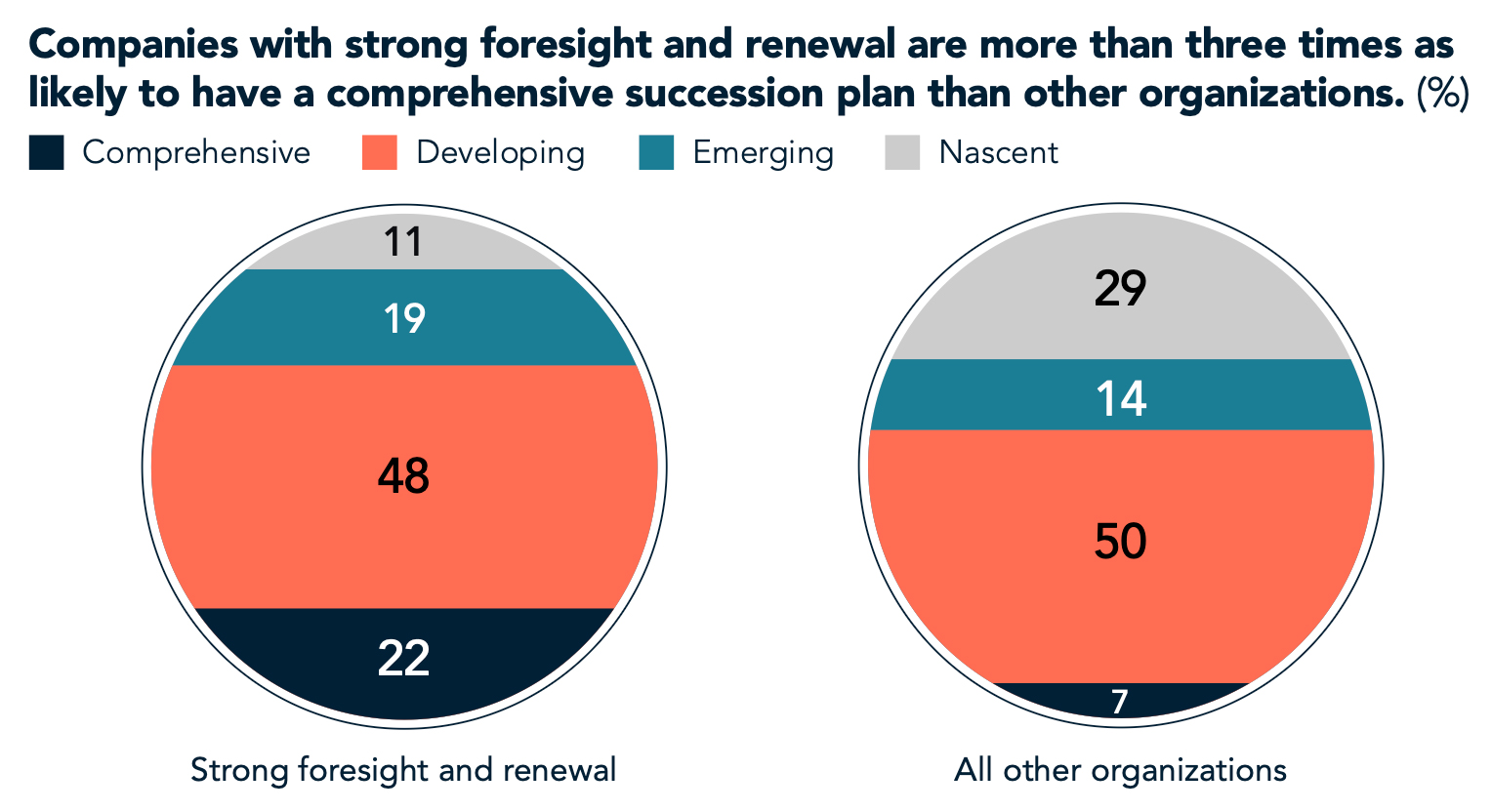
Finally, these companies are also more likely to give themselves the best opportunity for future success. One-third of companies that have boards with strong foresight and renewal treat succession as a true priority, compared to only one-quarter of other companies. They’re also more likely to have a comprehensive succession plan that ensures access to external experts, aligns planning with strategy, and manages succession continuously.
Continuity and renewal aren’t at odds
The current capability gap for Indian boards leaves organizations exposed. Without deliberate renewal, boards limit the options available to them when strategy needs to shift quickly. The good news is that unlike many of the external forces organizations face, these capabilities sit squarely within the board’s own remit.
Relationships and renewal aren’t competing priorities. In fact, the strongest boards use relationships to support more effective renewal. Trust among directors creates the conditions for candid conversations about where the board’s capabilities may no longer match the organization’s future needs and makes it easier to approach succession as an evolution of the board rather than a judgment on individual directors. Strong relationships can therefore help boards make more deliberate choices about when to refresh their composition, which capabilities to add, and how to integrate new voices without disrupting the board’s effectiveness.
Renewal, in turn, can strengthen those relationships. New directors can earn trust by demonstrating judgment, bringing relevant expertise, and contributing constructively to debate. Over time, those contributions expand the board’s collective capabilities while building new relationships across the group.
For boards in India, the goal isn’t to choose between continuity and renewal. It is to create a board where trust enables thoughtful renewal and thoughtful renewal continually strengthens the board. Boards can bring the same rigor to both by valuing chemistry, cultural understanding, and long-standing relationships while also applying clear criteria around the skills and experience needed for future business needs. Boards have the opportunity to consider relationships as one important dimension of an appointment decision alongside a clear-eyed assessment of what the board will need next. Boards that strike that balance will be better positioned to preserve the strengths of continuity while continuing to evolve for whatever comes next.
Reference
1 See the online methodology for details on how capability gaps were evaluated.
Stay connected
Stay connected to our expert insights, thought leadership, and event information.
Leadership Podcast
Explore the latest episodes of The Heidrick & Struggles Leadership Podcast.