Route to the Top India 2026: Alignment as a leadership imperative
Enterprise-wide alignment is a clear differentiator associated with stronger performance at many Indian organizations. Sustaining that advantage requires ongoing succession planning that develops multiple leadership options as strategic priorities evolve.
November 09, 2026
15m to read
For organizations in India, preparing for the future has rarely been more complex. Strategies and operating models are changing, expectations of leaders are shifting, and disruption—from geopolitical volatility to artificial intelligence (AI)—is making it increasingly difficult to anticipate what organizations will need from their leadership teams in the years ahead. In this environment, succession planning cannot be separated from the broader question of whether an organization’s leaders, strategy, and leadership pipeline align with where the business is going.
Our research suggests that this enterprise-level alignment has material implications. Organizations that connect leadership alignment, strategy and leadership-pipeline management, and executive development and succession planning are more likely to outperform their financial expectations and report stronger organizational outcomes. Yet only about half of organizations in India are aligned across all three areas. And even when they are, alignment is often fragile.
The findings point to an important shift in how organizations should think about succession. Alignment is a critical foundation, but sustaining it requires treating succession planning as a continuous discipline rather than a periodic exercise focused on identifying a single replacement. By developing multiple potential leaders for a range of strategic scenarios, organizations can build the leadership optionality needed to navigate uncertainty and ensure leadership capabilities evolve with the business.

In previous work, board members and CEOs consistently said succession planning would improve with greater alignment between business and succession strategies. This year, we explored this topic further by examining three aspects:
- Alignment among leaders: the extent to which board members and the CEO share a common understanding of the organization’s strategic priorities and the leadership capabilities required to deliver on them.
- Alignment between strategy and leadership pipeline management: the extent to which succession planning and leadership development are built around an organization’s strategic roadmap.
- Alignment among executive-management processes: the extent to which performance-management and incentive structures reinforce strategic priorities.
For example, if a board identifies a need for AI expertise, the question is not only whether the leadership team agrees that it is a strategic priority but also whether that priority is reflected in the management processes and systems that shape current and potential future leaders across the organization.
After assigning an aggregate “alignment score” based on responses, we found that only 53% of companies in India are aligned across all three dimensions. Among these organizations, most demonstrate only moderate alignment, suggesting that alignment remains fragile, including at relatively high-performing companies.1
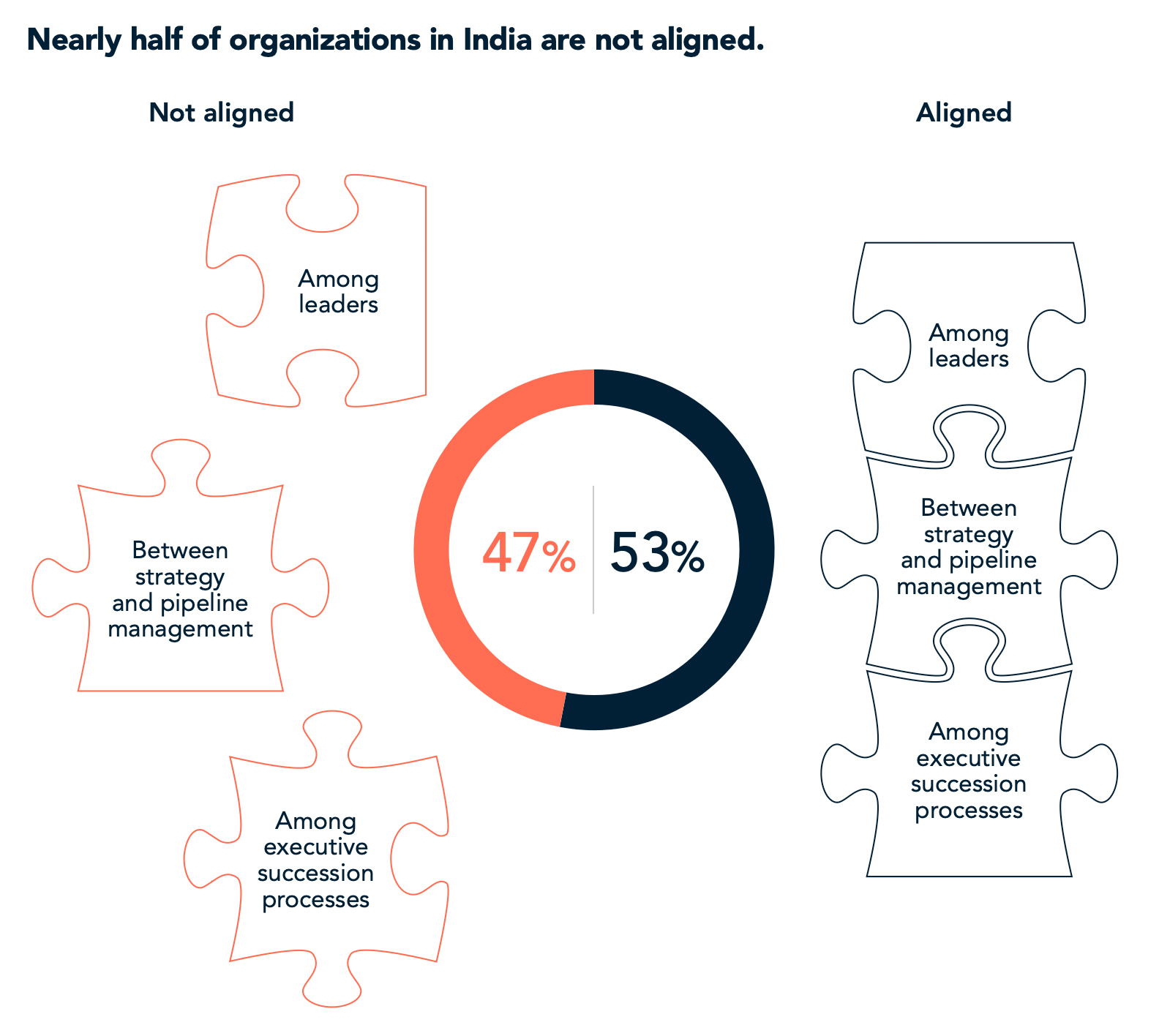
Generally, alignment was strongest across leadership relationships and systems but weakest in connecting those systems to organizational strategy. This is understandable given the prevalence of founder-family business models in India, but the disconnect can make it difficult for companies to ensure that leadership capabilities evolve in step with changing strategic priorities.
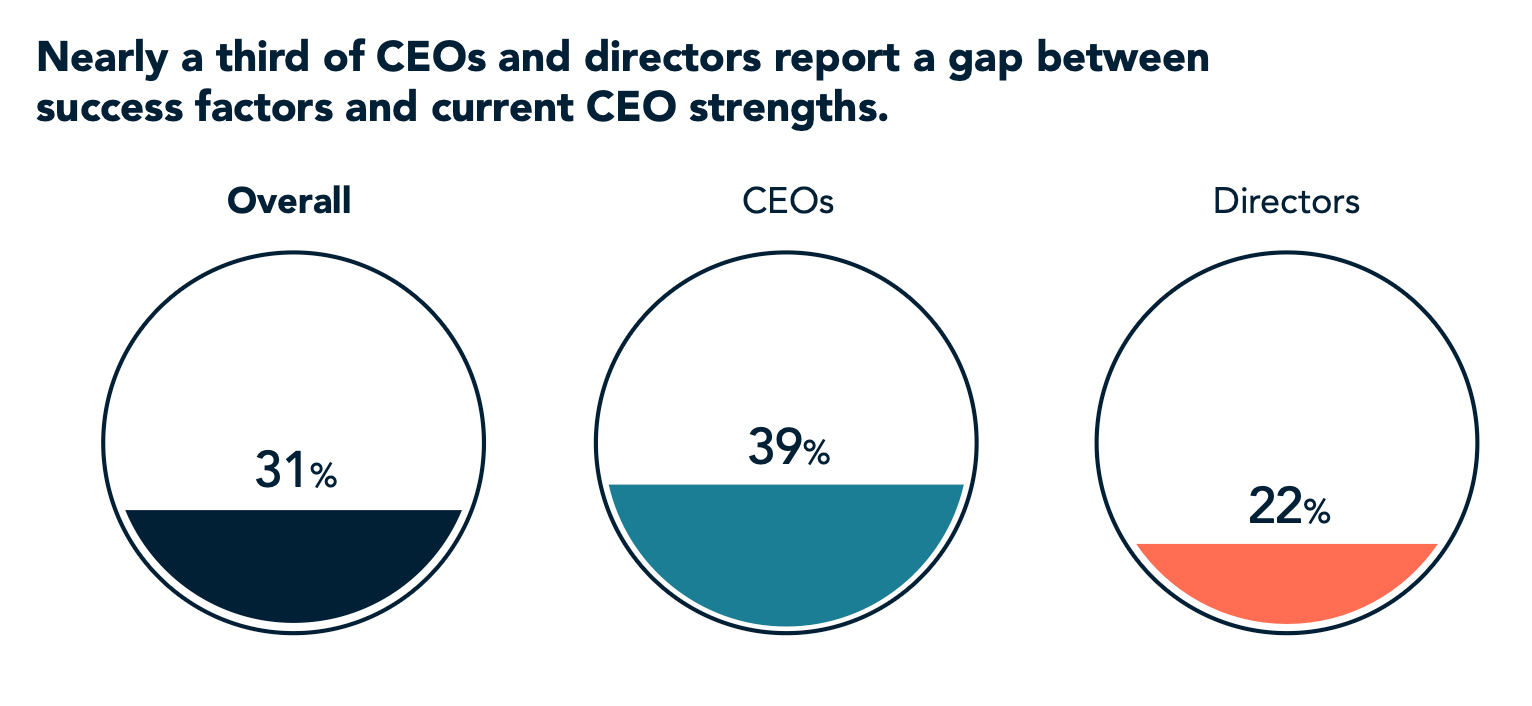
This is already apparent at the top of organizations. Nearly one-third (31%) of CEOs and directors report a gap between the capabilities their organizations expect to be most important for success over the next two to three years and the strengths of their current CEO. Without stronger alignment between strategy, leadership, and succession planning, organizations risk developing leaders for today’s needs rather than tomorrow’s challenges.
Aligned organizations outperform
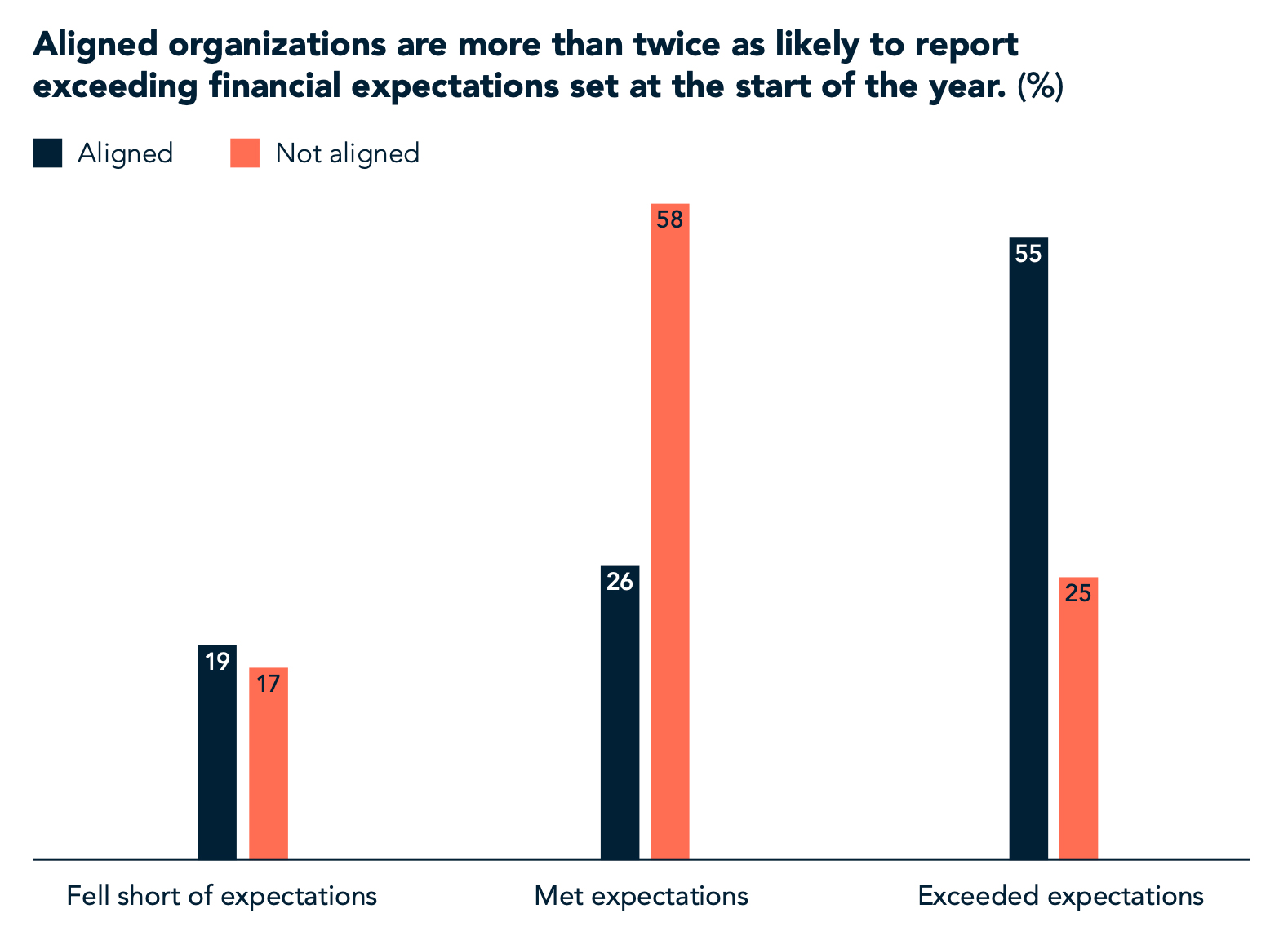
When organizations achieve enterprise-level alignment, the benefits are measurable. In India, more than half (55%) of aligned organizations report exceeding the financial-performance expectations they set at the beginning of the year, compared with just 25% of nonaligned organizations.
Aligned organizations are also more likely to report stronger performance in areas that are increasingly critical to navigating a complex business environment, including making effective decisions, managing volatility, and adopting AI at an appropriate pace. Together, these capabilities can help organizations respond more effectively to change and sustain performance over time.
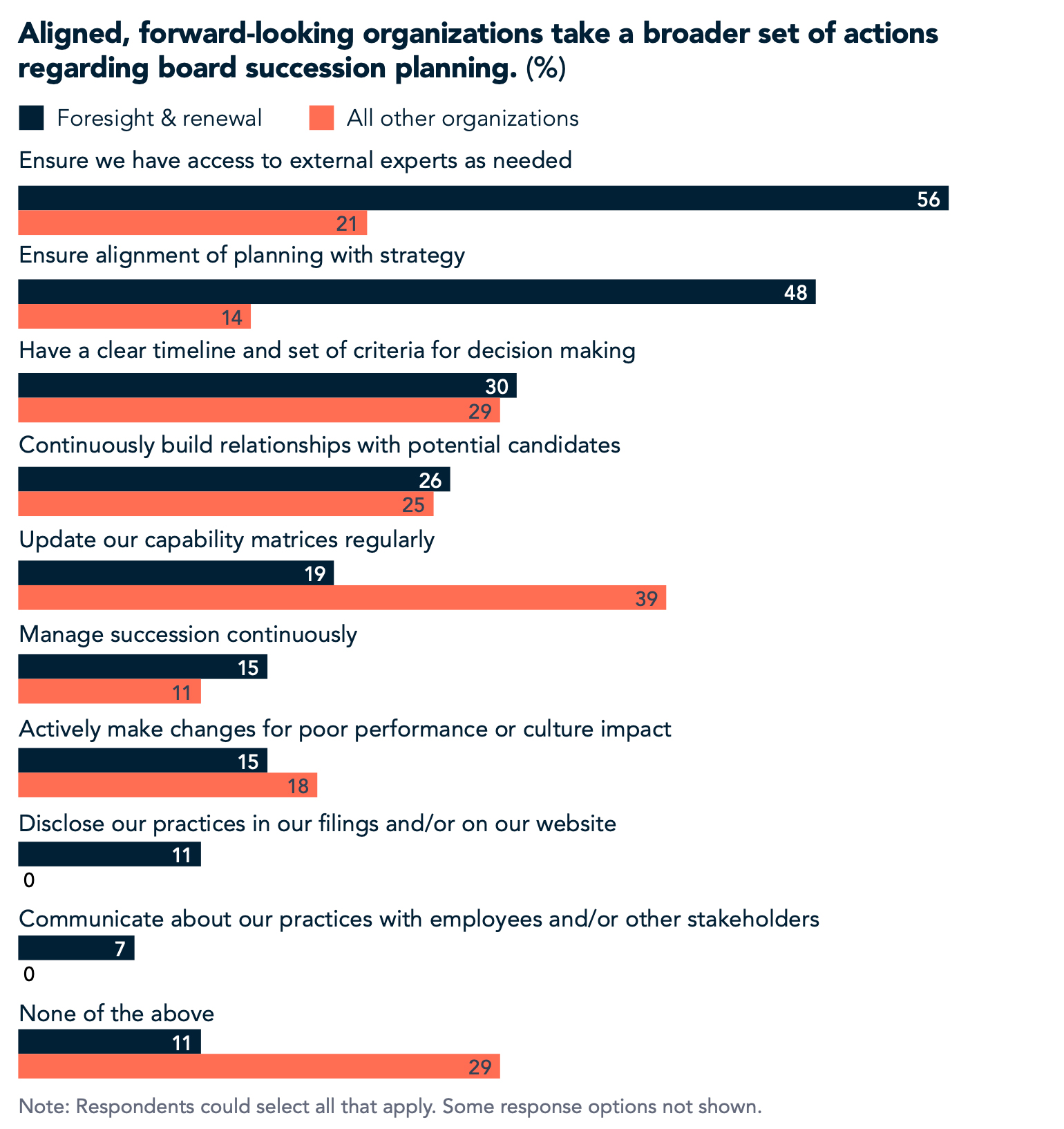
Beyond delivering results today, aligned organizations appear to invest more deliberately in protecting future performance through CEO succession planning. More than half (55%) consider CEO succession a top priority, compared with just 28% of nonaligned organizations. They are also more likely to take proactive steps to strengthen their succession pipeline, such as ensuring that at least one internal CEO candidate is identified at all times and regularly updating the CEO capability matrix to reflect future strategic needs.
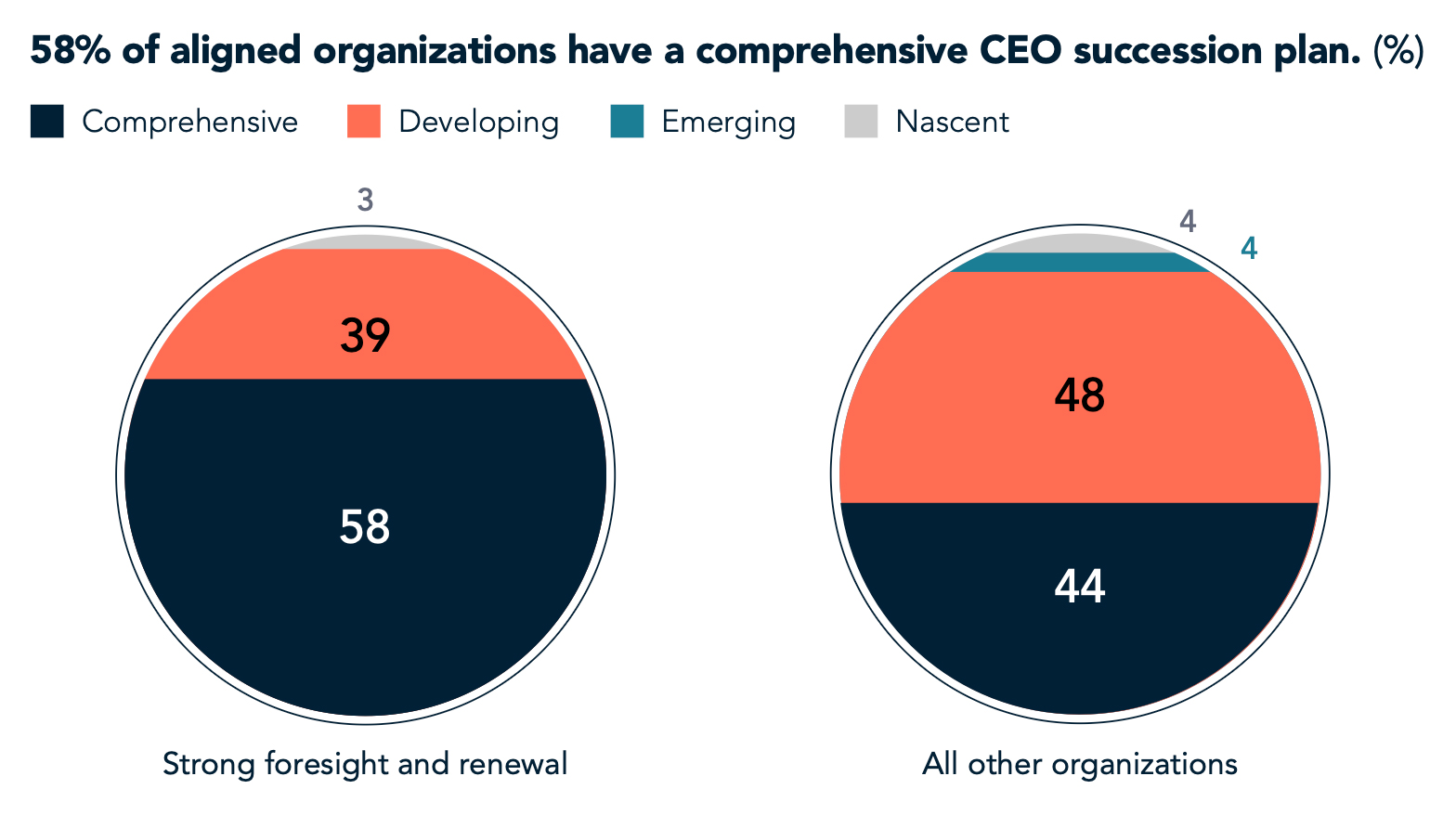
This greater emphasis on the future translates into more robust succession plans. 58% of aligned organizations have a comprehensive CEO succession plan, compared with 44% of nonaligned organizations. These plans go beyond identifying potential successors; they also include actions intended to keep the process effective in the long term. In this way, alignment supports stronger performance today and helps build the leadership continuity needed to sustain it into the future.
Continuous succession planning builds optionality
Enterprise-wide alignment is a strong foundation, but it is not sufficient on its own. Even aligned organizations recognize that their succession practices must evolve to keep pace with an increasingly unpredictable environment. In India, 88% of CEOs and directors expect changes to their strategy and operating model over the next two to three years, and 87% worry that their organization may be overlooking potential future leaders internally.
Optionality, then, becomes increasingly important. Different strategic scenarios may demand different leadership profiles, making it difficult to identify a single ideal successor far in advance. By developing multiple potential successors, organizations create several leadership pathways and greater flexibility to respond as market conditions, strategic priorities, and organizational needs change.
Some leaders may worry that ongoing succession discussions could disrupt the market, fuel rumors, or be interpreted as a signal about the incumbent CEO. However, normalizing succession planning as an ongoing organizational discipline can help reduce the stigma associated with these conversations. When succession is understood as a routine part of preparing for multiple possible futures—not an exercise triggered by concerns about a particular leader—it is less likely to be perceived as targeted and more likely to become embedded in an organization’s approach to managing leadership risk.
In a volatile environment, enterprise alignment is not a one-time achievement but a continuing discipline. The same is true of succession planning. The objective is no longer simply to identify a replacement for a future vacancy. It is to regularly assess leadership capabilities across a range of possible futures and develop those capabilities before they are needed.
Reference
1 See the online methodology for details on how the alignment score was calculated.
Stay connected
Stay connected to our expert insights, thought leadership, and event information.
Leadership Podcast
Explore the latest episodes of The Heidrick & Struggles Leadership Podcast.