Boards & Governance
Board Monitor United Arab Emirates 2026: Closing the gap between strategy and succession
Organizations in the United Arab Emirates have made progress in enterprise-wide alignment between strategy and succession planning. Boards that develop multiple future leaders will be better positioned to adapt as strategy and market conditions.
October 16, 2026
Organizations in the United Arab Emirates are operating in an environment marked by growing regional and global complexity alongside continued economic transformation. They are attracting capital and talent while navigating geopolitical conflict, shipping disruptions, and oil market volatility. As strategic priorities and operating conditions evolve, boards need to ensure that their own capabilities keep pace. This makes alignment between organizational strategy and board composition increasingly important and puts succession planning at the center of strengthening that alignment over time.

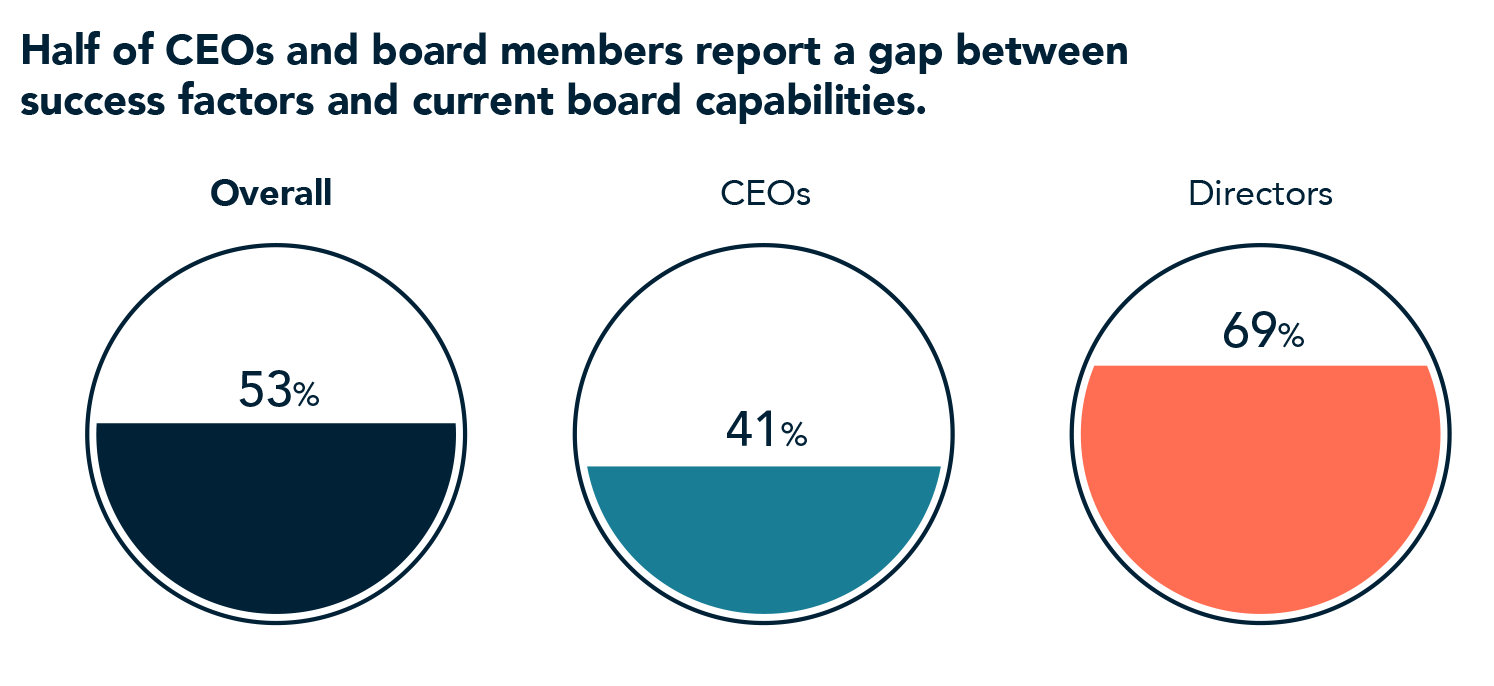
According to our recent survey of 1,033 CEOs and directors globally, including 59 in the UAE, nine out of ten expect their organization’s strategy and operating model to change over the next two to three years. 53% of CEOs and directors report a gap between what they need and their current board’s strengths. While this is quite high, it’s lower than other markets across the globe. In the U.S., for example, 61% of respondents report a capability gap.1
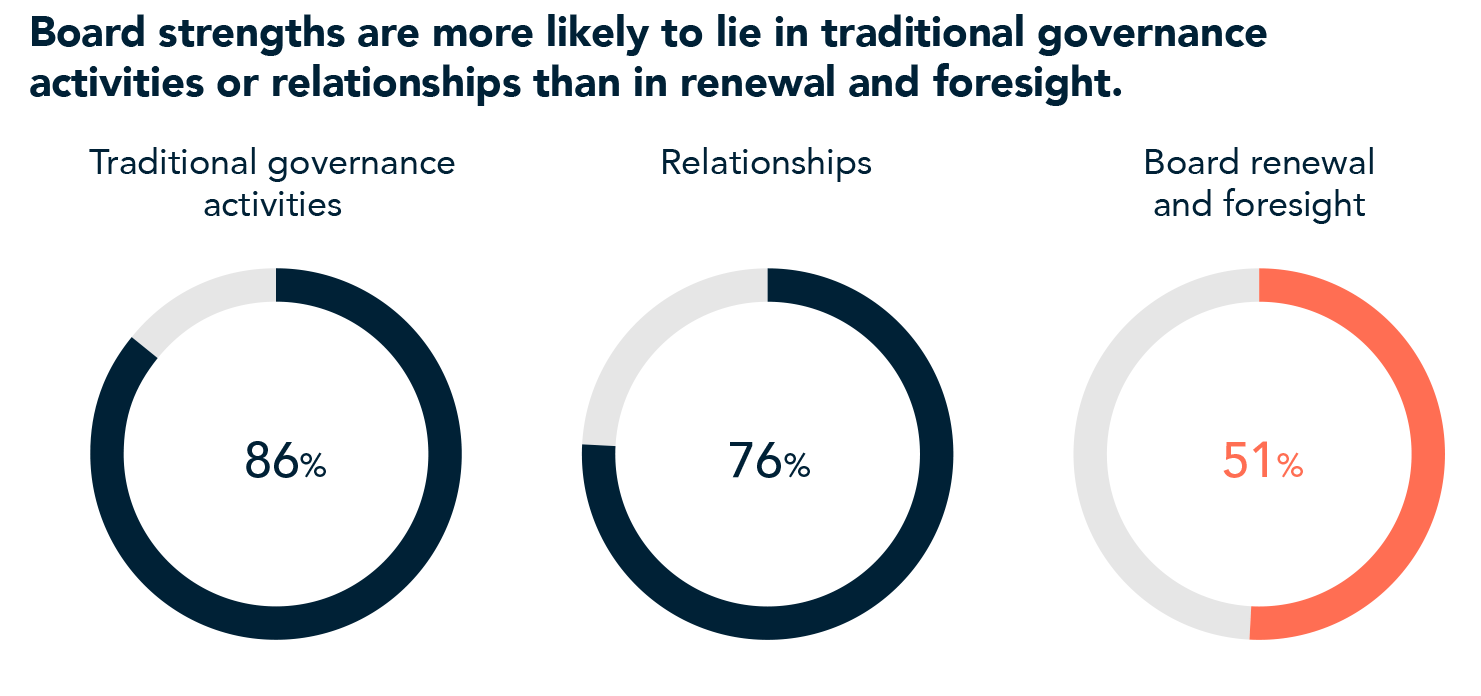
One contributing factor to these capability gaps may be that more than half of CEOs and directors in the Middle East reported in an earlier survey that they don’t regularly replace underperforming directors or directors whose skill sets may no longer align with organizational needs.2 This could explain why capability gaps persist rather than close over time: without a consistent cadence of turnover, boards miss the chance to bring in the skills and perspectives that evolving strategy demands. In addition, fewer boards demonstrate the foresight and capacity for renewal needed to stay effective as organizational needs evolve. CEOs and directors are considerably more likely to cite deep relationships as a board strength than they are to report strengths in foresight and renewal.
Analyzing alignment
Relationship-building is an important skill that helps boards provide effective oversight, constructively challenge management, and maintain productive engagement with executives. But strong relationships alone don’t close capability gaps. That requires a clear understanding of the skills the organization will need for future success—and enterprise- wide alignment on those skills.
In our previous work, board members and CEOs consistently said succession planning would improve with greater alignment between business strategy and succession planning strategy.3 This year, we dove deeper into this topic by asking about three aspects:
- Alignment among leaders
- Alignment between strategy and leadership pipeline management
- Alignment among executive management processes
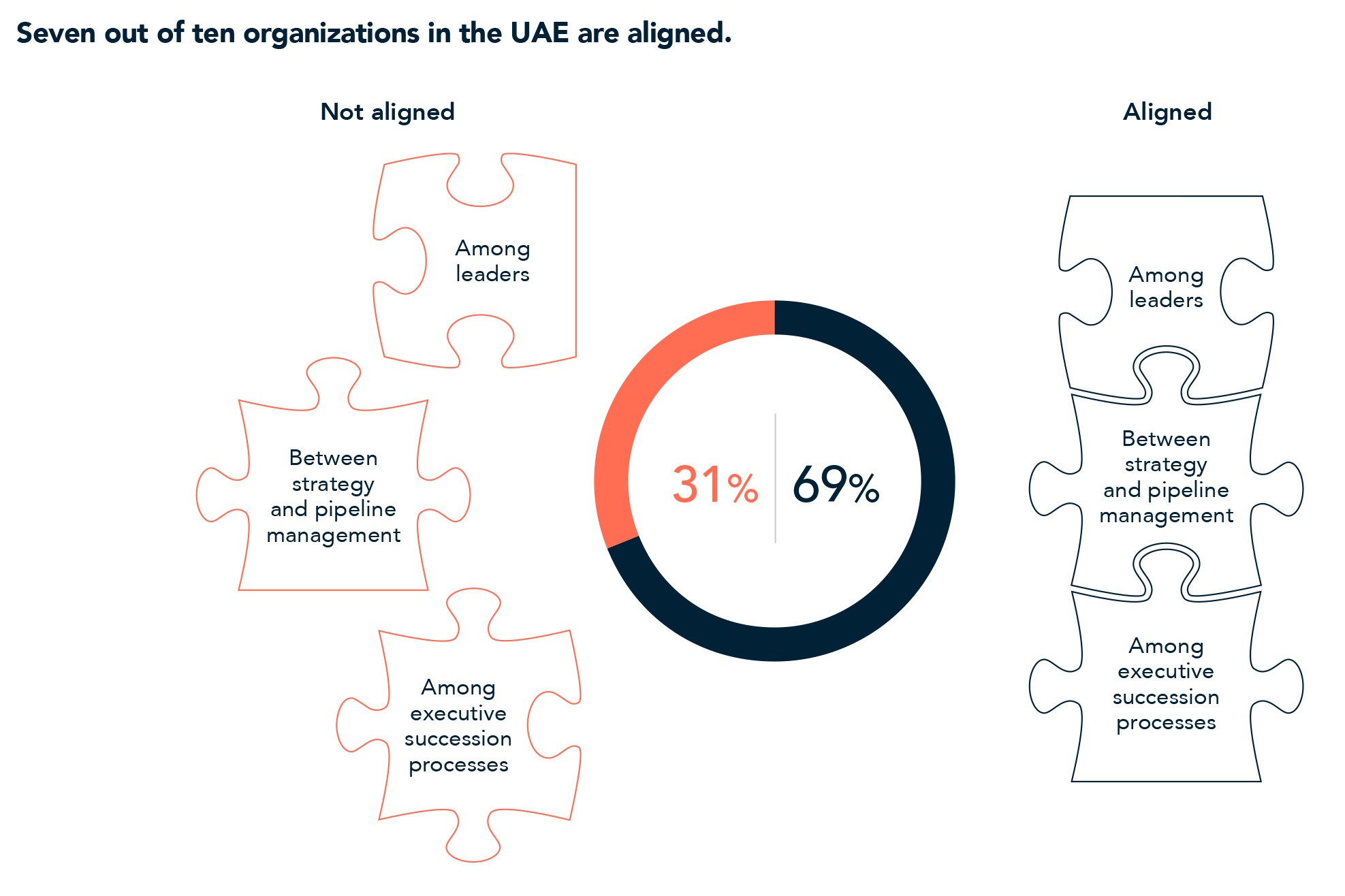
After assigning an aggregate "alignment score" based on responses, we found that organizations in the UAE are more aligned than in other markets: 69% are moderately or highly aligned compared to about half in other markets globally.4
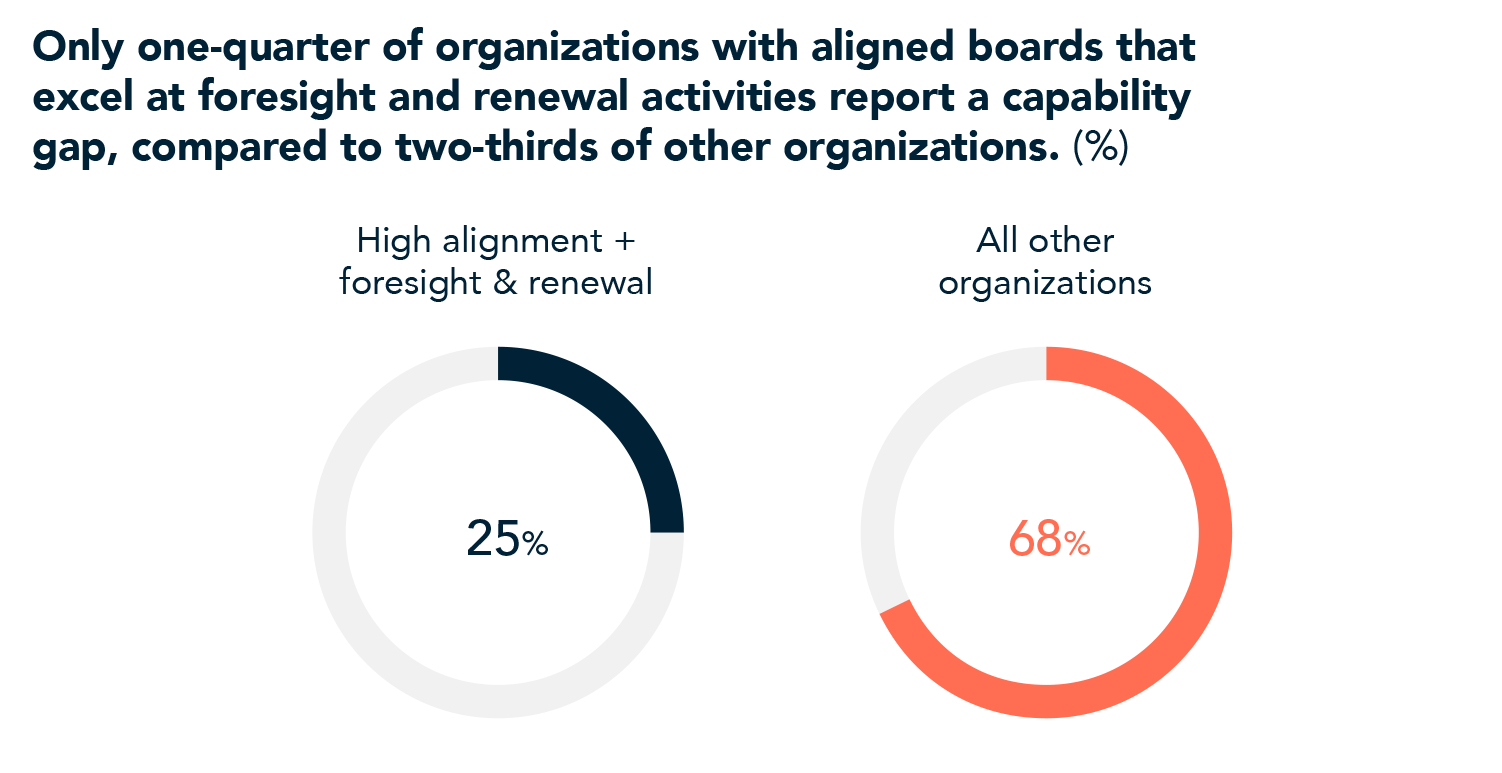
When companies are aligned and have strong foresight and board renewal capabilities, directors report measurable benefits. Only 25% of companies with aligned boards that excel at foresight and renewal activities report a capability gap, compared to 68% of all other companies.
While hardly surprising, the data raise the question of why more boards don’t prioritize enterprise-wide alignment, particularly around strategy and talent. It may be that boards often see their primary role as providing organizational oversight rather than shaping strategy. But strategy and risk management are closely linked, and since overseeing risk is unquestionably part of a board's mandate, engaging in strategic discussions should be as well.
Moreover, the combination of alignment and foresight predicts stronger financial performance relative to expectations. Only 5% of organizations with high alignment and a board that prioritizes foresight and renewal report that their financial performance in 2025 fell short of expectations set at the start of the year, compared to 16% of all other organizations.
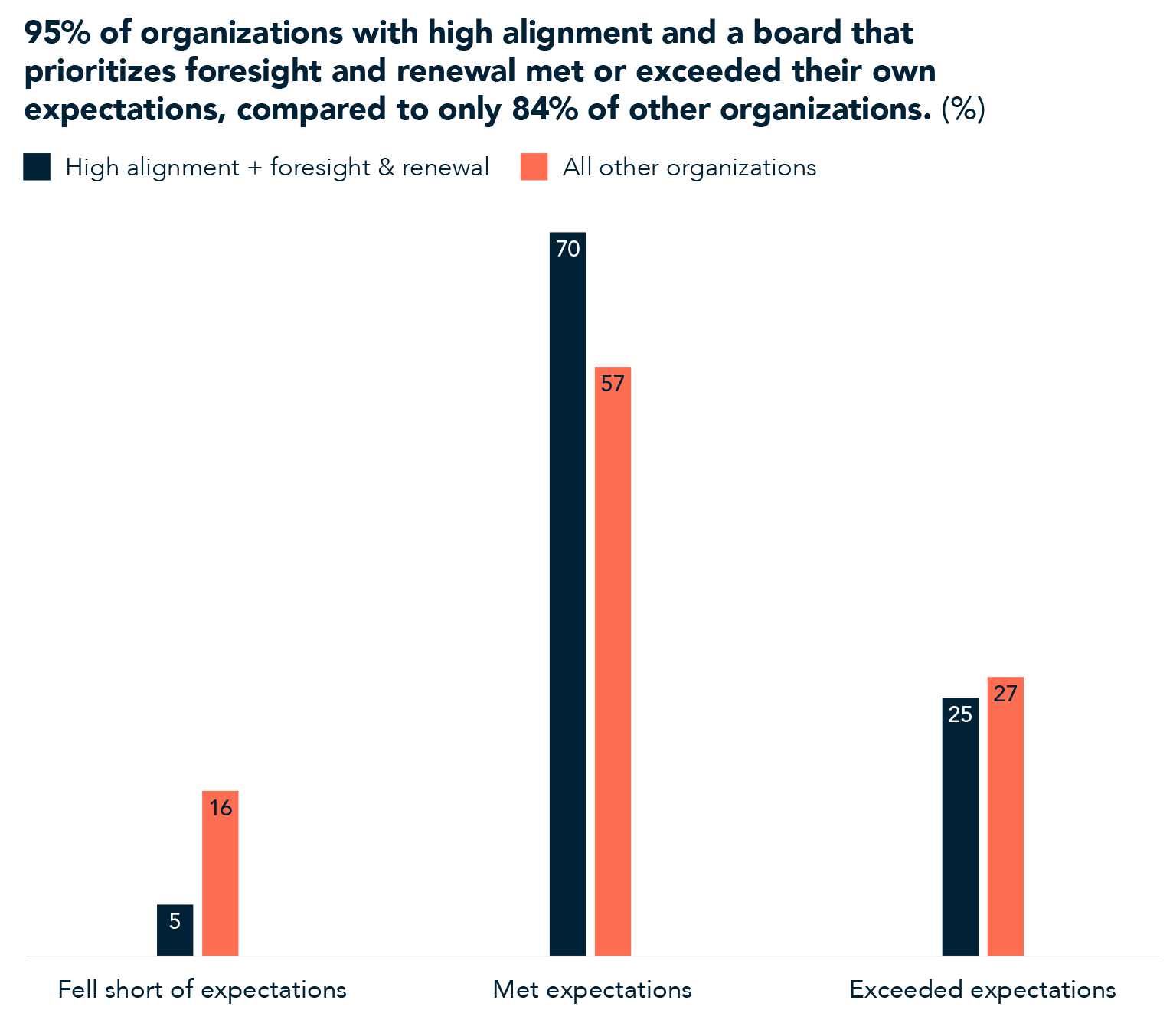
Directors at organizations with high alignment and focus on foresight also say they’re better at other leadership and governance activities, such as effective decision-making, volatility management, and adopting AI at the right pace. This suggests that when boards actively anticipate and adapt, they’re better positioned to support organizational performance.
An opportunity to strengthen succession planning
The UAE has a larger share of aligned organizations than other markets globally but still needs to place greater emphasis on board succession planning. Even among companies with high alignment, and strong foresight and renewal, only 5% treat board succession as a true priority. Fifty percent do not view it as a high priority.
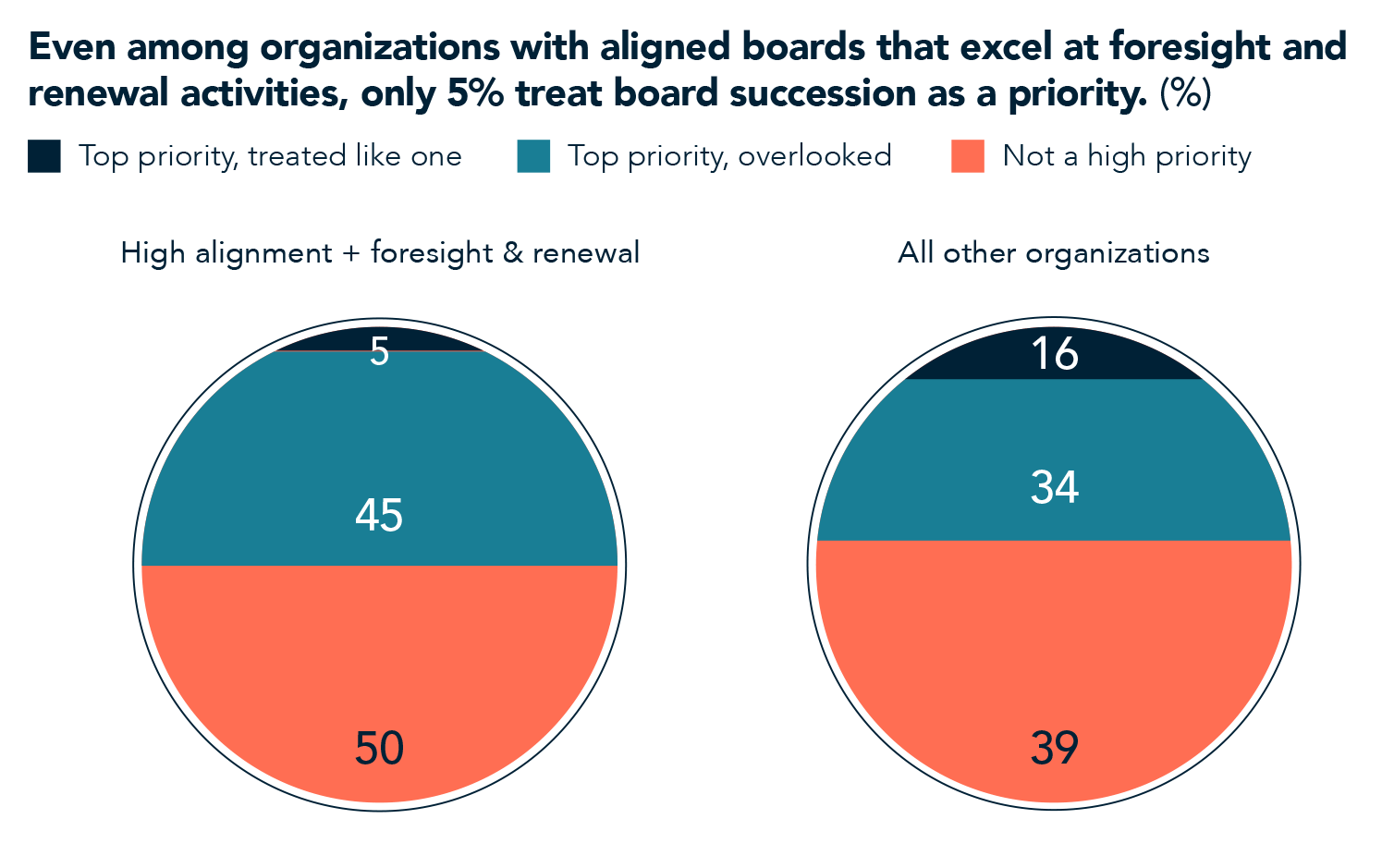
This means that even if boards see success now, they’re jeopardizing their future success by not having a clear plan. Boards with comprehensive succession plans take steps such as ensuring they have access to external experts and having a clear timeline and set of criteria for decision-making, which also contribute to improved performance. Boards in the UAE can also look to strengthen foresight and renewal capabilities by setting aside time to understand emerging strategic needs and to practice scenario planning.
Of course, some boards may be concerned about integrating new members more often. But the data suggest the opposite: boards at aligned companies tend to have more constructive, purpose-driven dynamics, so they’re often better at integrating new members. A continuous cadence of board refreshment can also help normalize director reviews as part of a consistent governance process. Establishing regular review intervals creates a more predictable and transparent approach to board composition, rather than addressing changes only as specific needs arise.
Finally, UAE boards should work to improve the alignment between strategy and talent. Financial benefits are most evident among organizations that combine strong alignment with foresight. Closing capability gaps alone isn’t sufficient; organizations must also ensure leadership systems support strategy execution.
UAE boards are better positioned than many global competitors to navigate disruption, but future success is far from guaranteed. Despite stronger alignment and fewer capability gaps, many boards don’t prioritize succession planning—putting at risk the governance effectiveness, financial performance, and future readiness that distinguish leading organizations,
References
1 “Board Monitor US 2026 | Future-focused boards: Linking renewal, alignment, and performance,” Heidrick & Struggles, May 12, 2026, heidrick.com.
2 Unpublished data from a survey reported in “CEO & board confidence monitor: Beating the succession planning paradox,” Heidrick & Struggles, October 30, 2024, heidrick.com.
3 For example, “CEO and board confidence monitor: Beating the succession planning paradox,” Heidrick & Struggles, October 30, 2024, heidrick.com, and “Route to the Top 2025 | The ascent redefined: Charting more effective routes to the summit,” Heidrick & Struggles, June 23, 2025, heidrick.com.
4 See the online methodology for details on how the alignment score was calculated.
Stay connected
Stay connected to our expert insights, thought leadership, and event information.
Leadership Podcast
Explore the latest episodes of The Heidrick & Struggles Leadership Podcast.