CEO Succession Planning
Route to the Top US 2026: Closing the CEO capability gap
Fortune 500 companies are increasingly appointing new CEOs who have prior experience in the role. However, a new survey finds that more than a third of US companies still don’t have a CEO with the capabilities the company needs to succeed in the near term. Some companies are planning their CEO successions more comprehensively and seeing greater success.
May 12, 2026
The CEO capability gap
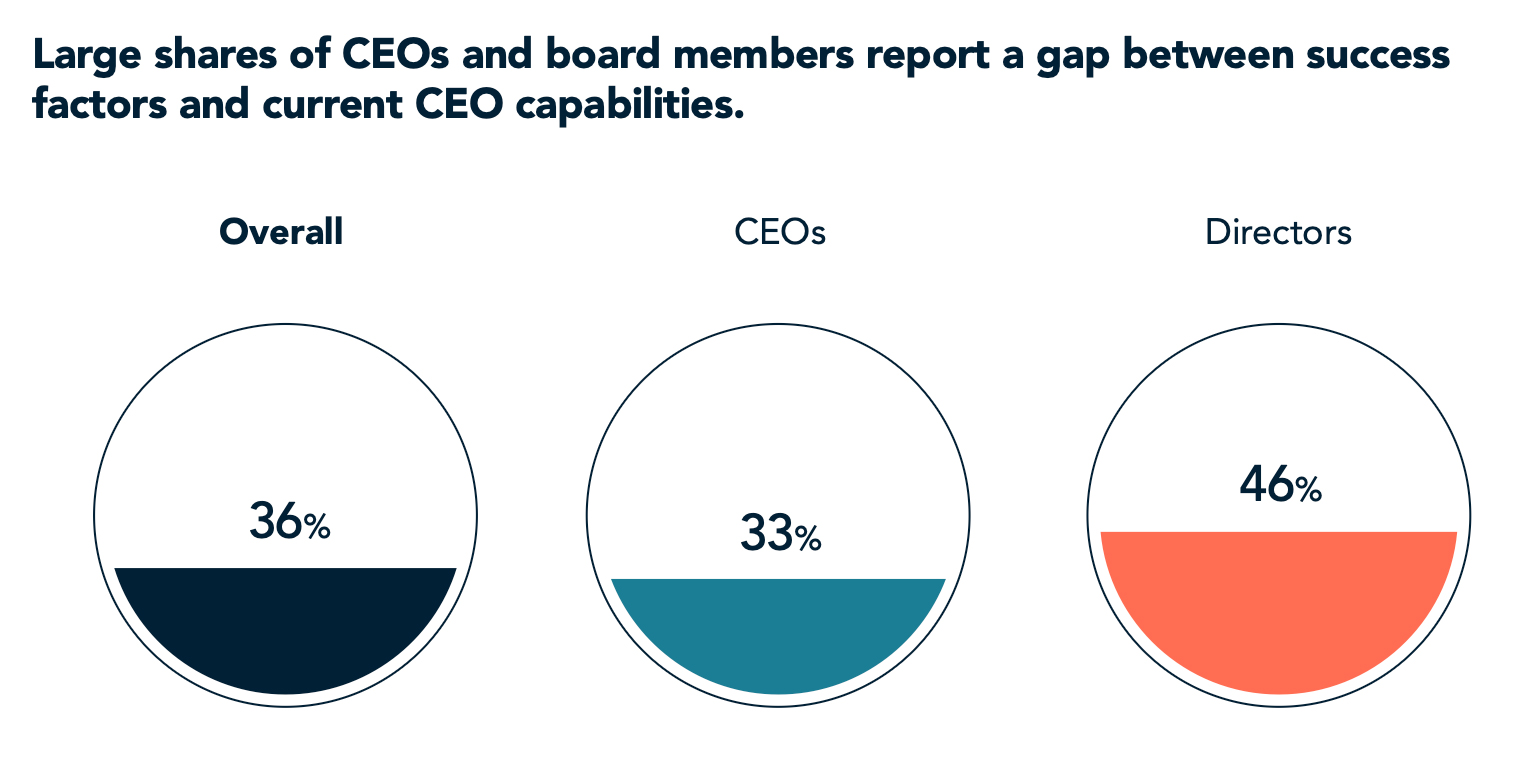
CEOs at more than a third of US companies do not have the capabilities their organization needs to succeed over the next two to three years. This is a core finding of a recent survey of 1,033 CEOs and board members globally, including 253 in the United States. The survey found a notable mismatch between the leadership and governance factors organizations say are most critical for their company’s success and their CEO’s greatest strengths. Directors expressed even more concern than CEOs themselves, with 46% of directors reporting a discrepancy.
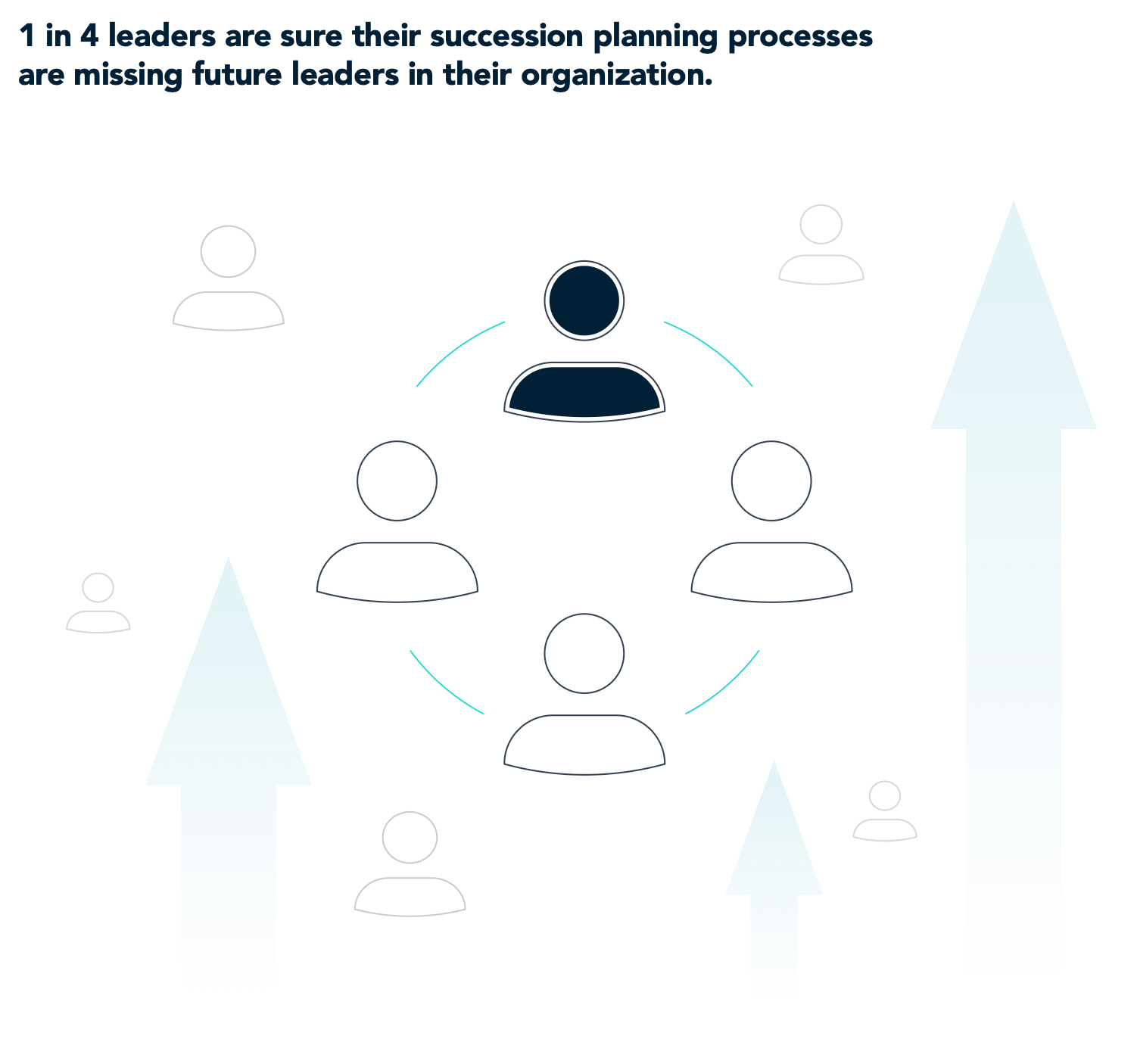
The data strongly suggest that these capability gaps are a symptom of inadequate succession planning: only 25% of leaders said they treat CEO succession planning as a priority, and one-third have no specific KPIs for their CEO succession planning process—meaning they lack basic mechanisms for evaluating whether it works.
This comes at a time when organizations expect persistent economic, geopolitical, and technological volatility. For the third year in a row, a parallel global survey found that these are the most significant issues organizations expect to face in the year ahead.1 Almost all leaders who responded to this survey—93%—expect changes to their strategy and operating model over the next two to three years, with half expecting significant change.
In this context, many companies where CEO succession is largely reactive, episodic, and under-resourced are putting themselves at significant risk.2

Our decades of experience working with leaders, combined with our research, have shown that leadership succession planning is most effective when closely aligned with business strategy. This applies at every level—board, CEO, and executive. Outcomes further improve when those succession practices are closely aligned with one another and carried out consistently and holistically across the organization.3
This insight led us to consider whether there are linkages between leadership alignment and the alignment of succession planning practices across the organization that can lead to more effective strategic planning. We examined three aspects of alignment together:
- Alignment among leaders
- Alignment between strategy and leadership pipeline management
- Alignment among executive development succession planning processes
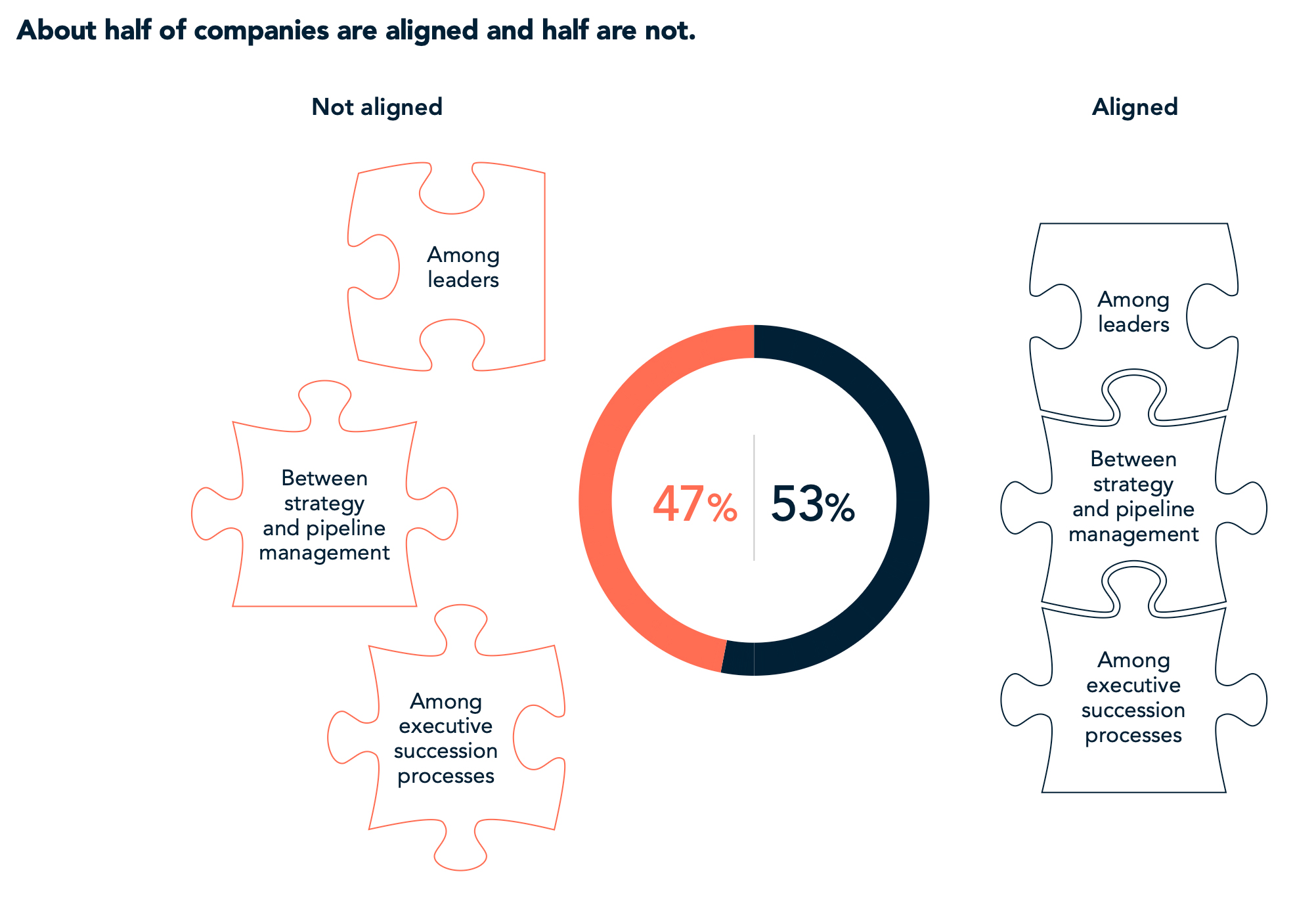
Looking across all three areas, we found that about half of companies are aligned and half are not.4 Interestingly, the majority of aligned companies are only moderately so, meaning alignment is fragile, even for those in the better-performing group.
This analysis allows us to understand the combined performance effects of having the right CEO now (which is, of course, good for performance) and an organization that is aligned across the enterprise.
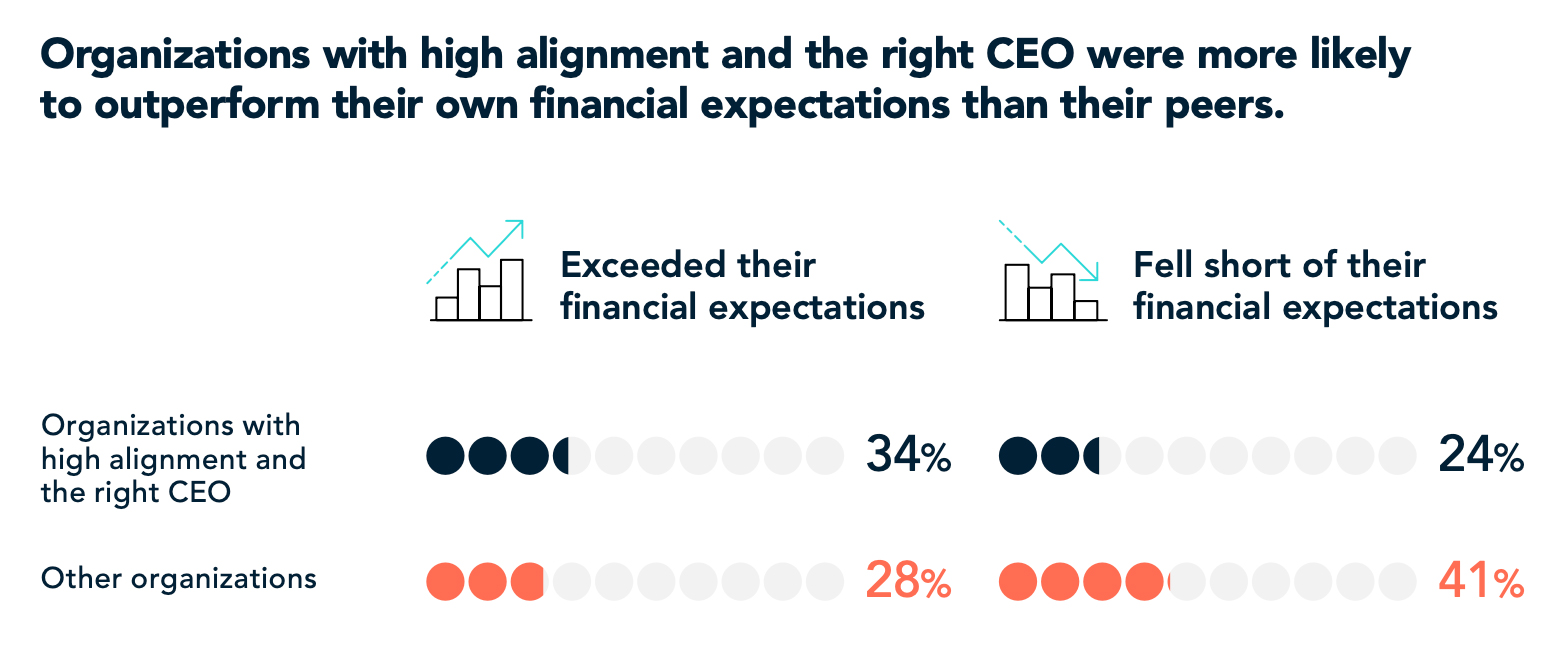
Specifically, 34% of organizations with high alignment and the right CEO—one whose strengths match the factors respondents say are most vital for future success—exceeded their financial expectations at the beginning of the year; only 28% of all others did the same. And just 24% of organizations with high alignment and the right CEO fell short of their financial expectations, compared to 41% of other organizations.
Further, the data show a directionally positive relationship between this combination and higher total shareholder return (TSR) among publicly traded companies. (While the base size for this report is too small to report a specific TSR boost, this finding is consistent with other research we have conducted5 and we are designing additional research to further explore the effects on TSR.)
We believe this combination of alignment and the right CEO is such a powerful predictor of performance because the CEO who is right for this moment may not be right for the next phase of an organization’s evolution. Long-term strategic alignment, including investing in succession planning and executive development, gives a company the flexibility and depth to understand and find the right CEO for the future. Leaders at these organizations point to particular strengths in managing volatility effectively and having a clear, shared view of where the organization is headed.
Still, almost every company can do more to improve its CEO succession planning
Aligned companies with the right CEO are more likely to have a comprehensive CEO succession process, including elements such as ensuring they have the external experts they need, communicating transparently with internal candidates, and actively making changes based on poor performance or cultural impact. And many actively measure their results: 79% have at least one specific metric for success, such as regularly benchmarking their practices against peers or treating the pool of candidates as a KPI for the CEO and CPO.
However, even these companies aren't doing everything they could. Only half of them have what we consider a comprehensive CEO succession plan: one that takes a number of concrete steps to align planning with strategy, continuously builds relationships with potential internal candidates, and regularly updates capability matrices.7 As we have written elsewhere 8, just because companies view CEO succession planning as a priority doesn’t mean they treat it as such.
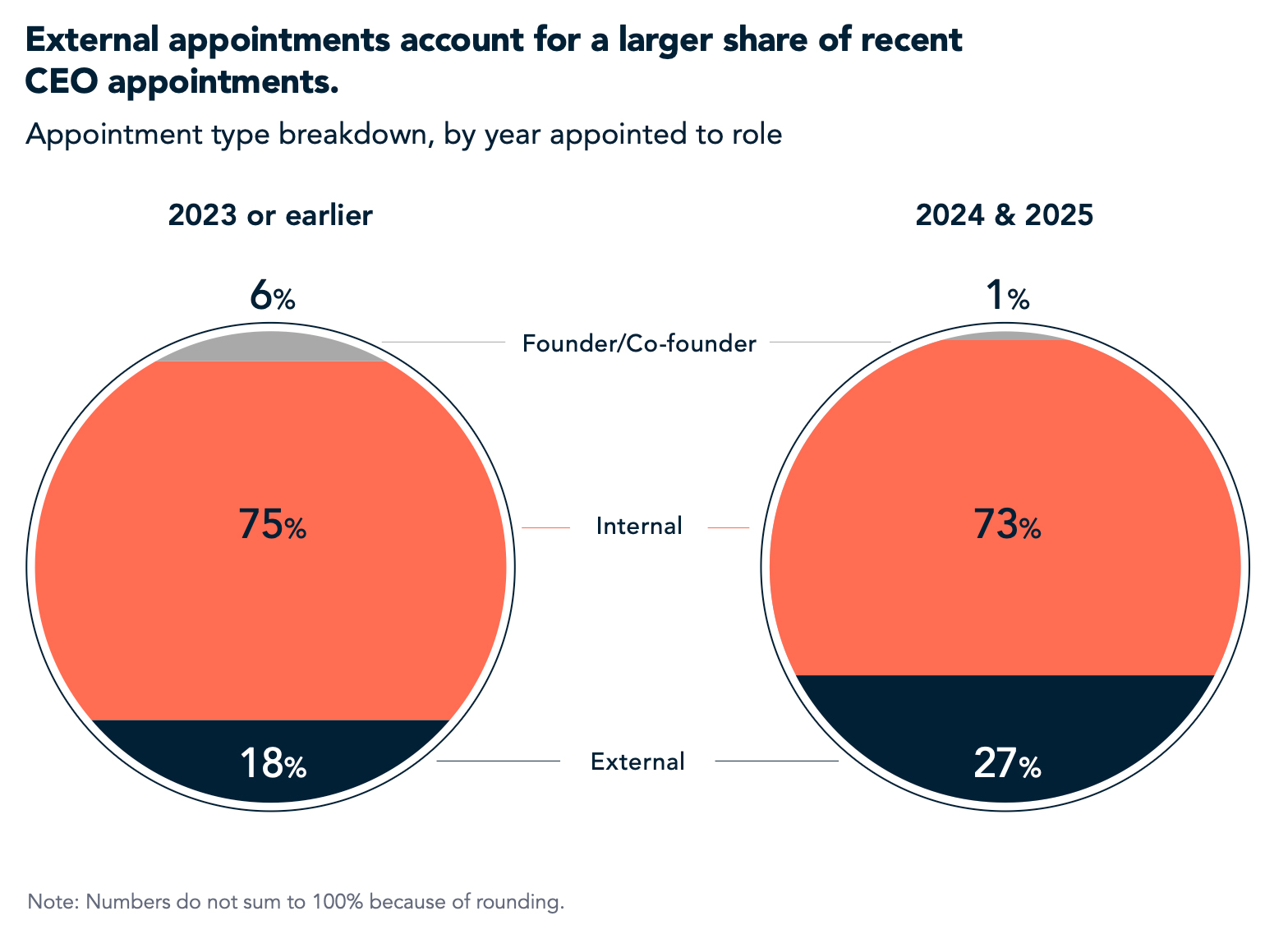
The challenges of building a robust internal pipeline are certainly part of the reason more companies are looking externally for new leaders. More than one-quarter of all organizations (including those that are highly aligned and have a CEO who matches their needs) expect to find new leaders outside their organization. These expectations match current market realities: 27% of Fortune 500 CEOs appointed since 2024 have been external hires, up from 18% prior to 2024.9
Practical next steps
At a time when almost all organizations expect significant strategic change in the near future, many find themselves in a precarious position—some with the wrong leader in place, and more with fragile alignment across the organization that could hinder leadership planning. It may seem simplistic to suggest companies should appoint the right CEO and achieve enterprise-wide alignment; however, it must be said, because data indicate that too many organizations are not doing so.
Though the attributes of the right CEO are unique to each organization, it is clear that comprehensive succession planning is inextricably linked to improved performance. Starting by ensuring the current CEO is the right one, and then working to improve alignment throughout the organization, will support both current performance and future success, including developing multiple potential future leaders. In other words, aligned companies that have the right CEO give themselves a better opportunity to find the next right CEO.
It is also clear that in today’s context, boards need to consider an increasingly wide range of potential attributes for their next CEOs. Today’s CEOs and potential CEOs were shaped by leadership development and promotion patterns over the last few decades. Tomorrow’s CEOs are being shaped right now by the development opportunities they’re given, the leaders who champion them, and the organizational cultures that stretch or constrain them. Succession planning will be most effective when it is a proactive, long-term effort focused on building adaptable leaders with a broad range of knowledge and who are capable of navigating conditions that organizations cannot yet foresee.
Organizations can begin this work by:
- Establishing practical best practices that foster alignment, such as regular evaluations, more frequent and substantive discussions on strategy and succession, and immersive sessions—whether in the field or focused workshops—that allow CEOs to engage more deeply with the board and executive leadership team
- Routinely assessing the needs of the organization, both in the immediate term and more distant future, alongside the CEO’s key strengths, and candidly identifying gaps
- Moving beyond a simple theoretical recognition of the importance of succession planning by taking concrete steps to implement it in practice, beginning with the executive team and extending deeper into the organization
Treating leadership readiness with the same rigor as other strategic priorities can create meaningful advantages in financial performance, organizational effectiveness, and succession readiness. The question is whether that commitment comes now or after the cost of delay becomes too obvious to ignore.
References
1 “2026 CEO & Board Confidence Monitor,” Heidrick & Struggles, February 12, 2026, heidrick.com.
2 “Route to the Top 2025 | The ascent redefined: Charting more effective routes to the summit,” Heidrick & Struggles, July 23, 2025, heidrick.com.
3 “Route to the Top 2025 | The ascent redefined: Charting more effective routes to the summit,” Heidrick & Struggles, July 23, 2025, heidrick.com; “CEO and board confidence monitor: Beating the succession planning paradox,” Heidrick & Struggles, October 30, 2024, heidrick.com. Additional research forthcoming.
4 See the online methodology for details on how the alignment score was calculated.
5 New research forthcoming.
6 “Board Monitor US 2026 | Future-focused boards: Linking renewal, alignment, and performance,” Heidrick & Struggles, May 12, 2026, heidrick.com.
7 See the online methodology for details on the categorization of board succession plan maturity.
8 “Route to the Top 2025 | The ascent redefined: Charting more effective routes to the summit,” Heidrick & Struggles, July 23, 2025, heidrick.com.
9 To learn more about the backgrounds and routes to the top of the current Fortune 500 CEOs, see our interactive data dashboard.
Stay connected
Stay connected to our expert insights, thought leadership, and event information.
Leadership Podcast
Explore the latest episodes of The Heidrick & Struggles Leadership Podcast.