CEO Succession Planning
Route to the Top Australia 2026: The case for optionality
Most organizations expect their strategy to change in the coming years, yet far fewer have adapted how they identify, develop, and prepare future leaders. Organizations that focus on enterprise-wide alignment and continuous succession planning are better positioned to appoint the right leader for future success.
September 21, 2026
As geopolitical tensions, the emergence of artificial intelligence (AI), shifting workforce expectations, and economic volatility continue to reshape the business landscape, four out of five Australian CEOs and directors expect their organization's strategy and operating model to change over the next two to three years.
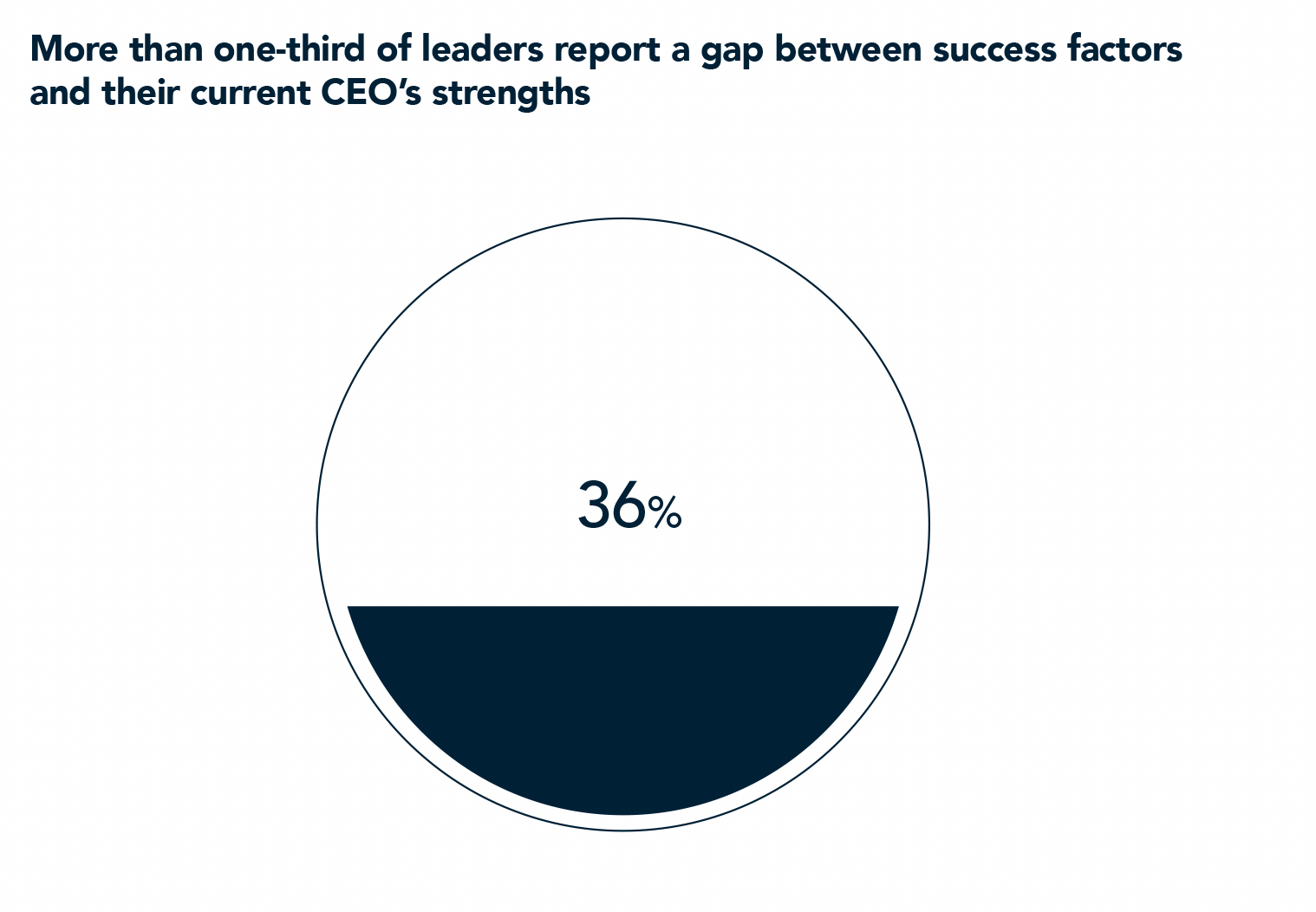
Yet, despite anticipating profound shifts, many companies continue to approach CEO selection and succession planning in the same way they always have. As a result, leadership requirements are not keeping up with the pace of change. More than one-third of Australian CEOs and directors report a gap between the capabilities their organization will need for near-term success and the greatest strengths of their current CEO.
This misalignment could result in missed opportunities. Our recent survey of 1,033 CEOs and directors globally, including 53 in Australia, finds that organizations see measurable improvements when they have both a CEO whose strengths fit their core success drivers, and coordinated, company wide alignment, especially between strategy and succession planning.
In light of this finding, rather than seeking to identify a single "ideal" successor, boards should focus on maximizing optionality—continuously assessing the capabilities different strategic scenarios may require, developing multiple potential leaders, and ensuring CEO selection evolves with the business environment. In an increasingly volatile world, the strongest succession plans are those that give organizations the flexibility to appoint the right leader, regardless of what the future brings.

Eighty-one percent of CEOs and board members in Australia expect their organization's strategy and operating model to change over the next few years. According to our recent Confidence Monitor survey, the share of CEOs and directors who expect AI to be among the most significant issues facing their organization in the next year grew from 26% in 2025 to 44% in 2026. Yet CEO hiring patterns in the ASX 100 have not materially shifted, and CEOs’ profiles remain remarkably consistent with historical norms.
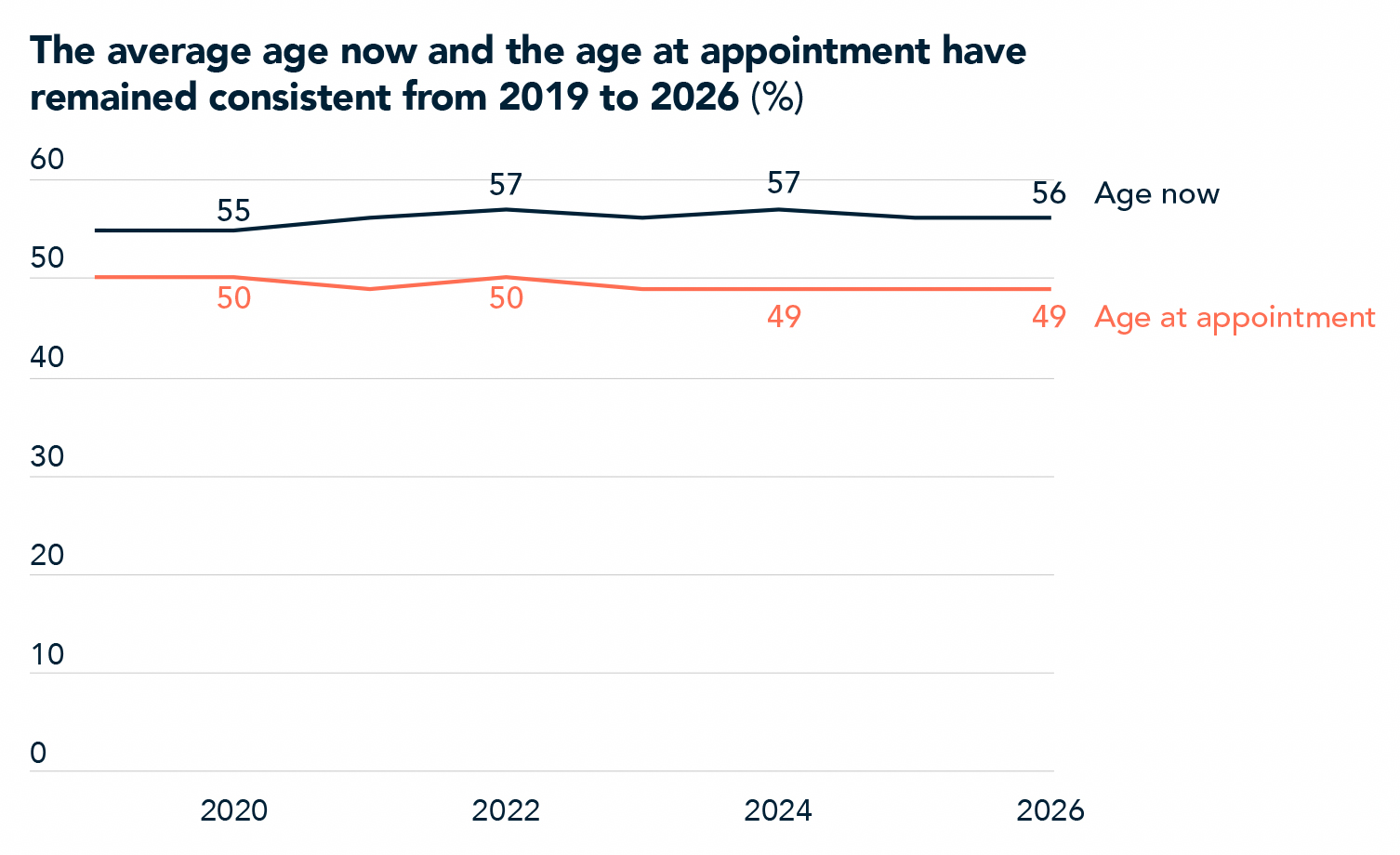
Forty percent of CEOs have previously served as a CEO elsewhere—an increase from 2025, but broadly in line with longer-term trends. The average age of newly appointed CEOs is 49, unchanged since we began tracking in 2019. Similarly, the prevalence of cross-sector experience and the balance between internal and external appointments closely match historical patterns.
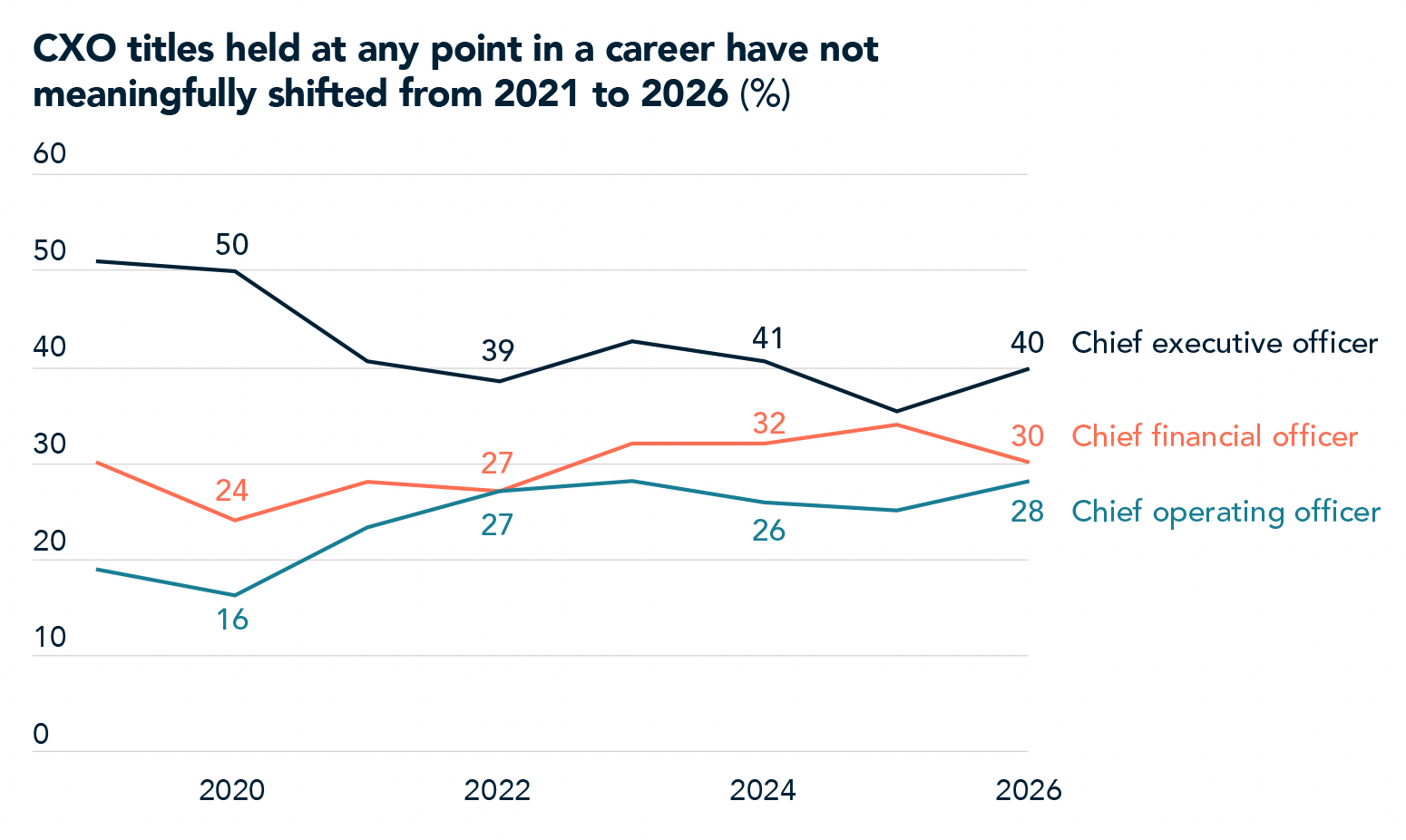
However, within these continued trends, two distinct pathways to the CEO role have emerged. External appointments continue to prioritize proven leadership experience, with 62% of externally appointed CEOs having previously served as a CEO elsewhere. Internal appointments, by contrast, reflect boards' willingness to rely more on deep organizational knowledge than prior CEO experience. We see that many boards view internal CFOs with meaningful operational experience as particularly strong candidates for the CEO role. As a result, only 26% of internally appointed CEOs have previously served as a CEO elsewhere. Internal appointees tend to bring extensive organizational tenure, averaging 11 years with the company before their appointment as CEO.
Internal or external, most companies continue to rely on traditional CEO selection criteria, which may limit a company’s ability to respond to change. More than one-third (36%) of CEOs and directors who report a gap between the capabilities required for future success and their current CEO’s greatest strengths have not yet acted on that recognition.
Too few organizations achieve enterprise-wide alignment
The high number of companies with a gap between what they need to reach their strategic goals and their current leaders highlights a persistent weakness in succession planning.
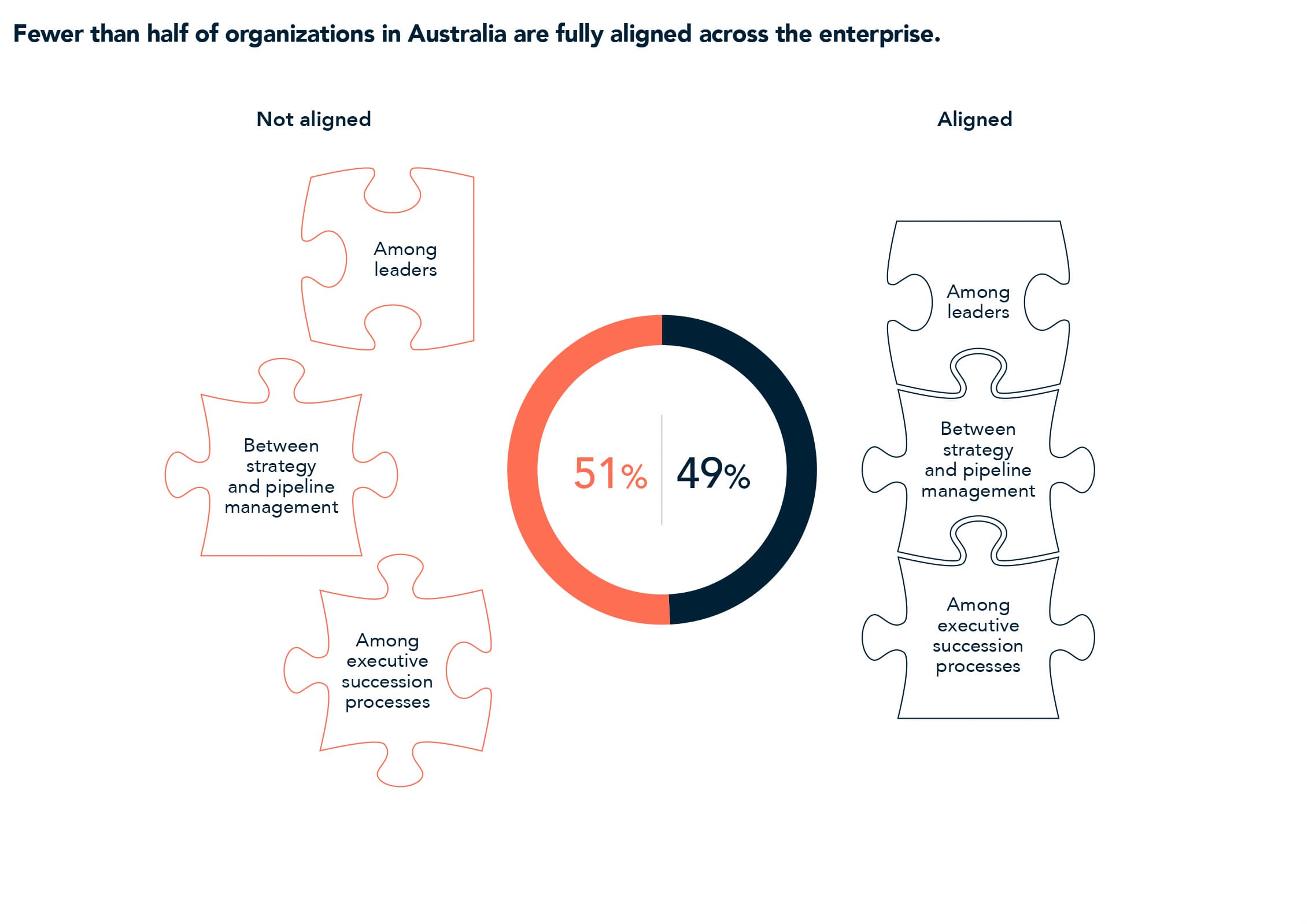
This insight led us to consider whether there are specific linkages between leadership alignment and succession planning practices across the organization that could lead to more effective strategic planning. We examined three aspects:
1. Alignment among leaders
2. Alignment between strategy and leadership pipeline management
3. Alignment between executive development and succession planning processes
Looking across all three areas, we found that fewer than half of companies in Australia are aligned across all three.1 And the majority of aligned companies are only moderately so, meaning alignment is fragile, even for those in the better-performing group.
The right CEO unlocks the full benefits of alignment
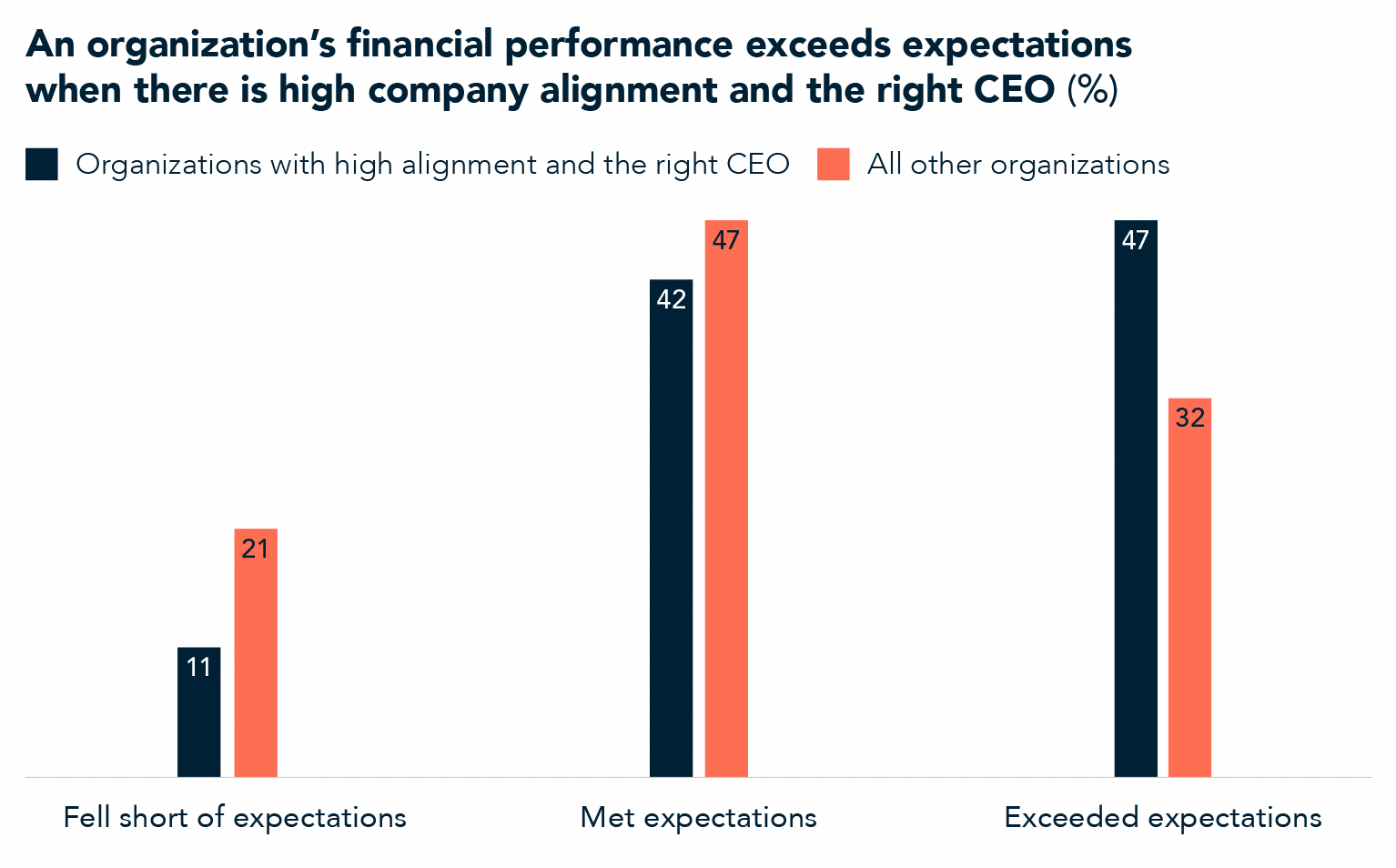
The benefits of alignment become even more pronounced when organizations pair alignment with a CEO whose strengths match those most critically needed for the future success of the business. Nearly half (47%) of CEOs and directors at these organizations say they exceeded their own financial performance expectations set at the start of the year, compared with just 32% of those at other companies. They are also more likely to report stronger organizational outcomes, including managing volatility effectively and adopting AI at an appropriate pace—both of which support current performance and strengthen long-term competitiveness.
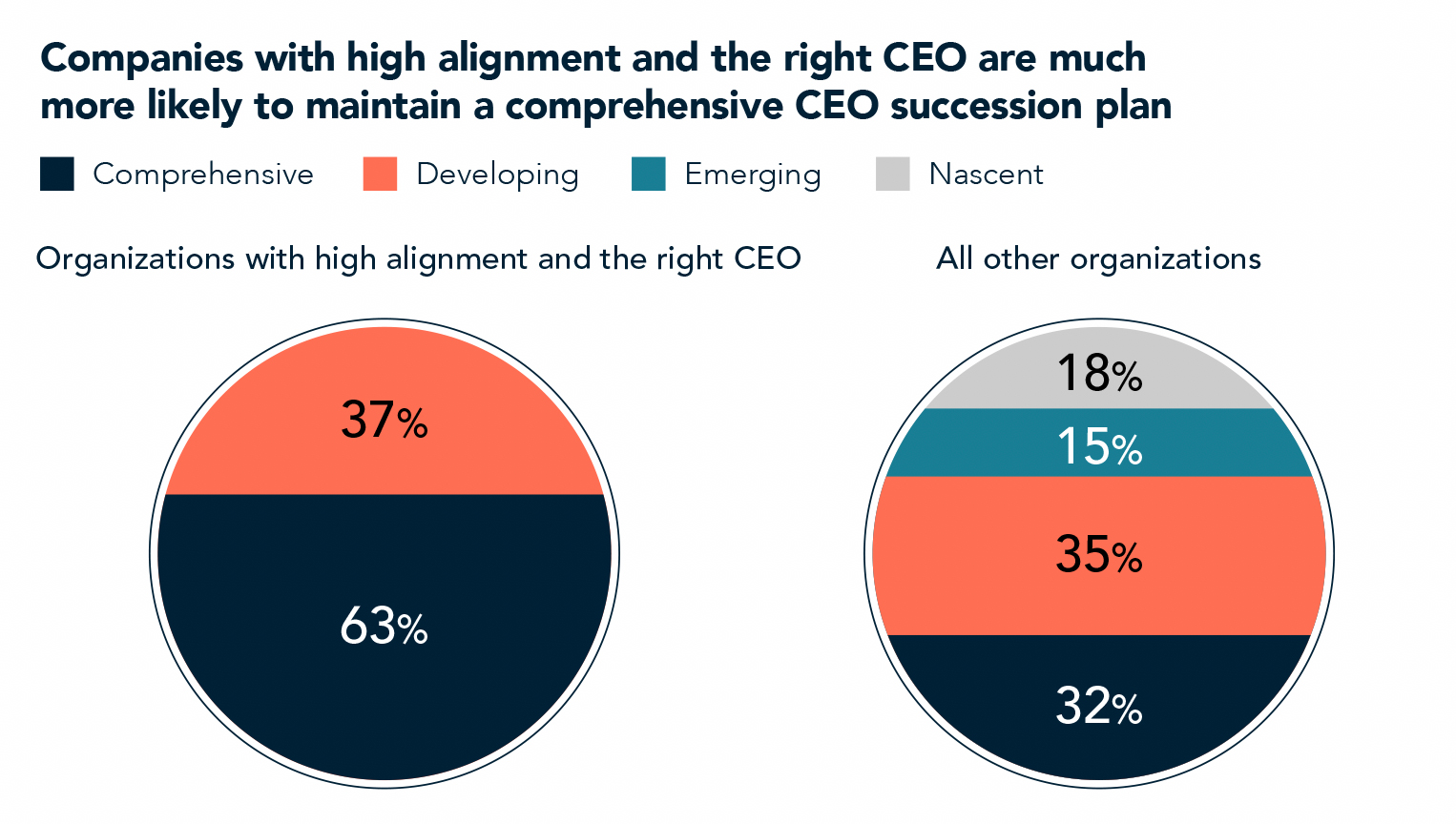
The organizations with processes in place to select the right CEO can better meet today's challenges, as well as develop organizational capabilities that will help execute future strategic direction. Indeed, companies with both strong alignment and the right CEO are substantially more likely to maintain a comprehensive CEO succession plan. Nearly two-thirds report succession processes that go beyond identifying potential successors to include continuous talent management and active intervention when performance falls short, compared with just 32% of other organizations.
Organizations with high alignment and the right CEO also appear to have stronger leadership confidence. Thirty-seven percent of leaders at these organizations say they are not at all concerned about overlooking potential future leaders, compared with only 21% of their peers elsewhere. That confidence matters because different strategic scenarios often call for different leadership profiles. By developing multiple credible CEO successors, organizations preserve greater strategic flexibility, enabling them to match future leaders to the opportunities and challenges that emerge.
Build leadership optionality before it is needed
Regardless of where an organization stands today, strengthening alignment and building leadership options for multiple future strategic scenarios should be an ongoing priority. Even among organizations that combine enterprise-wide alignment with the right CEO, there is still significant room for improvement. For example, only roughly one-third of organizations report constantly building relationships with potential CEO candidates or regularly updating the capability matrices that underpin succession decisions.
In parallel with developing more robust processes, boards should remember that enduring leadership qualities become even more valuable in periods of sustained uncertainty, because such qualities enable leaders to adapt successfully across a wider range of circumstances. Characteristics such as curiosity, humility, open-mindedness, and the ability to collaborate enable leaders to navigate complexity and inspire followership. These qualities should not be mistaken for indecisiveness or a reluctance to make difficult choices; rather, they allow leaders to challenge assumptions, foster constructive debate, and build the trust necessary for effective decision making.
With more than 30% of Australia's population born overseas, these capabilities are particularly relevant—leaders increasingly need to navigate diverse perspectives and experiences. Empathy, cultural awareness, and adaptability have become essential attributes for guiding organizations and engaging a changing workforce.
Some boards may hesitate to adopt a more constant approach to CEO succession planning out of concern that it could create uncertainty or fuel speculation in the market. However, the current environment calls for more frequent assessments of leadership readiness. As organizations shift from emphasizing experience alone to identifying perennial leadership qualities and leadership profiles suited to a range of potential strategic scenarios, succession planning becomes less about evaluating a single individual and more about constantly aligning leadership capabilities with evolving business needs. When this mindset becomes a normal part of governance, succession planning is less likely to be stigmatized or interpreted as targeting any one executive.
In a volatile environment, CEO succession planning can no longer be viewed as identifying a single replacement for an eventual vacancy. It needs to be a continuous process of anticipating the leadership capabilities an organization may need across a range of possible futures, and ensuring those capabilities are developed well before they are required. When done effectively, this enables organizations to adapt leadership as strategy evolves rather than forcing strategy to adapt to leadership.
Reference
1 See the online methodology for details on how the alignment score was calculated.
Stay connected
Stay connected to our expert insights, thought leadership, and event information.
Leadership Podcast
Explore the latest episodes of The Heidrick & Struggles Leadership Podcast.