CEO Succession Planning
Route to the Top Saudi Arabia 2026: Great boards build options, not successors
Many organizations in Saudi Arabia recognize their strategies will evolve over the coming years, but relatively few are shifting their leadership capabilities to reflect those anticipated changes. Organizations that cultivate multiple future leadership options while aligning succession, strategy, and leadership could gain a lasting advantage in performance and resilience.
September 09, 2026
CEO succession has always been one of the board's most important responsibilities. But as organizations across Saudi Arabia navigate the ongoing effects of war, heightened geopolitical tension in the Middle East, and broader global economic uncertainty, it’s no surprise that volatility is having direct implications on organizations’ priorities. Even for companies that are not directly affected, conflict in the region is influencing investor sentiment, supply chains, energy markets, trade flows, and the overall risk environment.
Our recent survey of 1,033 CEOs and directors globally, 56 of whom are in Saudi Arabia, suggests that Saudi organizations have made significant progress in aligning leadership with strategy and embedding succession planning into governance. Yet many continue to prepare leaders for today’s business rather than for tomorrow’s. In an uncertain environment, positioning yourself for the future requires organizations to build a portfolio of leaders capable of succeeding across multiple strategic scenarios, rather than searching for a single successor.

Four out of five CEOs and board members in Saudi Arabia expect their organization’s strategy and operating model to change within the next two to three years. They recognize that the uncertainties they are experiencing are likely to remain a defining feature of the operating environment, reinforcing the need for leaders who can adapt strategy and execution as conditions evolve.
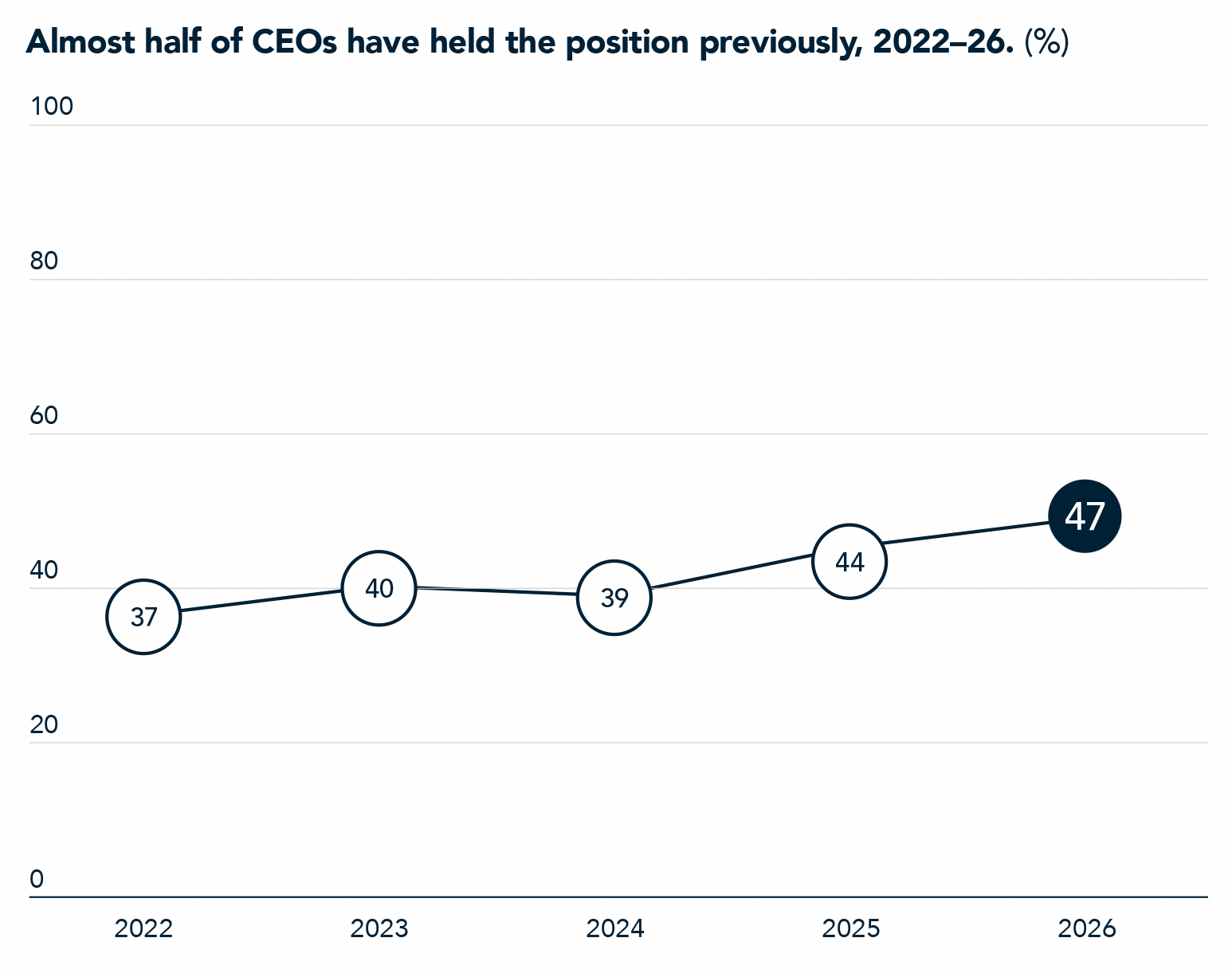
In response, many of Saudi Arabia’s largest publicly listed companies are placing a greater premium on executive experience. Nearly half (47%) of CEOs have previously held a chief executive role elsewhere, continuing the steady increase from 37% when we began tracking this trend in 2022. Market leaders also describe organizations placing greater emphasis on developing and appointing Saudi nationals into leadership positions, reflecting the sustained localization of executive talent.
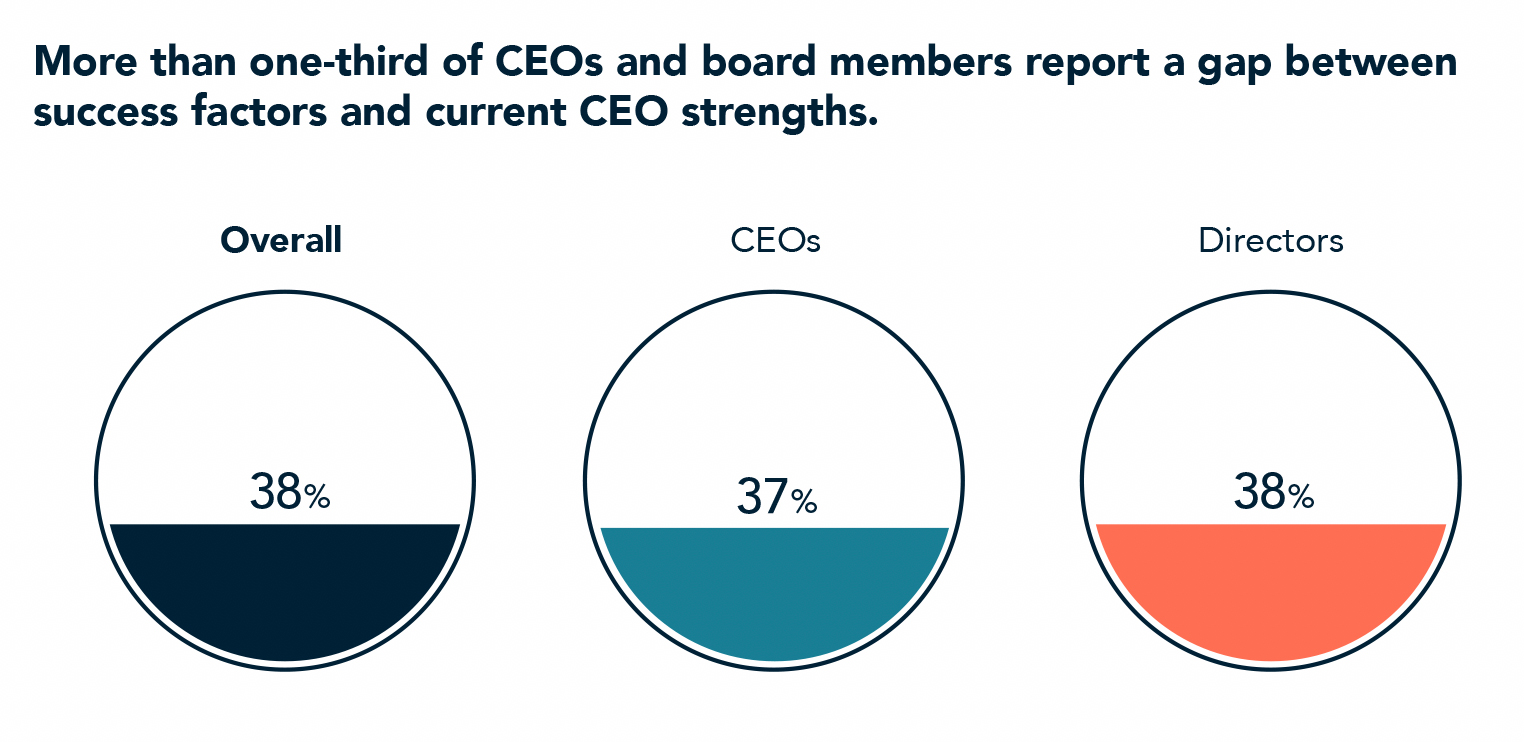
Yet experience and greater familiarity with the market do not ensure organizations have the leadership they need for the future. More than one-third (38%) of CEOs and directors report a gap between the capabilities they believe will be most critical to their organization’s future success and the greatest strengths of their current CEO.
Cross-dimensional alignment is the core of future success
This disconnect points to a broader challenge: succession planning remains underdeveloped in many companies. Based on decades of advising boards and executive teams, combined with our research, we have repeatedly found that succession planning is most effective when treated as a capability directly informed by business strategy, rather than a periodic talent exercise. When these are integrated with one another, it creates a consistent and holistic approach to identifying, developing, and preparing future leaders.
To better understand what differentiates organizations prepared for strategic change, we examined the role of organizational alignment across three dimensions:
1. Alignment among leaders
2. Alignment between strategy and leadership pipeline management
3. Alignment between executive development and succession planning processes
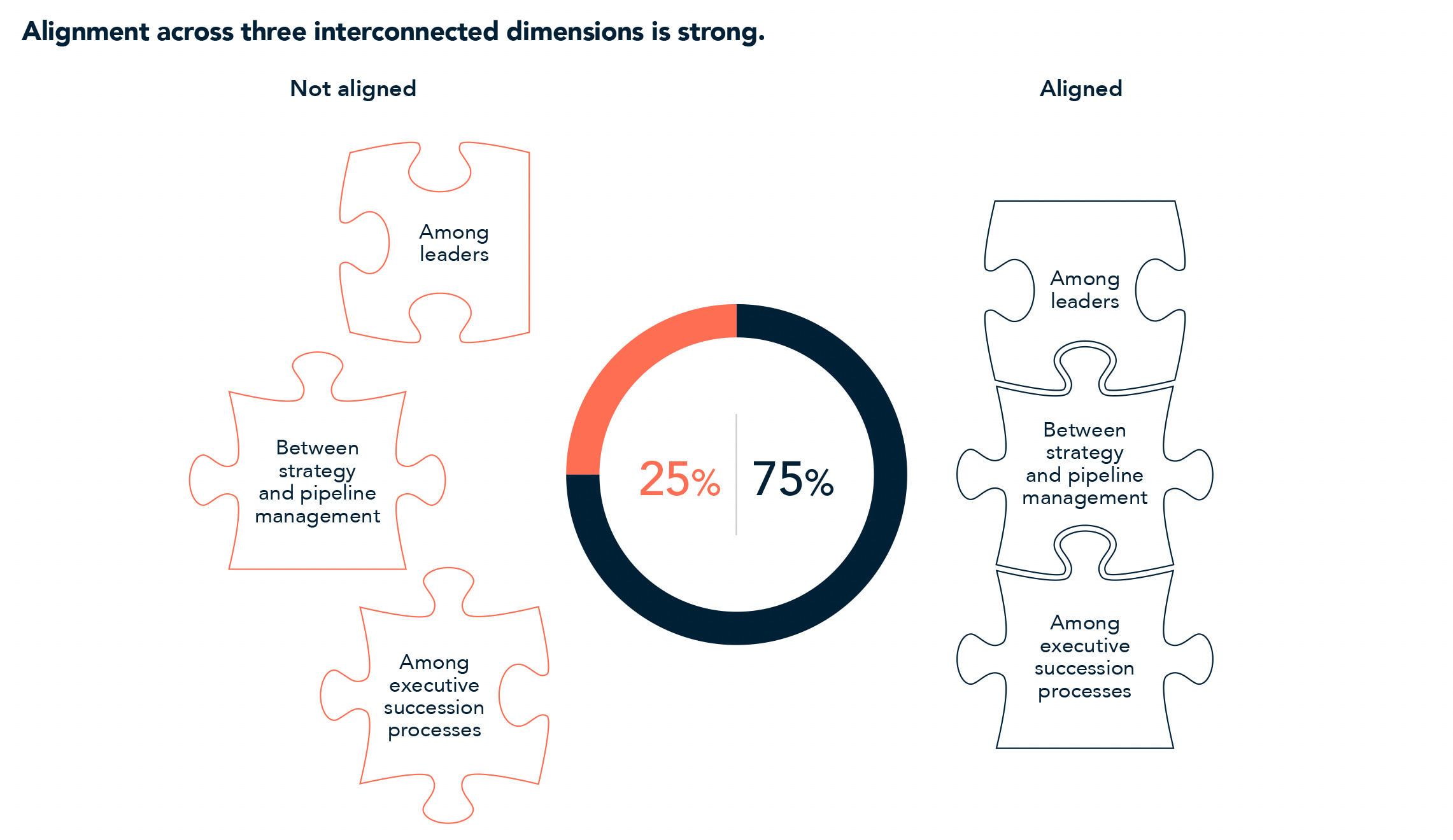
Our findings are encouraging. Three-quarters of organizations in Saudi Arabia report alignment across all three dimensions—a higher proportion than in many other regional and global markets. For example, in the United States, only about half of organizations report this level of alignment.1
Even so, the most common area of weakness remains the link between strategy and talent management, including leadership pipeline management. As organizations redefine where they compete and how they create value, many have yet to fully translate those strategic ambitions into the capabilities they build, the leaders they develop, and the succession decisions they make. Closing this gap will be essential for organizations seeking to sustain performance through continued transformation.2
The right CEO amplifies the benefits of alignment
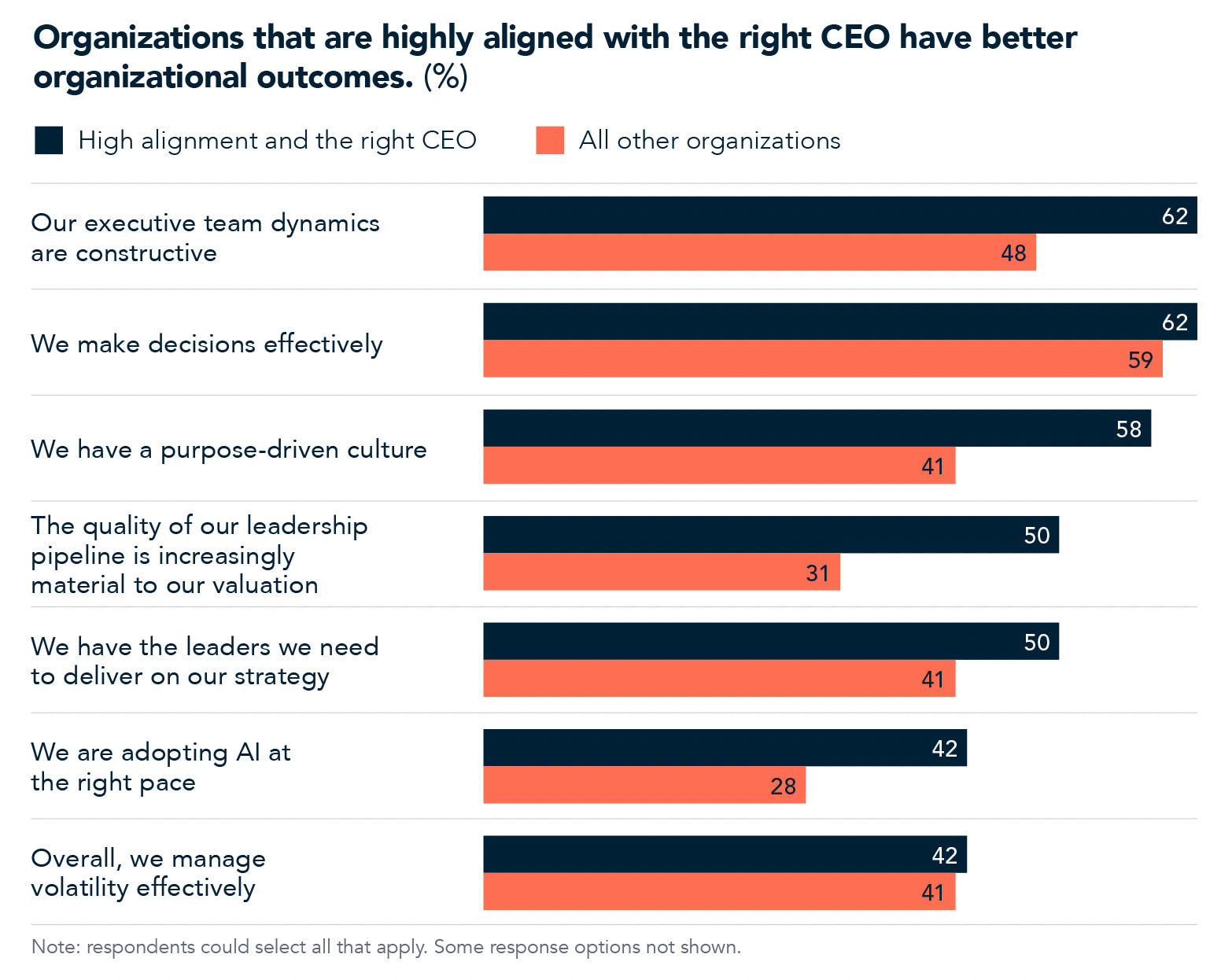
The benefits of aligning leadership with strategy extend beyond better governance to stronger business performance. Organizations that combine enterprise-wide alignment across the three dimensions, with a CEO whose strengths closely match the factors most critical to future success, consistently outperform their peers.
Among these organizations, 92% have met or exceeded their financial performance expectations at the beginning of the year, compared with 86% of all other companies. They also demonstrate stronger organizational health in ways that support sustained performance. And they are more likely to report effective decision making, a purpose-driven culture, and an ability to adopt AI at an appropriate pace.
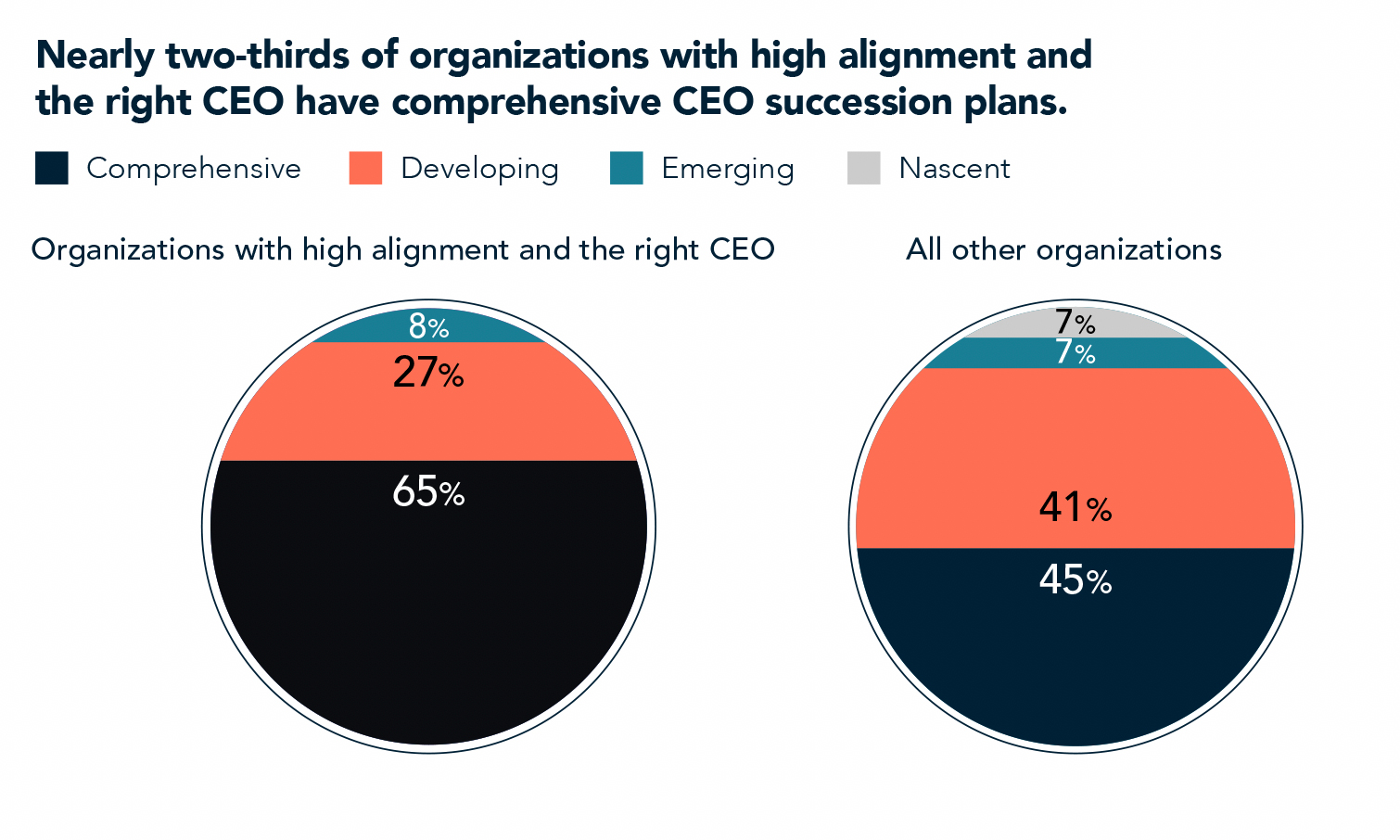
Perhaps most importantly, these organizations also invest in having the right CEO for tomorrow. They are substantially more likely to maintain a comprehensive CEO succession plan—one that is actively managed, continually updated, and includes clear actions when performance or strategy needs change. Nearly two-thirds (65%) of these organizations report having such a plan, compared with fewer than half of their peers. They improve current execution—and give themselves a better opportunity to adapt as strategic priorities evolve.
Optionality is the ultimate competitive advantage
Our survey shows that Saudi organizations have made meaningful progress in enterprise-wide alignment. Compared with many regional and global peers, they are well positioned for future success. Yet findings also suggest that strategic succession should be a continual capability, not a destination.
In a volatile environment, succession planning can no longer be viewed as identifying a single replacement for a future vacancy. It requires organizations to constantly assess the leadership capabilities they will need across a range of possible futures and to develop those capabilities well before they are required.
This is particularly relevant in Saudi Arabia, where business and regulatory conditions can change rapidly and leadership transitions may occur with little advance notice. By building a deep pipeline of leadership talent, organizations create optionality, enabling them to respond quickly and confidently when circumstances change.
Even among organizations that report robust enterprise-wide alignment and have a CEO whose strengths match strategic priorities, opportunities remain to bolster succession practices. Only 35% of these organizations report that they continually manage their succession planning. As organizations shift from viewing succession as the search for a single successor toward building a portfolio of leaders capable of succeeding under different scenarios, succession planning becomes not just about evaluating individuals, but about ensuring the organization is prepared for future demands.
The changing nature of leadership also requires organizations to look beyond experience alone. It is increasingly the underlying leadership qualities that distinguish executives capable of leading through uncertainty. Traits such as curiosity, humility, open-mindedness, self-awareness, sound judgment, an appreciation of risk, and the ability to bring people together are especially important when strategies need to evolve quickly. These qualities should not be mistaken for indecisiveness or a reluctance to make difficult choices—leaders who foster constructive debate and diverse perspectives are often better equipped to make sound decisions and build commitment across stakeholders.
For some boards, adopting a more continual approach to succession planning may raise concerns about fueling market speculation or creating uncertainty within the executive team. However, today’s environment calls for succession planning to become a normal part of strategic governance rather than an event triggered by an impending leadership transition. When succession planning is embedded into the organization’s governance as an ongoing process of building leadership capability and maintaining strategic optionality, regular succession discussions are recognized as a hallmark of a well-managed, forward-looking organization and not perceived as targeted or disruptive.
Ultimately, organizations that invest in leadership optionality—not simply leadership continuity—will be best positioned to adapt, compete, and thrive as Saudi Arabia's business landscape keeps evolving.
References
1 “Board Monitor US 2026 | Future-focused boards: Linking renewal, alignment, and performance,” Heidrick & Struggles, May 12, 2026, heidrick.com.
2 See the online methodology for details on how the alignment score was calculated.
Stay connected
Stay connected to our expert insights, thought leadership, and event information.
Leadership Podcast
Explore the latest episodes of The Heidrick & Struggles Leadership Podcast.