Leveraging the executive leadership team to improve workforce planning
More than half of executives who lack confidence in their organization’s succession plan say that making CEO succession planning a more continuous, proactive process would make the most difference in positioning their organization well for the future.1 This response reflects how CEO succession is widely understood today: an always-on element of enterprise risk management and long-term value creation. The same logic applies beyond the CEO role; workforce planning is essentially succession planning at scale. By embedding succession management within a comprehensive talent planning strategy, organizations can not only ensure leadership continuity but also optimize workforce quality, identify high-potential employees, and align people decisions with business priorities.
Increasingly, workforce quality is becoming a strategic priority for businesses and a driver of enterprise value. This shift is giving chief people officers and other HR leaders greater opportunity to drive measurable business outcomes and elevate their influence with the C-suite and board. Executive teams are paying closer attention to workforce planning metrics, creating an opening for closer collaboration with CPOs. When treated as a valuation lever and not merely a cost center, workforce planning can help organizations discover new pathways to differentiation and long-term value creation.
For now, traditional approaches still reign
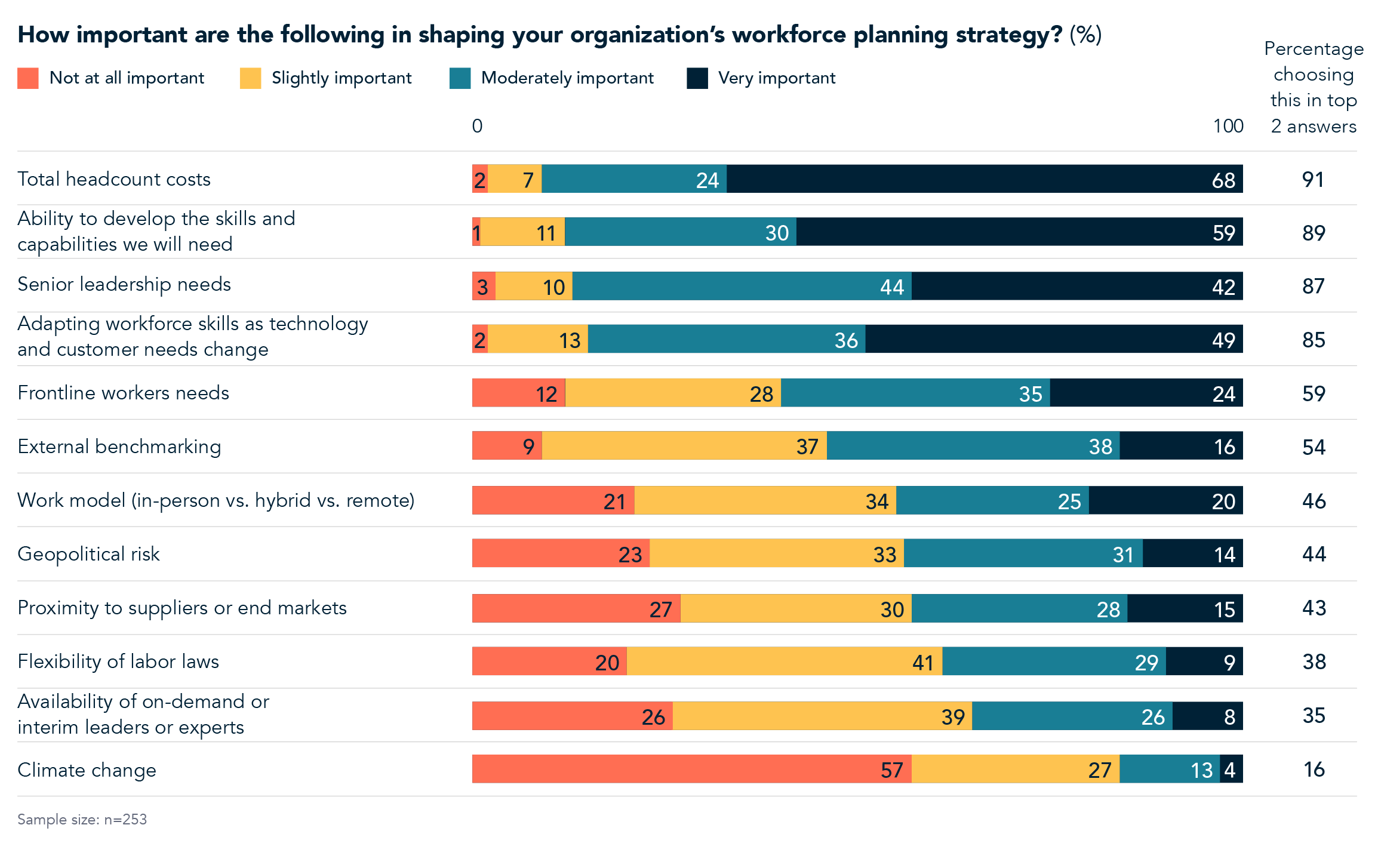
Today, 91% of HR leaders reported that headcount cost remains the most important factor in shaping workforce planning. The next three biggest factors—which at least 85% of respondents cited—were the ability to develop necessary skills and capabilities; senior leadership needs; and the ability to adapt workforce skills as technology and customer needs change. These factors are all fundamentally rooted in traditional HR responsibilities, such as employee attraction and engagement, cost effectiveness, and training.
Far fewer put a strategic lens on their workforce planning: About 30% of HR leaders said their organization either does not map talent for key roles at all or does so only minimally, and a similar number do not have a clear definition of talent needs. Many organizations would not accept this level of informality in CEO succession planning, but tolerate it for the broader leadership and capability pipeline.
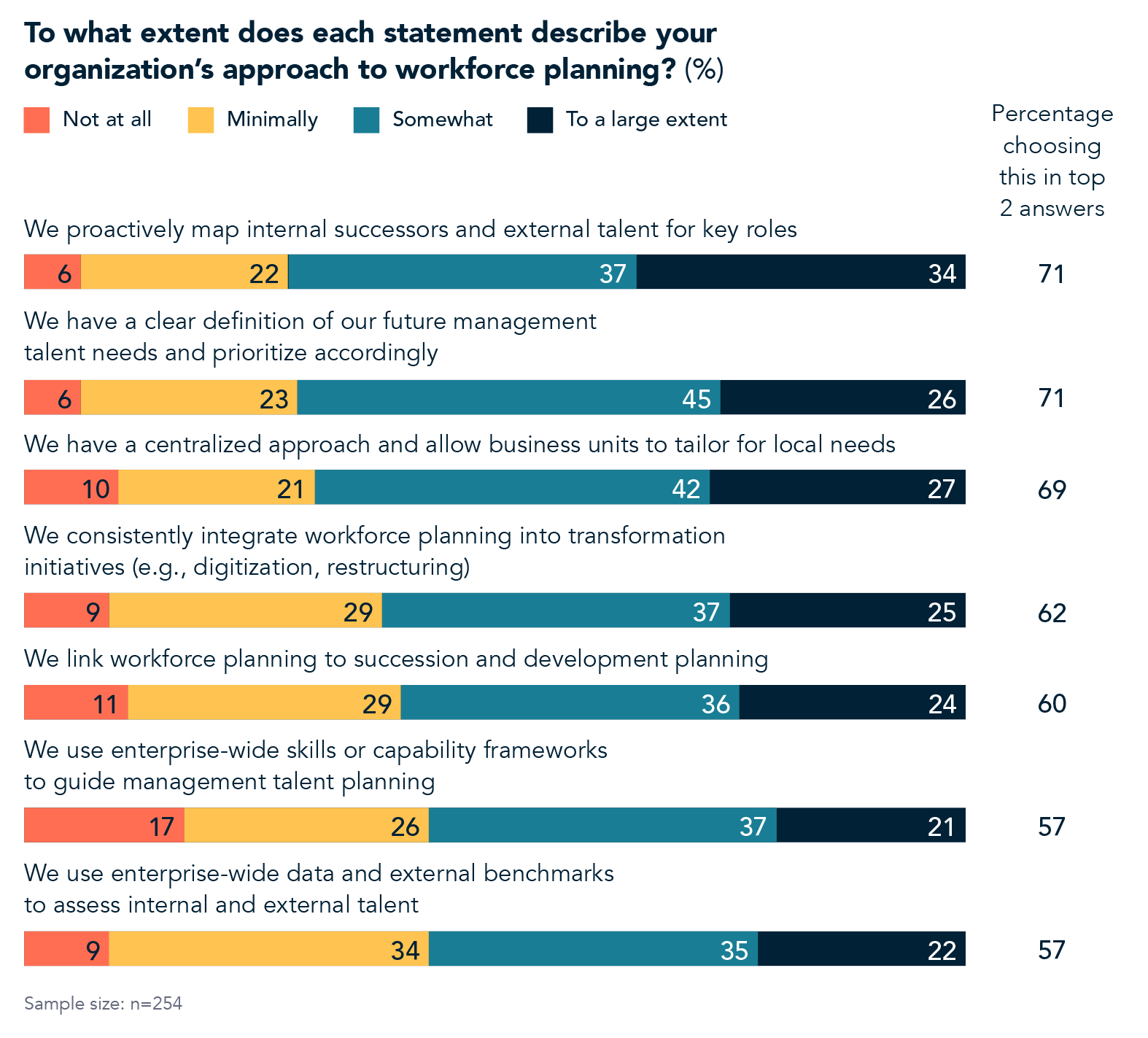
Additionally, more than one-quarter of HR leaders said they don’t even have a standard process for filling unexpected leadership vacancies. There’s also limited alignment between workforce planning in three key areas: innovation or product development, risk mitigation, and learning and development.2

The lack of a strategic approach to workforce planning can have significant consequences for the business. Without clear talent mapping, defined role requirements, and processes for unexpected leadership gaps, organizations risk higher turnover, lost productivity, and slower response to market changes. In short, failing to connect workforce planning to broader business objectives can turn talent from a potential driver of value into a source of operational and financial drag.
Executive interest is rising
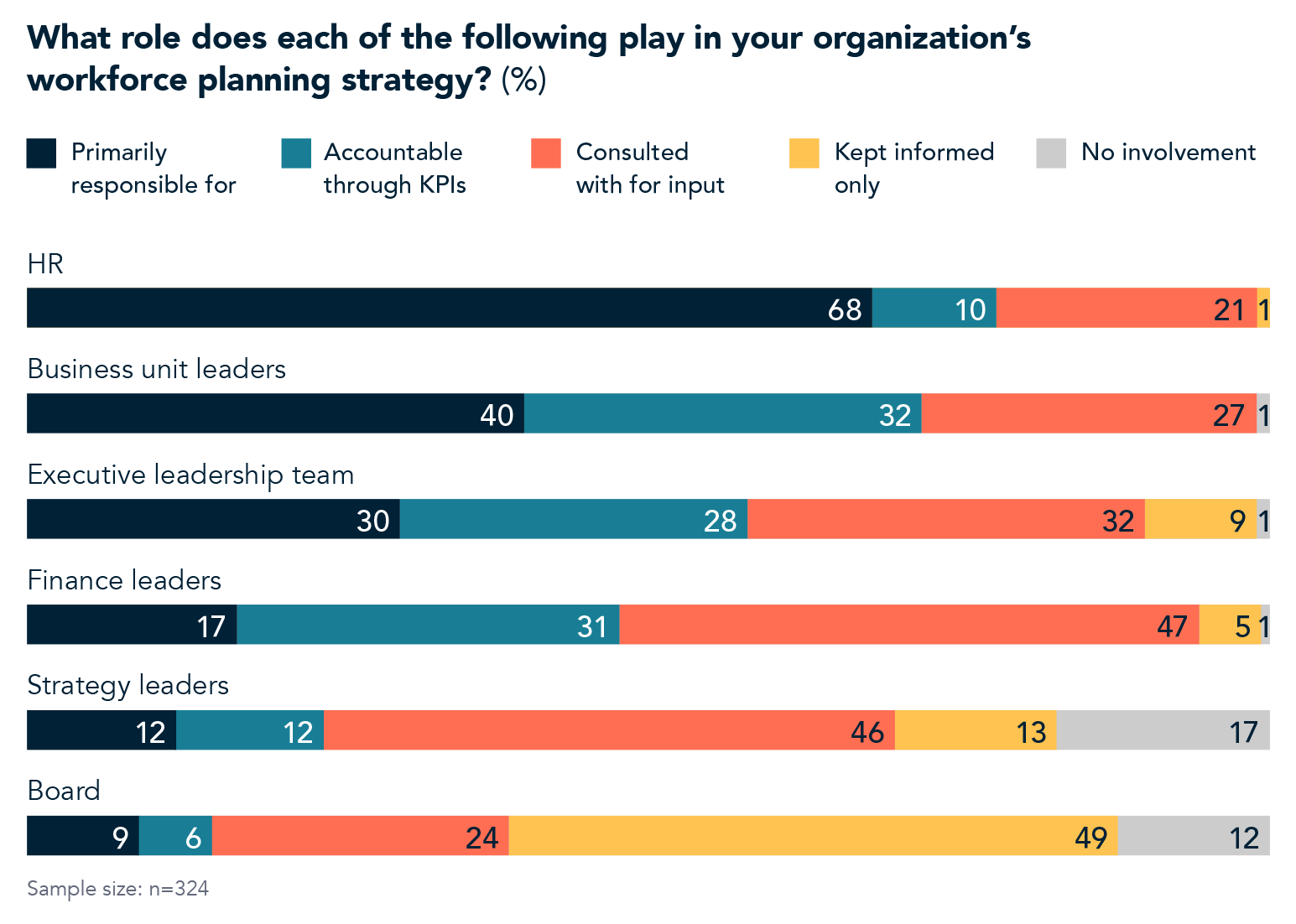
Despite this traditional focus, HR leaders indicated that executive teams are paying more attention to workforce planning, with one-third saying executive teams are primarily responsible, and an additional 28% holding them accountable via KPIs.
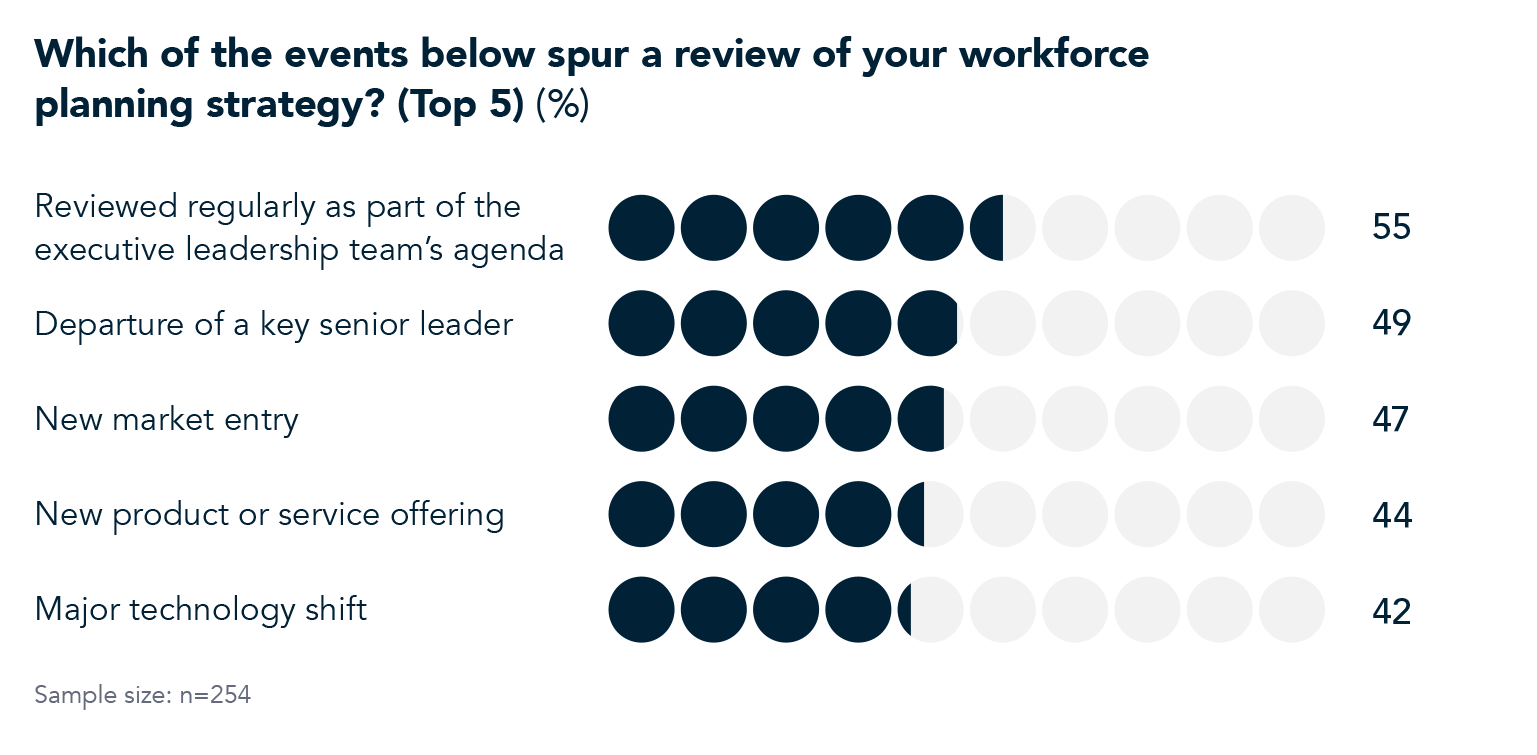
Further, more than half of HR leaders reported that workforce planning is reviewed regularly as part of the executive leadership team’s agenda.
HR leaders also said that their executive teams are interested in a lot of detail, considering an average of five metrics. The most common were retention rates of high performers (77%) and succession planning rates for critical roles (69%).

A window of opportunity
The data suggest that executive teams are closely involved in workforce planning. This creates a window of opportunity for CPOs to move those efforts in a more strategic direction by centralizing them, establishing enterprise-wide clarity around standard processes, and mapping talent for key roles. Just as succession planning is a core risk and responsibility for the board, workforce planning plays that same role for CPOs—positioning them as essential partners in enterprise leadership decisions.
The combination of executive buy-in and strategic focus creates conditions favorable for CPOs to strengthen relationships with C-suite peers and the board while deepening their understanding of the business. And, as we have shown elsewhere, succeeding in those efforts is crucial to CPOs’ long-term success.
Workforce planning is an ideal starting point, but to truly elevate its value, CPOs should pause and reflect on key questions:
- Elevating workforce planning: Am I treating workforce planning as an enterprise-wide, standardized process? What would it take to centralize and elevate it across the organization?
- Identifying executive partnerships: Am I fully leveraging rising executive interest by embedding workforce planning into the regular agenda and decision rhythms of the CEO, CFO, and executive leadership team, ensuring they see it as a value driver rather than a cost exercise?
- Building strategic, future-backed design: Am I pushing workforce planning beyond headcount and cost to integrate innovation, risk, learning and development, and AI-driven capability forecasting, so we can prepare for future needs before they constrain growth? Am I presenting too much—or not enough—data?
- Ensuring leadership continuity and succession readiness: Am I confident that our succession planning is continuous, proactive, and transparent enough to protect the organization from leadership volatility?
Starting with workforce planning creates a foundation for broader priorities, whether that’s CEO succession readiness or adapting to AI, which we’ve explored in our examination of the role of chief people officers. By reflecting on these questions, CPOs can move beyond operational execution toward true strategic partnership, positioning themselves and their organizations for sustained success.
About the authors
Brad Warga (bwarga@heidrick.com) is the co-head of the global Chief Human Resource Officers Practice; he is based in the San Francisco office.
Jennifer Wilson (jwilson@heidrick.com) is the co-head of the global Chief Human Resource Officers Practice; she is based in the Dallas office.
References
1 “Route to the Top 2025 | The ascent redefined: Charting more effective routes to the summit,” Heidrick & Struggles, July 23, 2025, heidrick.com
2 The lack of alignment between workforce planning and other strategic functions is a persistent theme reported by various executive roles across several recent surveys, including our 2025 Route to the Top survey.